

You may be working, caring for children, or considering a career change while wondering whether university is still realistic without traditional A levels. Perhaps you left school years ago, your results don't meet a course's entry requirements, or you need a route that connects more directly with your intended career. The good news is that A levels are one route into higher education, not the only credible one.
The right alternative depends on your destination, previous qualifications, available time, finances, and whether you want academic preparation, practical training, paid employment, or a combination of these. This guide maps the main UK options, explains how they work, and uses official progression evidence to help you choose with confidence.
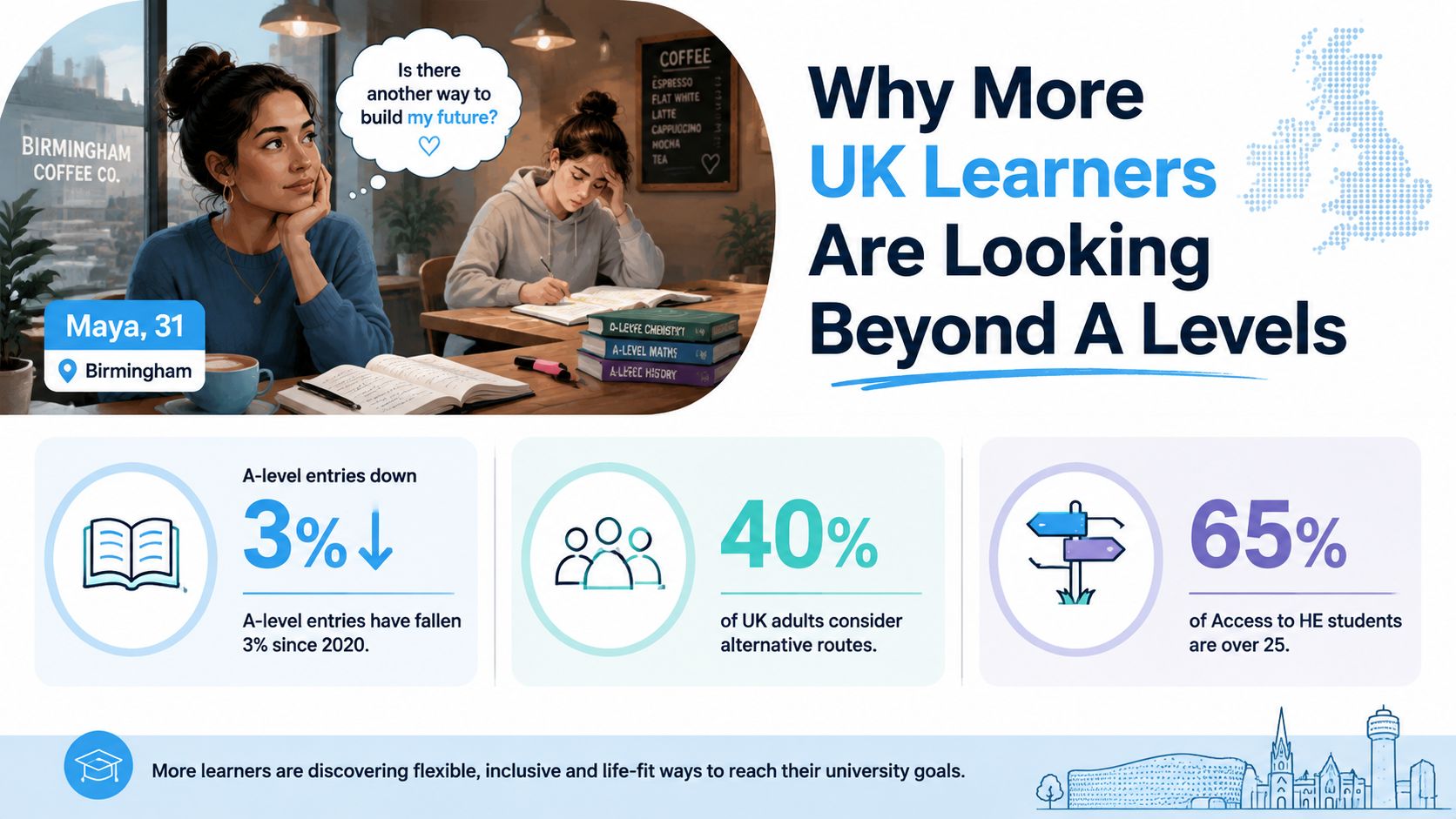
Why More UK Learners Are Looking Beyond A Levels
Maya is 31 and works part-time in a Birmingham café. While her younger cousin spends evenings revising for A levels, Maya is thinking about applying for a midwifery degree. She has work shifts, family responsibilities, and no recent experience of classroom study. Her question isn't whether education matters. It's whether the traditional route fits the life she has now.
Many adults face a similar decision. Some underperformed at school, some left education early, and others want to retrain after years in employment. A levels can be academically demanding and are often designed around a full-time school or college timetable, so they may not suit someone balancing work, childcare, or other responsibilities.
That doesn't mean adults have to lower their ambitions. The Access to Higher Education Diploma is a major UK alternative for adults. Quality Assurance Agency statistics recorded 40,855 registrations in 2021-22, with 22,630 Access students accepted into higher education for September 2022 entry (QAA's Access to HE statistics). The national Access statistics also recorded 38,220 learners registered in 2022-23, while 19,320 were accepted for September 2023 entry (Access to HE national statistics).
The route matters more than the label
The UK now offers several Level 3 pathways, including vocational qualifications, technical programmes, apprenticeships, Access Diplomas, and new Alternative Academic Qualifications. The Department for Education's post-16 reforms introduce AAQs from August 2025 and August 2026, including smaller qualifications that can sit alongside A levels and larger qualifications that can act as alternatives in subjects less well served by A levels (government guidance on the post-16 qualification landscape).
That change makes careful advice more important. Some qualifications will be introduced, while others will be withdrawn from public funding, so a course that sounds suitable may not be available or funded in the same way when you're ready to enrol.
The practical question is therefore not, “Which qualification sounds most academic?” It's, “Which recognised route gives me the preparation and progression I need for my chosen future?”
Understanding the UK Post-16 Qualification Framework
選擇課程時,先確認它的級別、學習量,以及完成後能通往哪裡。受規管資格框架(RQF)提供共同參考方式。資格級別反映知識與技能的複雜程度,資格大小則反映包含多少學習內容。同一級別的資格,課程結構和用途仍可能有很大差異。
A levels、BTEC Nationals、T Levels、許多 AAQs,以及 Access to HE Diplomas,通常都屬於 Level 3 study。GCSE 和 Functional Skills 資格位於較低級別,可協助學習者補足基礎,再升讀 Level 3 課程。
| RQF Level | Example Qualifications | Purpose |
|---|---|---|
| Level 3 | A levels, BTEC Nationals, T Levels, AAQs, Access to HE Diplomas | 為高等教育、技術工作或進一步培訓作準備 |
| Level 2 | GCSEs at the relevant grade, Functional Skills Level 2 | 建立基本學科和工作能力基礎 |
| Level 1 | Functional Skills Level 1 and other introductory qualifications | 在進入較高級別學習前,建立基本知識和信心 |
Academic and vocational routes
Academic qualifications通常集中於理論、概念、書面評核和學科知識。Vocational qualifications則把知識應用於作業、實務活動、專題或職業情境。兩者的學習方式不同,沒有一類資格會自動令學習者更有能力。選擇時應配合你希望發展的學科、工作或升學方向。
大學可能以成績、指定科目或 UCAS Tariff points 列出入學要求。Tariff為許多資格提供共同參考,但各大學自行決定接受哪些資格和科目。因此,具備 Tariff points 不代表該資格適合每一個學位課程。申請前,應直接查看目標大學和課程的要求。
What the AAQ reform changes
Alternative Academic Qualifications 是政府建立 A levels 替代路線的一部分。較小型的 AAQs 可與 A levels 一同修讀,較大型的 AAQs則計劃在 A levels 較少涵蓋的科目中,提供完整課程。改革把 STEM and NHS-related fields as strategically important,所以成人學習者需要核實相關新資格是否已開辦,以及目標學科的大學是否承認。
Department for Education 的改革包括 AAQs from August 2025 and August 2026。部分資格會推出,另一些資格則可能退出公共資助。你今天找到的課程,日後未必以相同形式提供或獲得資助,報讀前應查閱最新的政府 post-16 qualifications guidance。
Ofqual負責監管英格蘭許多資格,QAA監管 Access to HE Diplomas,而 Institute for Apprenticeships and Technical Education參與技術課程及學徒制標準。監管不代表所有資格可以互換,但能幫助你分辨受認可課程與非正式證書。
The Main A Level Alternatives Explained
The strongest choice depends on what you want to do after the course. A practical programme may be more useful for employment, while an adult-entry diploma may be more direct for university.
| Qualification | Duration | Best Suited To | UCAS Points |
|---|---|---|---|
| BTEC National Certificate or Extended Certificate | Varies by size and delivery pattern | Learners wanting applied subject study | Depends on qualification size and grade |
| BTEC National Diploma or Extended Diploma | Often taken as a substantial full-time programme | Learners seeking vocational preparation or university progression | Depends on qualification size and grade |
| T Level | Two years | Mainly 16 to 19 learners seeking technical preparation | Designed to carry comparable value to A levels |
| Apprenticeship | Varies by level, standard, and employer | Learners wanting paid, work-based training | Depends on the completed apprenticeship |
| AAQ | Varies by qualification | Learners needing an academic alternative in an approved subject | Depends on the qualification |
| Access to HE Diploma | Commonly completed within an intensive adult programme | Adults preparing for university without recent A levels | Can carry substantial Tariff value |
| Functional Skills or GCSE retake | Varies by subject and provider | Learners filling English or maths entry gaps | Usually a foundation rather than a complete university-entry route |
BTEC qualifications
BTEC Nationals are unit-based and usually combine assignments, projects, practical tasks, and examinations. They suit learners who prefer building a portfolio of work rather than relying mainly on final written exams. Universities accept many BTEC qualifications, but the required subject, size, and grade combination can differ sharply between courses.
T Levels
T Levels are technical programmes with classroom learning and an industry placement. They're aimed primarily at younger learners and are designed around occupational sectors. They may be a strong option if you want technical preparation and can commit to the timetable and placement requirements, but availability depends on the subject and local provider.
Apprenticeships
Apprenticeships combine employment, structured training, and assessment. They can exist at Level 2, Level 3, Level 4, and higher levels, including Higher and Degree Apprenticeships. This makes them attractive to adults who want to earn while developing a career, although you'll need to secure an apprenticeship vacancy and meet the employer's requirements.
If you're preparing for an apprenticeship assessment or interview, structured apprenticeship revision can help you organise your subject knowledge and practise the type of preparation these applications demand.
AAQs and foundation routes
AAQs offer a newer academic option, but you'll need to check their exact status, funding, delivery model, and university acceptance. Functional Skills and GCSE retakes are more often stepping stones. They can help you meet English or maths requirements before a Level 3 course, rather than replacing a full university-entry qualification on their own.
For many mature learners, the most direct option is an Access to HE Diploma. It focuses on university preparation and is built specifically around adults returning to education.
How Access to HE Diplomas Work in Practice
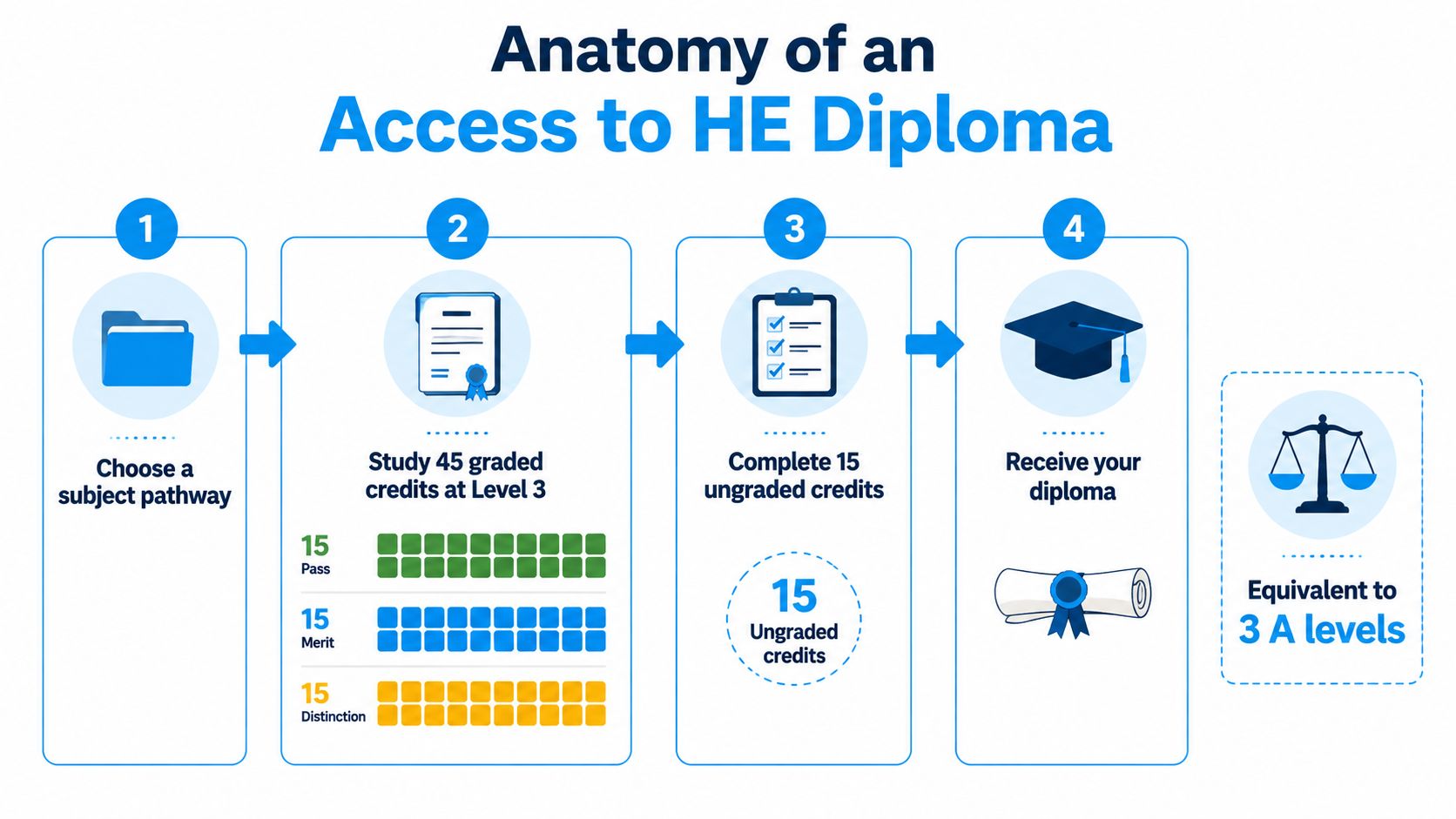
An Access to HE Diploma is designed for adults who want to progress to university but don't hold the traditional qualifications normally expected from school leavers. Instead of taking several separate A levels, you follow one subject-focused programme, such as Health Science, Nursing, Midwifery, Social Science, Business, or Computing.
The standard diploma structure contains 60 credits. This normally includes 45 graded Level 3 credits and 15 ungraded credits. The graded work is assessed at Pass, Merit, or Distinction, while the ungraded units often develop study skills, preparation, or other supporting abilities.
What you study
Your subject pathway determines the academic content. A Health Science diploma might include human biology, health studies, research methods, and preparation for professional study. A Social Science route could include psychology, sociology, research, and social policy.
You'll also practise skills universities expect, including academic writing, referencing, research, managing deadlines, and responding to tutor feedback. Those skills matter because university success involves more than meeting an admissions offer.
How admission works
Universities set their own requirements. Some may ask for specific Access modules and a particular number of Merits or Distinctions. Healthcare degrees can also require GCSE English, maths, and science, along with interviews, occupational checks, or other professional requirements.
Check the exact requirements for each degree before enrolling. The course title alone isn't enough. A university may accept an Access Diploma in a relevant subject but still require particular graded units or GCSE results.
Practical rule: Choose the degree first, then work backwards to the Access pathway and grade profile it accepts.
The diploma can be completed through colleges or online providers, depending on the course and awarding arrangements. Flexible delivery may help adults study around employment or family responsibilities, but online learning still requires regular commitment, independent work, and reliable communication with tutors. A clear explanation of the qualification's structure is available in this guide to Access to Higher Education.
A video can also help you visualise how the qualification fits together:
University Progression and Employer Recognition
A qualification earns its value from what you plan to do with it. Universities check the subject, level, grades, and experience against a specific degree. Employers usually focus on occupational competence, practical evidence, work experience, and the standards attached to the job.
The main routes support different outcomes:
| Qualification | UCAS Points Range | University Entry Status | Employer Recognition |
|---|---|---|---|
| BTEC National | Depends on size and grade | Accepted by many universities, subject to requirements | Strong where applied subject knowledge is relevant |
| T Level | Depends on final result | Designed to support higher education and technical progression | Strong in the relevant occupational sector |
| Apprenticeship | Depends on level and standard | Higher and degree apprenticeships provide direct progression; other levels may need additional study | Directly connected to employer assessment and workplace performance |
| Access to HE Diploma | Depends on credit grades and university rules | A major adult-entry route, with requirements set by each university | Demonstrates preparation, subject study, and academic commitment |
| AAQ | Depends on the approved qualification | Acceptance depends on the university and subject | Developing, with relevance shaped by the qualification |
| Functional Skills | Usually a foundation requirement | Commonly used to meet English or maths conditions | Useful evidence of essential skills, but not usually a complete degree-entry route |
BTEC Nationals combine applied learning with subject knowledge, so they can support higher education or employment where that subject experience is relevant. T Levels focus on technical occupations and include industry experience. Apprenticeships connect training directly to paid employment, workplace assessment, and performance on the job.
Access to HE Diplomas serve a different purpose. They are designed particularly for adults who need a structured return to academic study before applying to university. QAA reported that 25% of Access students achieved a first-class degree, compared with 26% of students entering with other Level 3 qualifications (QAA's outcome statistics). QAA also reported that 77.7% of Access students stayed in their local area to study, which indicates that the route can connect adult learners with nearby higher education options.
Government progression research found that Access to HE and GCE A levels had the strongest higher-education progression among the Level 3 routes examined. Other vocational Level 3 programmes showed lower progression in the research. In the cited England cohort, around 64% of A level students progressed to higher education compared with 29% of BTEC students (government progression research).
These findings do not make BTECs weak qualifications. They show that a qualification should be judged against its intended destination. A technical route may suit direct employment, while an Access Diploma may fit an adult learner preparing for a degree. For a broader comparison of routes, this guide on university access routes for students without A levels provides a useful reference.
Funding, Flexibility and the Adult Learner Reality
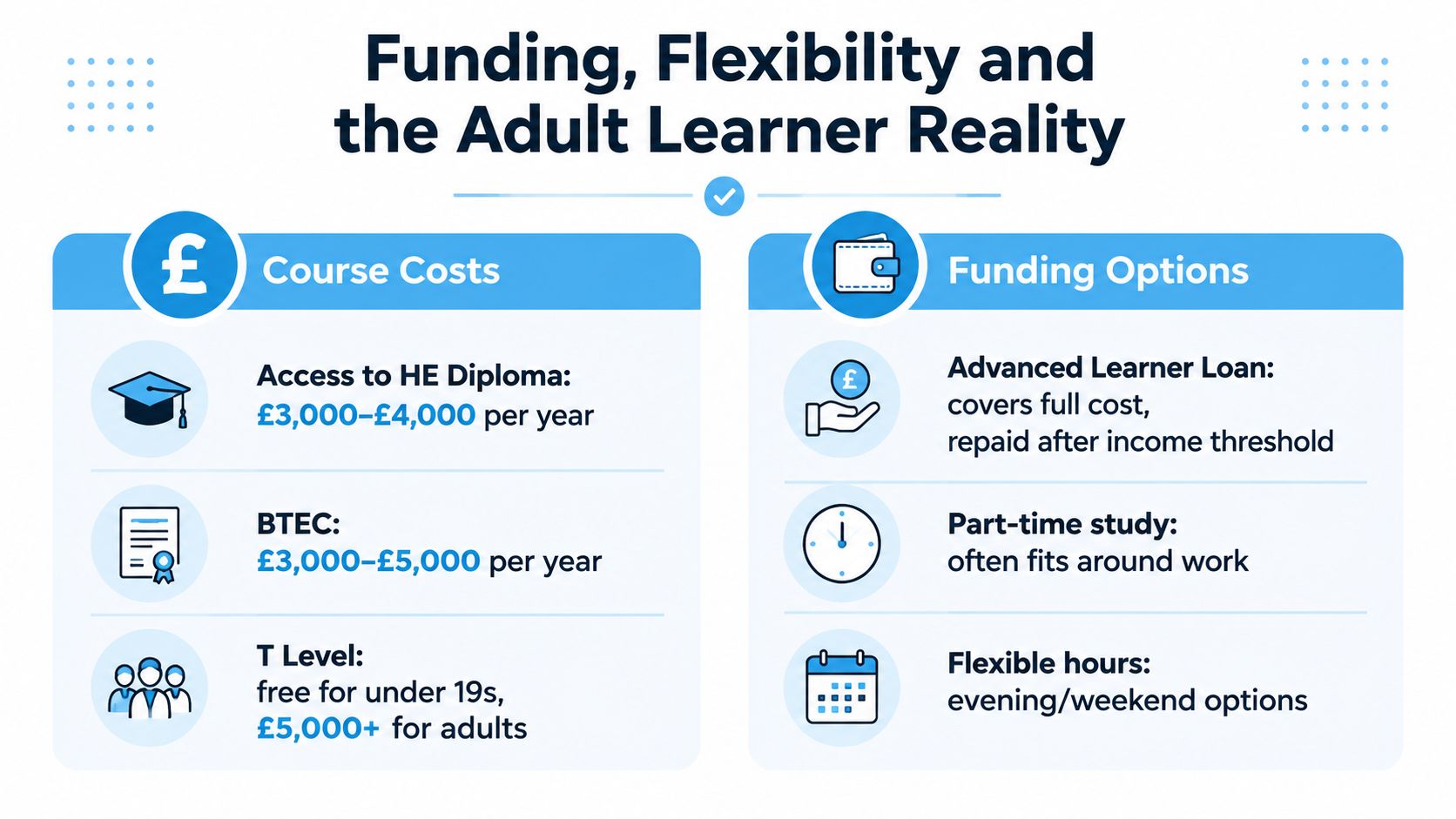
Choosing a qualification is also a household decision. Course fees, travel, equipment, childcare, lost working hours, and the length of study can matter as much as academic suitability. A route that looks attractive on paper may be unrealistic if its timetable conflicts with your shifts or caring responsibilities.
Access to HE Diplomas, BTECs, and other Level 3 courses may be funded through an Advanced Learner Loan, subject to eligibility and current rules. Access learners should also check the arrangements under which loan funding can be written off after completing an eligible higher education course. The details matter, so confirm them with the provider and the official funding service before enrolling.
Four questions to ask before applying
- What will I pay upfront? Ask about tuition, registration, materials, travel, childcare, and payment plans.
- How will I study? Confirm whether attendance is full-time, part-time, evening-based, blended, or fully online.
- What happens to my income? Compare study hours with work shifts and find out whether an employer can adjust your schedule or contribute to costs.
- What is the completion timeline? An intensive programme may finish sooner, while part-time study may be easier to sustain over a longer period.
Apprenticeships offer a different financial model because the learner is employed and paid while completing training. Competition for vacancies can be significant, and the role must fit your career plans, location, working pattern, and existing experience.
Adults should also examine funding changes carefully. The government's post-16 reforms state that some qualifications will be withdrawn from public funding while new qualifications are introduced, so availability can vary by subject and academic year. This funding guide for Access to Higher Education can help you identify the questions to raise with a provider, but always verify the current position before making a financial commitment.
A Real Journey From No Qualifications to University
Consider Priya, a 34-year-old NHS administrator who wants to move into adult nursing. She doesn't have the traditional qualifications usually associated with university entry, and her working pattern changes from week to week. Childcare means she can't attend a daytime college course without planning around other people.
Priya starts by checking nursing degree requirements rather than choosing a qualification at random. She confirms the university's expectations for Access grades, GCSE English and maths, relevant science content, references, and the selection process. That research helps her choose a Health Science pathway with the right academic focus.
Her study happens online, with most work completed after shifts and once her child is asleep. The course includes graded Level 3 work alongside ungraded units, so she learns subject content while also developing essay writing, referencing, research, and time-management habits.
The difficult moments are ordinary ones. An assignment takes longer than expected, a late shift disrupts her study plan, and feedback shows that her first draft needs clearer academic structure. Instead of treating that feedback as proof she doesn't belong, Priya uses it to improve the next submission.
“I'd forgotten how to study, but I hadn't lost the ability to learn.”
By the time she applies through UCAS, she can explain why nursing is the right choice and show recent evidence of commitment. Her Access Diploma gives the university a recognised basis for considering her application without traditional A levels. After completing the admissions process, she receives an offer for adult nursing at a local university.
“The offer changed my view of myself. I stopped saying I was hoping to become a nurse and started preparing to train as one.”
Priya's route is one example, not a promise of a particular outcome. Similar Access pathways are available across health, social science, business, computing, science, and humanities, although each university sets its own requirements.
Choosing Your Route and Taking the Next Step
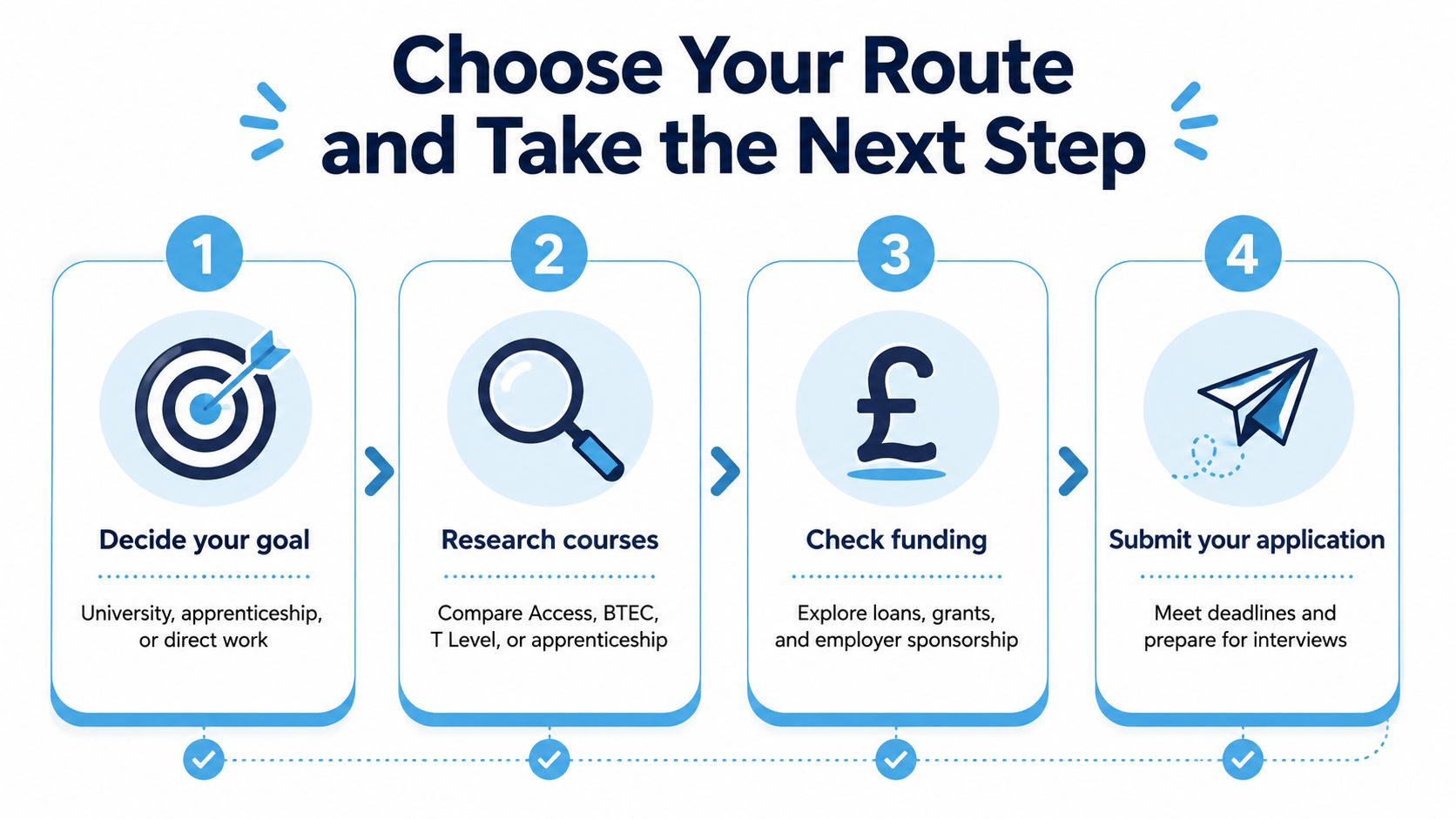
Start with the destination, not the qualification title. Use this checklist to turn a broad ambition into a realistic application plan.
- Define the goal. Decide whether you're aiming for university, an apprenticeship, or direct employment. If you want a degree, identify the course and university before comparing entry routes.
- Match the route. Consider Access to HE for adult university preparation, BTEC for applied subject study, T Levels for technical training, apprenticeships for paid workplace learning, and Functional Skills or GCSE retakes for missing foundation requirements.
- Check the conditions. Read the university's exact Access grade and subject requirements. For other routes, check BTEC subject rules, T Level availability and placement arrangements, apprenticeship vacancies, and English or maths requirements.
- Investigate the provider. Attend college open days, search apprenticeship vacancies, review UCAS course pages, and check that an Access provider works with a recognised validating agency such as OCN London or Ascentis.
- Review funding and timing. Ask about loans, payment plans, employer sponsorship, study hours, assessment dates, and whether the programme fits your work and family commitments.
- Apply with evidence. Prepare your personal statement, references, certificates, and any required interview or skills-test materials. Online providers may offer rolling intakes, but you still need enough time to meet university deadlines.
You don't need to solve every decision today. Choose one degree or apprenticeship target, check its entry requirements, and contact a suitable provider this week. Access Courses Online offers accredited online Access to Higher Education Diplomas for adults preparing for university in areas including Nursing, Midwifery, Health Professions, Computing, Science, Social Science, and Business. Visit Access Courses Online to review available pathways, ask about flexible study and funding, and take the first practical step towards your next qualification.