

Returning to education can feel like a decision with no room for error. You may be working shifts, caring for children or supporting an older relative, while wondering whether a university social work degree is still realistic without the A levels you didn't take at school.
An Access course in social work can provide a recognised bridge into higher education, but choosing the right route involves more than finding a course with the right title. Universities can differ in the subjects they accept, the GCSE evidence they request, the grades they expect and whether they want relevant care experience. The safest approach is to treat the Access diploma as the first part of a planned university application, not as a qualification that guarantees admission by itself.
What an Access Course in Social Work Really Means
Imagine a care worker finishing a late shift and checking university entry requirements on a phone. She has useful experience with people, patience under pressure and a clear reason for wanting to become a social worker, but she doesn't have the traditional qualifications listed on many degree pages. An Access diploma can give her a structured way back into academic study without asking her to recreate her entire school career.
An Access to Higher Education Diploma is a Level 3 qualification designed mainly for adults who want to progress to university but don't hold the usual entry qualifications. In social work, it normally acts as preparation for a degree rather than as a professional qualification that allows someone to practise as a social worker. The diploma helps you develop academic confidence, subject knowledge and evidence of your ability to meet degree-level demands.
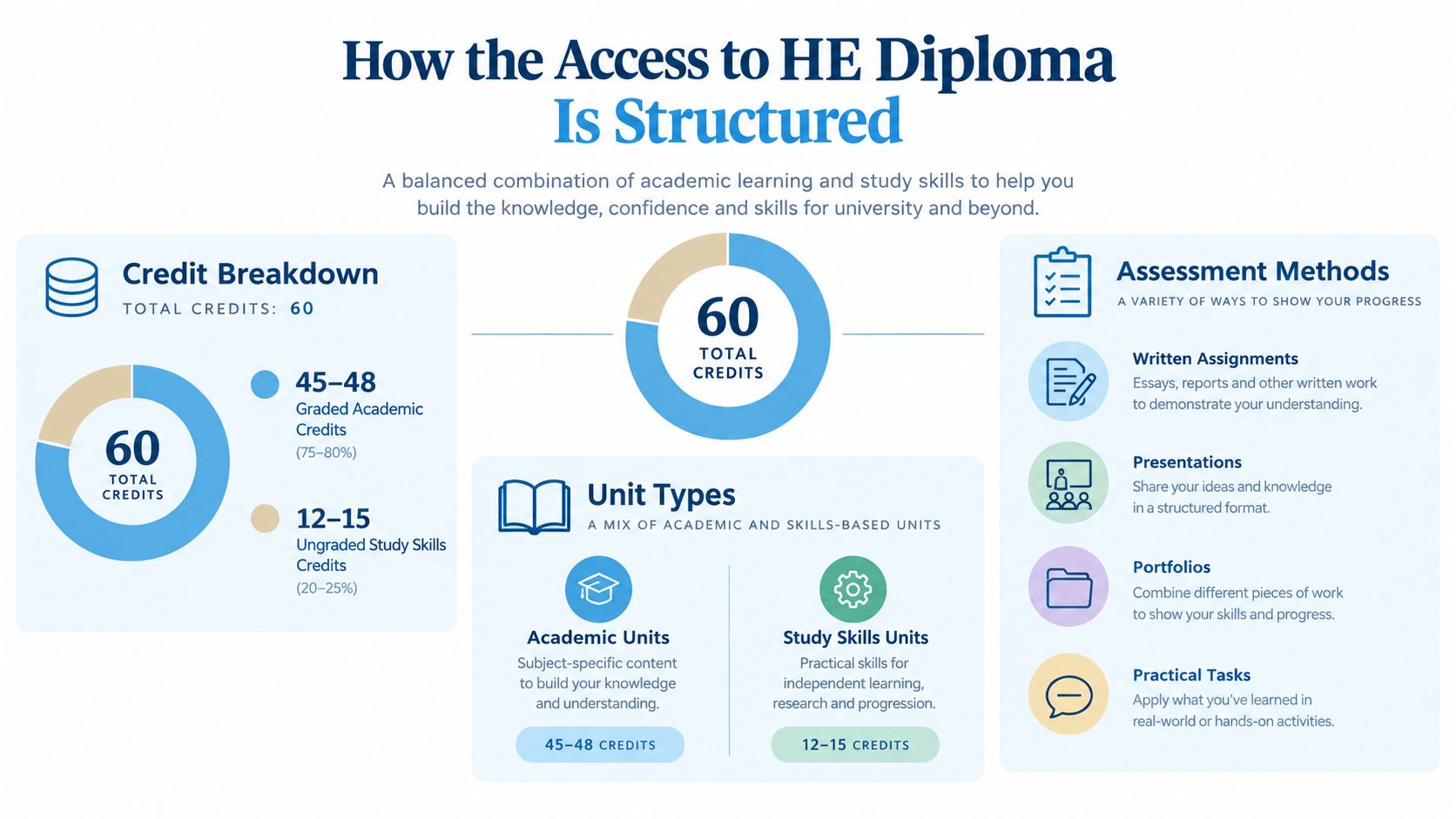
In the UK, providers generally describe the Access to HE Diploma in Social Work as carrying 60 credits, with 45 graded credits at Level 3. It's commonly positioned as equivalent to three A levels, although universities still decide how they interpret the qualification for a particular course. You can review the qualification structure in the Access to HE Diploma Social Work specification.pdf).
How it differs from other routes
An Access diploma isn't the same as a foundation year. A foundation year is usually attached to a specific university degree and may lead directly into the next stage if you meet the progression conditions. An Access course is a separate qualification, so you apply to university with your completed or predicted diploma results.
It also isn't the same as a social work degree. The degree includes professional learning and placements, and registration is required before you can work as a registered social worker in England. Your Access studies are preparation for that later stage.
That distinction should reassure you rather than put you off. You aren't taking a random detour. You're building an academic record that admissions tutors can assess, while also testing whether university study and social work subject matter suit your circumstances.
Practical rule: Choose the university degree first, then check whether its admissions team accepts the exact Access pathway you're considering.
Some adults start with a broad social science route, while others choose a diploma specifically aligned with social work. Neither option is automatically right for everyone. What matters is whether the course includes the subject content and assessment profile your preferred universities recognise.
How the Access to HE Diploma Is Structured
The credit structure gives you a useful way to understand what you're signing up for. An Access to HE Diploma normally contains 60 credits in total, including 45 graded Level 3 credits and supporting ungraded study content, as described in the Social Work Access diploma specification.pdf).
Understanding the credits
Think of credits as a record of completed learning rather than marks on their own. The graded credits usually come from subject units, while the remaining credits support academic development. Those supporting units can include skills such as academic writing, research, referencing and preparation for higher education.
The graded units matter because a university may look beyond the overall diploma title. It can inspect the subjects you studied and the results achieved in relevant units. For example, a social work degree may be more interested in your performance in sociology, psychology or a related social policy unit than in a completely unrelated optional topic.
Access courses commonly use a mixture of written and practical academic assessments. Depending on the provider and unit, you may need to complete essays, presentations, reflective work, research tasks or timed assessments. Ask for an assessment overview before enrolling, particularly if you haven't written an academic assignment for many years.
What the grades mean
Access diplomas use the familiar Distinction, Merit and Pass grading language for graded units. Your provider should explain how individual assignments are marked, how feedback works and how the final profile is assembled.
Don't assume that every university treats a Pass or Merit profile in the same way. One course may publish a minimum overall profile, while another may specify required grades in particular units. A third may also ask for GCSE evidence or relevant experience. Your job is to compare the exact entry profile for each social work degree before you commit to a provider.
Awarding and quality arrangements give the qualification its recognised framework, but they don't remove the need to check university requirements. The most important question is not whether a course is called an Access diploma. Ask whether it is an approved Access to HE qualification, which awarding organisation issues it and whether your intended universities accept that route.
What to ask before enrolment
Use these questions when speaking to a provider:
- Credit profile: How many credits are graded, and which units contribute to the final result?
- Subject content: Does the diploma include sociology, psychology, social policy or other subjects requested by your target universities?
- Assessment: How many assignments are there, and are there presentations or timed assessments?
- Progression: Can the provider show typical university destinations, without promising that any university will accept every applicant?
- Support: Who gives feedback, how quickly do tutors respond and what help is available if academic writing is new to you?
A clear answer to these questions is more valuable than a broad promise that the course will lead to social work. The qualification gives you a route, but your preparation and the university's published conditions still determine the next step.
Core Modules That Prepare You for a Social Work Degree
The strongest Access courses don't just help you collect credits. They introduce the ways of thinking you'll need when social work becomes more complex than a simple story of right and wrong.
Sociology can help you examine family life, inequality, poverty, communities, identity and social responses to behaviour. That matters because social workers consider a person's circumstances, relationships and access to support rather than viewing a difficulty in isolation.
Psychology can introduce development across the lifespan, relationships, attachment and the effects of difficult experiences. You won't become a practising psychologist through an Access unit, but you may become more comfortable reading evidence about behaviour and development.
Social policy and applied health can help you understand how public services are organised, how policy affects people and why support can be easier to access for some groups than others. These topics can give you useful context for later degree discussions about legislation, safeguarding and professional responsibility.
What the study skills units add
Many mature learners worry that they have forgotten how to study. Academic skills units address that concern directly. You'll practise finding reliable material, planning an argument, referencing sources and writing reflectively rather than just describing what happened.
Those skills are particularly relevant to social work because degree assessments often ask you to connect theory with practice. A reflective account, for example, should show what you learned, how your thinking changed and how you would apply that learning responsibly. It shouldn't be a diary entry or a list of personal opinions.
Optional topics can also influence your preparation. Law, communication, safeguarding and working with vulnerable people may help you connect your previous experience with your future professional direction, but don't choose a unit only because its title sounds impressive. Check whether the unit is graded and whether it meets the conditions of your preferred degree.
Common Access to HE modules and their relevance to social work degrees
| Module | Typical content | How it prepares you for social work |
|---|---|---|
| Sociology | Inequality, family life, communities and social behaviour | Builds awareness of structural influences on people's lives |
| Psychology | Development, relationships and behaviour | Supports informed thinking about people at different life stages |
| Social policy | Public services, welfare and social provision | Helps connect individual circumstances with wider systems |
| Communication | Listening, professional communication and relationships | Encourages clear, respectful communication |
| Safeguarding | Risk, vulnerability and professional responsibility | Introduces the importance of recognising and responding to concerns |
| Academic study skills | Research, referencing, writing and reflection | Develops the habits needed for degree-level assessment |
The exact module list varies, so use this table as a starting point rather than a guarantee. A good course adviser should be able to show you the unit titles, assessment methods and grading arrangements before you enrol.
Entry Requirements and How Universities Actually View Access Diplomas
Universities don't treat Access applicants as a single group. They assess the qualification alongside the course content, your GCSE profile, your experience and the evidence that you can manage professional study.
In England, social work is regulated. Applicants need a recognised social work qualification for registration, and Social Work England states that applicants typically need GCSE English at grade C or 4 or above. It also explains that there isn't a national maths standard for registration, because individual education providers may set their own requirements according to their course content. The current Social Work England registration guidance should be checked alongside each university's admissions page.
That distinction is easy to miss. A university may ask for GCSE maths, Level 2 numeracy, Functional Skills or another form of evidence even though maths isn't a national registration requirement. Another may ask for work or voluntary experience, an interview or evidence that you understand the realities of social care.
Compare the course, not just the qualification name
An Access diploma isn't a second-class alternative. It demonstrates recent academic study and can show an admissions tutor how you respond to feedback, manage deadlines and work with subject material. The tutor may inspect your unit profile rather than relying only on the words “Access to HE Diploma”.
The differences between universities are the reason generic advice can mislead applicants. One institution may accept a social science diploma with a specified grade profile. Another may require particular subject credits. A third may ask for English evidence or experience in a care setting. Before applying, read the university's own course page and contact admissions if the wording is unclear. The guide to qualifications needed for social work can help you identify questions to take to each admissions team.
| University | GCSE requirement | Diploma grade profile | Additional criteria |
|---|---|---|---|
| Leeds | Check the current social work course page | Check the published Access profile | Confirm subject credits, experience and interview requirements |
| Coventry | Check the current social work course page | Check the published Access profile | Ask whether specific units or evidence are required |
| The Open University | Check the current programme conditions | Confirm how Access study is considered | Ask about the programme's own eligibility and progression rules |
This table is deliberately a prompt for verification, not a substitute for current admissions information. Course pages change, and a requirement that applies to one social work programme may not apply to another at the same university.
Questions that prevent unpleasant surprises
Ask each admissions team:
- Subject fit: Does the course accept my Access pathway, and must the diploma be in social science, humanities or another named area?
- Unit profile: Are sociology, psychology or other graded subjects required?
- English and maths: Which GCSE or equivalent certificates must I provide?
- Experience: Is paid or voluntary work expected, and what type of experience is considered relevant?
- Selection: Is there an interview, written task or values-based assessment?
- Predicted results: Can I apply while studying, and when must the final transcript be sent?
Contextual admissions and widening participation policies may affect an offer, but don't assume they remove every academic condition. Your safest plan is to keep documentary evidence of your GCSEs, discuss your circumstances openly and ask for written clarification when an entry requirement is ambiguous.
Study Patterns for Adults Balancing Work and Family
The main choice isn't just online or classroom based. It's whether the study pattern gives you enough protected time to read, attend teaching, complete assignments and recover when family life becomes unpredictable.
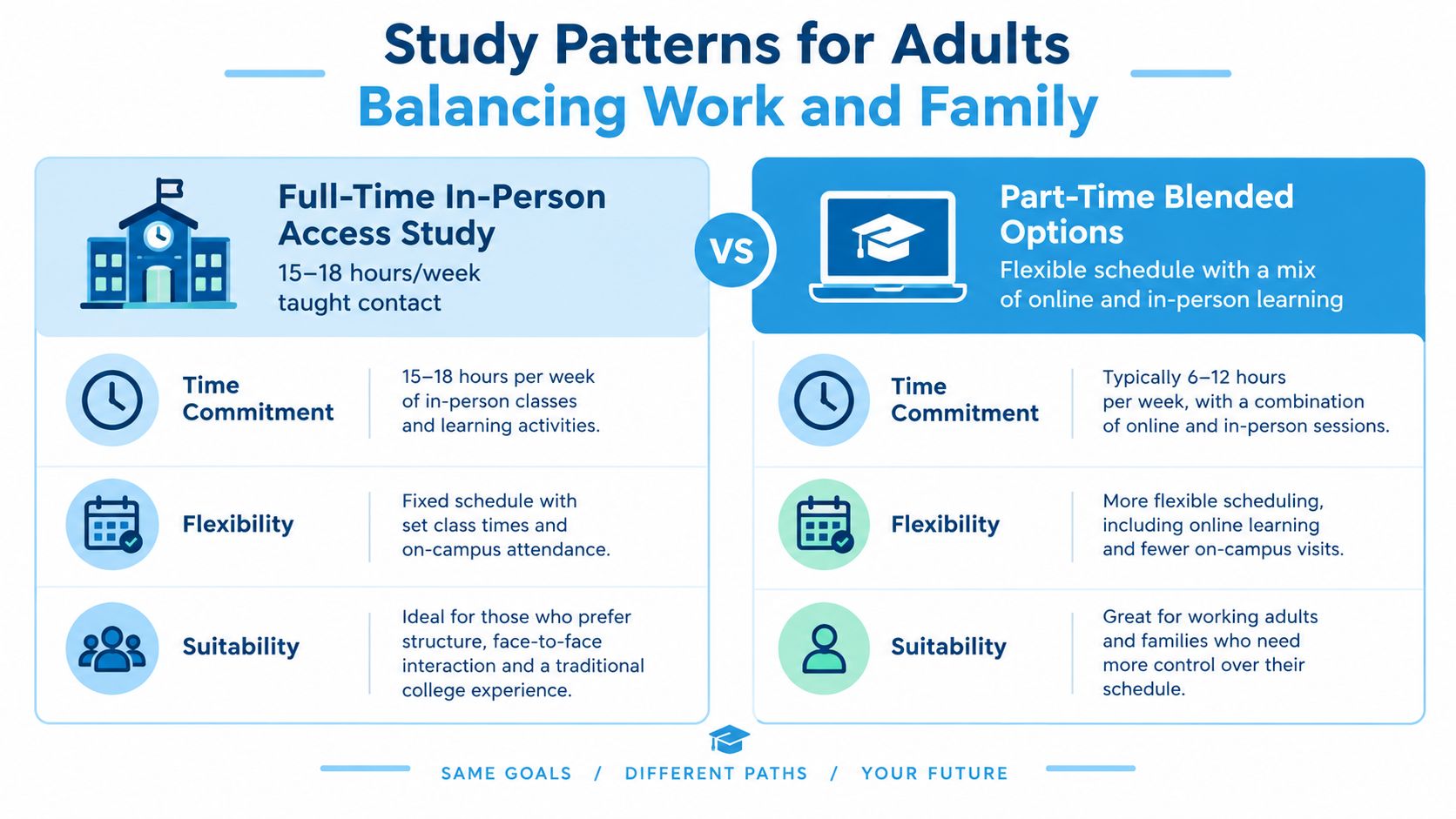
A full-time route is usually more concentrated. One provider describes an Access to HE Social Work programme as a one-year course with about 60 credits across roughly 21 units and around 15 hours of study each week, as shown on its online Access to HE Social Work course information. Those hours may include organised learning, but you should ask how much additional reading and assignment work you'll need to complete.
Matching the route to your week
A full-time classroom route may suit someone who can protect regular daytime hours and wants immediate access to tutors and classmates. It can be harder for a night-shift worker, a parent with changing childcare or someone whose caring responsibilities don't follow a timetable.
Online or distance learning can provide more control over when you study, but flexibility doesn't mean the work disappears. You still need a dependable routine. A parent might use two early mornings and one weekend block, while a shift worker might plan study around a published rota. Build in time for reading before an assignment deadline, not just the time needed to type the final draft.
Some UK listings describe routes lasting from about nine to twelve months, while others describe 18-month part-time or flexible patterns. The Access course information from Glasgow Kelvin College illustrates why you need to compare duration, attendance and delivery method rather than assuming every diploma follows one timetable.
| Study pattern | Potential advantage | Question to ask |
|---|---|---|
| Full-time in person | Regular structure and direct tutor contact | How many days must I attend, and what happens if a shift changes? |
| Online full-time | Home-based study with a concentrated timetable | Are teaching sessions live, recorded or both? |
| Part-time online | More time to absorb difficult topics | Are units released in a fixed order, and how are deadlines arranged? |
| Blended learning | A combination of online and supported study | Which activities require attendance, and where do they take place? |
Adult learners often benefit from studying in a way that recognises existing responsibilities. Guidance on adult learning principles for courses can help you judge whether a provider's teaching approach respects your experience and supports practical, self-directed learning.
Before you enrol, ask about tutor response times, recorded sessions, extensions, technology requirements, assignment calendars and the support available if you fall behind. A course that fits your calendar on paper may still be unsuitable if its deadlines collide with your busiest work or caring periods.
From Access Diploma to Qualified Social Worker
The Access diploma is the opening stage, not the finish line. The usual progression is from the diploma to an approved social work degree, then to professional registration with the relevant regulator.
For applicants in England, that regulator is Social Work England. Scotland, Wales and Northern Ireland have their own arrangements, so check the requirements for the country where you intend to study and practise. As explained earlier, registration depends on completing a recognised social work qualification, not solely on holding an Access diploma.
What happens after Access
Most mature applicants consider an approved undergraduate social work degree. Graduates from another subject may also explore a postgraduate qualifying route, if they meet the relevant academic and admissions conditions. Some universities offer integrated study routes, but the exact length, structure and eligibility vary, so use the individual course page rather than relying on a general pathway diagram.
University study combines academic learning with supervised practice. You may encounter placements in settings such as local authority children's services, adult social care, hospitals, mental health services or voluntary organisations. The purpose is to develop professional judgement, communication, record keeping and ethical decision-making under supervision.
The work is demanding because social workers support people during difficult periods, often while balancing competing needs and legal or organisational responsibilities. Your Access course should help you test your motivation, but university placements will show you how that motivation operates in real professional settings.
The video below offers another way to think about the transition from learning into practice.
After registration, career options can include children's services, adult services, hospitals, mental health, education-related support and the voluntary sector. Later development may involve specialist practice, employer-supported development and post-qualifying learning. Your first priority is to choose an approved degree whose placements, teaching approach and support arrangements suit the kind of social work you hope to enter.
Preparing a Strong Application to University
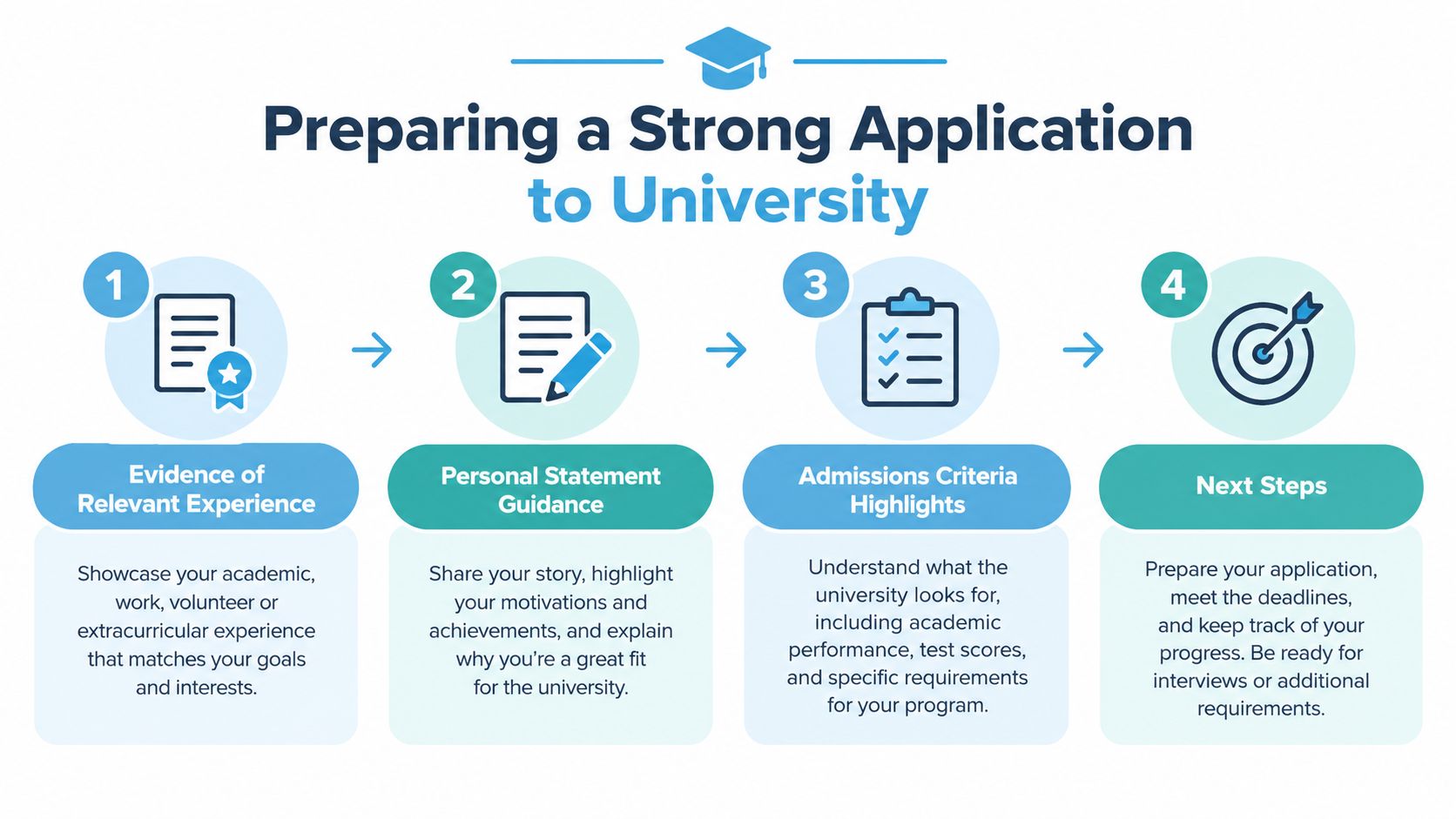
A strong application connects three things: your reason for choosing social work, the evidence that you understand the profession and proof that you can manage academic study.
Relevant experience doesn't have to be presented as a list of impressive job titles. Explain what you did, who you supported, what boundaries you observed and what you learned about communication or vulnerability. If your experience is unpaid, describe the responsibility clearly. Admissions tutors are interested in thoughtful reflection, not inflated language.
Your personal statement should also connect your Access learning to your motivation. A paragraph about inequality can explain how sociology changed your understanding of a family's circumstances. A psychology assignment can show how you learned to question assumptions about development or behaviour. This is stronger than writing that you are compassionate, hardworking or a good listener.
Evidence to gather early
Keep your documents together while you study:
- GCSE evidence: Find certificates or official statements for English and any maths requirement listed by your chosen university.
- Access information: Ask your provider for the course title, awarding details, unit list and predicted or completed results.
- Experience record: Note dates, responsibilities, training and reflective learning from employment or volunteering.
- Reference details: Choose someone who can comment on your reliability, academic engagement or relevant work rather than someone who only knows you socially.
- Interview preparation: Practise explaining confidentiality, professional boundaries, equality, safeguarding and how you respond when someone disagrees with you.
Prepare for values-based questions
Social work interviews may explore how you think about dignity, fairness, risk and the rights of people who use services. There isn't always one perfect answer. Interviewers want to see that you can listen, recognise complexity, avoid judgement and seek appropriate guidance.
Use a real experience where possible, but protect confidentiality. Don't name a service user or disclose identifying details. Explain the situation in general terms, describe your actions and reflect on what you would do differently after learning more.
Check application dates with each university and ask how predicted Access results should be entered. Request references early, allow time for your provider to send transcripts and confirm whether an interview follows the initial application. A careful application won't guarantee an offer, but it will prevent avoidable problems and help admissions tutors see the person behind the qualification.
If you need a fully online route, Access Courses Online offers Access to Higher Education Diplomas, including a social work pathway, with flexible study, tutor guidance and funding information for adult learners. Visit Access Courses Online to review the course details, discuss your circumstances and check whether the route fits your intended university progression.