
You may have spent years caring for family, supporting patients in another role, or wondering whether a nursing career is still possible without A-Levels. The university prospectus looks exciting, but the entry requirements can make the goal feel distant, especially if your GCSE record is incomplete or your previous qualifications came from another country.
The Access to Higher Education Diploma in Nursing offers a focused route for adults who want to prepare for a nursing degree. It isn't a shortcut around academic work. It's a structured qualification that helps you build subject knowledge, improve study skills, and meet the requirements for university progression.
Your Pathway to a Nursing Career Starts Here
Consider an adult learner who has worked in a care setting for several years. They understand compassion, communication, and responsibility, but they don't have the A-Levels listed on a nursing degree page. Returning to education can feel intimidating, yet their practical experience has given them a clear reason to pursue the profession.
The Access route is designed for people in this position. It provides a recognised Level 3 qualification for adults who don't have traditional entry qualifications, while focusing the learning on progression into higher education and health-related careers. The nursing and health-professions pathway is also built around the QAA subject descriptor for progression into nursing degrees. The QAA descriptor received its nursing-specific publication on 20 October 2023, with piloting from 1 August 2024 and full application from 1 August 2025.
The route is widely used. In 2022–23, 38,220 students registered for an Access to HE Diploma in England and Wales, and 7,105 progressed into higher education in nursing and midwifery for September 2023 entry, making nursing and midwifery the most popular reported progression subject. Overall, 19,300 Access students were accepted into higher education for September 2023 entry. These figures come from the Access to HE key statistics.
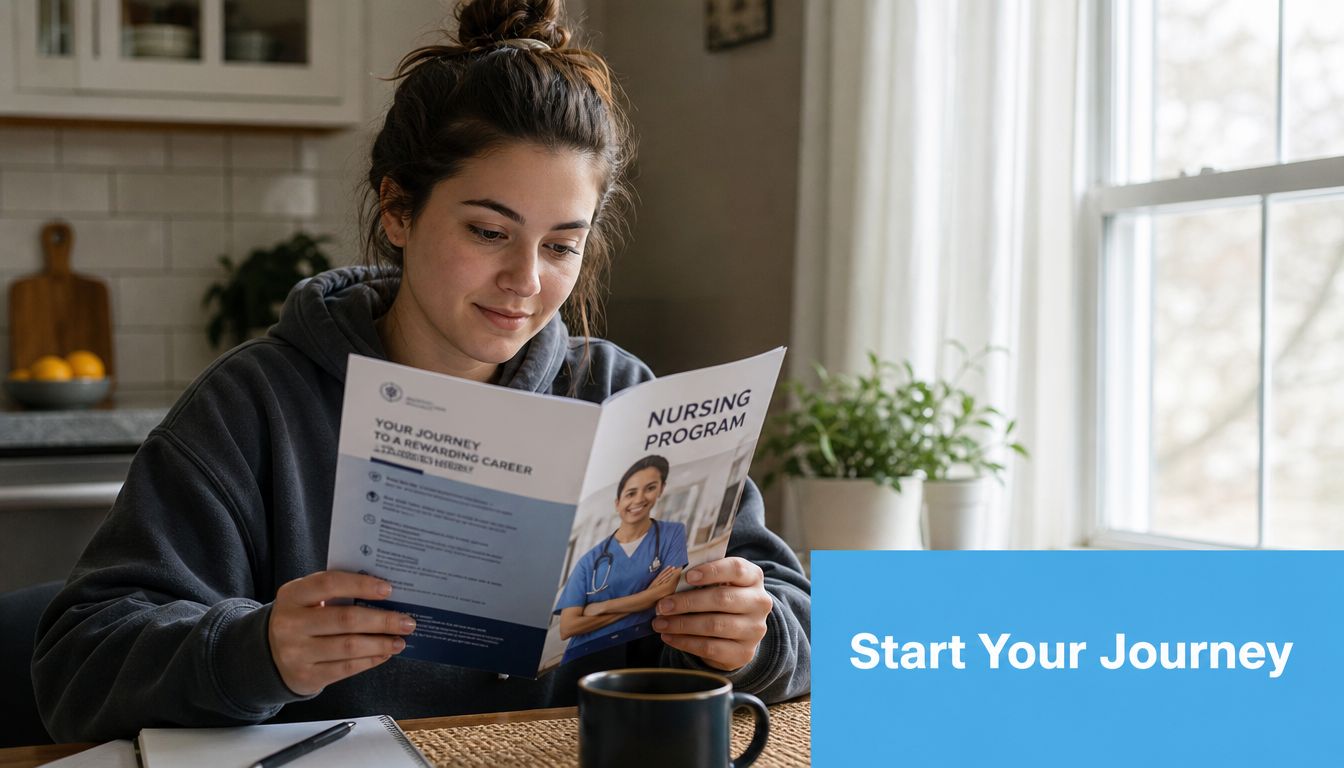
Your past doesn't have to determine your next qualification. What matters now is choosing a course that matches your intended university, checking every additional requirement, and planning enough time for demanding study. If you already have care experience, resources on how to turn clinicals into achievements can also help you describe practical responsibilities clearly in applications and interviews. You can explore the wider professional motivation behind this route in nursing as a career.
What Exactly Is the Access to HE Nursing Diploma
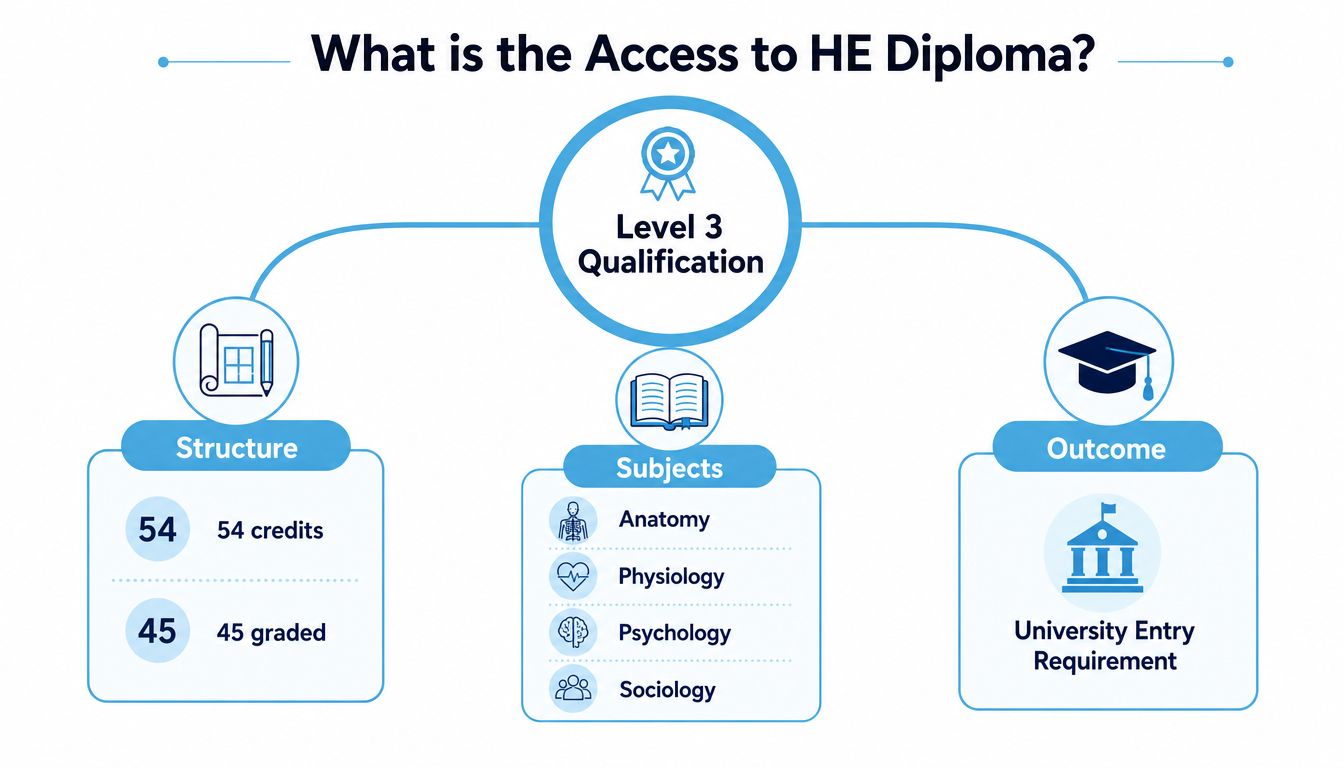
The Access to HE Diploma is a regulated Level 3 qualification in the UK. It's designed for adults without traditional entry qualifications who want to progress to university. The nursing version gives that general route a healthcare focus, preparing learners for the academic expectations of nursing and related degree programmes.
Understanding the credit structure
A full diploma contains 60 credits. Of these, 45 are graded Level 3 credits, while 15 are ungraded credits at Level 2 or Level 3. A full-time course can typically be completed in one year, although the exact timetable and delivery model depend on the provider.
Credits represent completed learning rather than a simple attendance score. The graded credits are particularly important because universities may use the grade profile when making conditional offers. The ungraded units still matter, since they may develop academic practice, professional awareness, or other skills required for successful completion.
The qualification isn't just a collection of unrelated modules. The nursing and health-professions content is guided by the QAA nursing and health-professions subject descriptor, which provides a national reference point for the knowledge and preparation expected from this type of pathway.
What the qualification does and doesn't do
The diploma demonstrates that you can study at Level 3 and prepare for degree-level learning. It can replace the need for A-Levels in many admissions situations, but it doesn't automatically guarantee a place on every nursing degree. Universities set their own entry requirements, and some will ask for specific GCSEs, Functional Skills qualifications, health checks, interviews, or other evidence.
That distinction is essential. A course provider can offer a valid nursing Access diploma, while a particular university may still apply additional conditions. Before enrolling, contact admissions teams for the nursing degrees you're considering and ask whether they accept your chosen diploma, which grades they require, and whether your existing English, maths, or science qualifications meet their rules.
A suitable course should therefore give you more than a certificate. It should provide subject preparation, structured assessment, tutor feedback, and a clear route for checking university compatibility before you commit.
Core Modules and Assessments Explained
The course usually combines healthcare knowledge with the academic habits you'll need at university. You may study human biology, anatomy and physiology, health studies, psychology, sociology, and professional practice. The exact unit titles vary between providers, so treat a published module list as a starting point rather than a guarantee of identical content everywhere.
Why these subjects matter
Human biology and anatomy help you understand the body, its systems, and the biological basis of health and illness. That foundation supports later nursing study, where you'll need to connect theory with patient assessment and care.
Psychology and sociology broaden your view of the person receiving care. They can help you examine behaviour, communication, development, inequality, social circumstances, and the wider influences on health. Nursing isn't only about identifying a physical condition. It also involves understanding the individual, their concerns, their choices, and the environment in which they live.
Professional and health studies units may introduce topics such as confidentiality, communication, teamwork, ethics, equality, diversity, health promotion, and safe practice. These areas help you think about what responsible care looks like before you enter university placements.
Assessment is more than memorising facts
Access courses commonly assess learning through assignments rather than relying only on formal examinations. Depending on the provider, you may complete essays, reports, presentations, research tasks, reflective work, or written responses to a case scenario.
An essay might ask you to compare approaches to health promotion. A report could require you to explain a body system using reliable academic sources. A presentation may test whether you can communicate information clearly to a defined audience. These tasks develop skills that nursing students use repeatedly, including reading critically, organising evidence, referencing, and explaining conclusions.
Study-skills units are just as valuable as science content. Adults returning to education often worry about academic writing, but tutors can help you understand paragraph structure, source evaluation, referencing, and feedback. The aim isn't to expect polished university work on your first submission. It's to help you improve through practice.
Practical rule: Treat every assignment as rehearsal for university. Keep feedback, identify repeated weaknesses, and apply the advice to your next piece of work.
You'll also need to manage deadlines. A course compressed into a full-time academic year can feel intense, particularly alongside employment or caring responsibilities. Building a weekly study routine early is more useful than waiting until several assignments arrive together.
Meeting University Entry Requirements for Nursing
The diploma is only one part of a successful application. Your target nursing degree may assess your Level 3 grades, GCSE equivalents, personal suitability, interview performance, and compliance with professional or placement requirements.
Read the offer as a set of conditions
A full Access to HE Diploma can produce up to 144 UCAS Tariff points, depending on the grade profile. Many UK nursing degrees set offers in the 96 to 128 tariff-point range, so the difference between a Merit-heavy and Distinction-heavy result can affect whether you meet a conditional offer. The relationship between grades and points is explained in Access to HE nursing entry guidance.
The key point is that the 45 graded Level 3 credits matter. Passing the diploma overall isn't always enough if your university offer specifies a particular combination of grades. An admissions adviser can tell you whether the course requires an overall profile, specific subject grades, or a minimum number of credits at a particular grade.
Don't judge your chances from tariff points alone. Two applicants may hold similar headline qualifications while differing in the GCSE subjects, interview evidence, or additional checks required by their chosen university.
Check the GCSE gap before enrolling
Many nursing degrees still expect GCSE English and maths at grade 4/C, or an accepted equivalent such as Functional Skills Level 2. Some Access course descriptions may describe Level 2 English or maths as preferable, or mention that equivalents can be considered. That wording doesn't mean every university will waive the requirement.
Ask each university these questions:
- English: Will your existing qualification meet the literacy requirement?
- Maths: Do they accept Functional Skills Level 2, and do they require a specific GCSE grade?
- Science: Is a science GCSE needed, or does the Access curriculum satisfy the subject expectation?
- Overseas study: Will your previous qualifications need formal comparison or separate evidence?
- Timing: Must missing qualifications be completed before application, before enrolment, or before the nursing course begins?
If you're missing English or maths, look for a provider that offers a suitable supplementary route, or enrol separately with an approved centre. Get confirmation in writing from the university rather than relying on a general statement on a course advertisement.
The same care applies when researching healthcare professionals or preparing for clinical conversations. For a useful explanation of how to verify a midwife, review the relevant credentials and registration information rather than accepting a title without checking it. For further guidance, compare the details in nursing degree entry requirements.
Before you apply: Create a requirement checklist for each university. Don't assume that one nursing course's rules apply to every other course.
Choosing Your Study Path Online or On-Campus
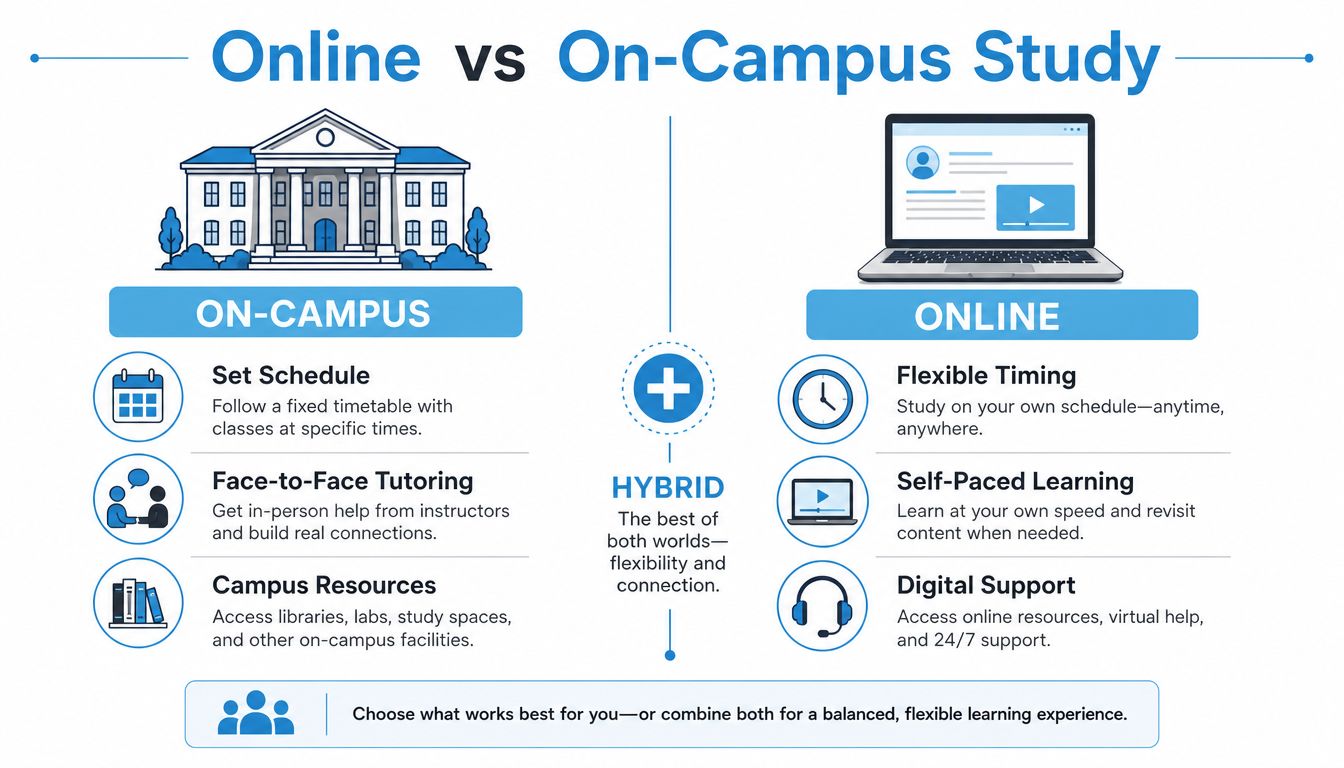
The best delivery method is the one you can sustain while producing strong work. On-campus study gives you a fixed routine, direct access to tutors, and contact with other learners. Online study gives you more control over timing and location, but it places greater responsibility on you to plan, start tasks, and request help promptly.
On-campus learning
A college timetable can suit learners who benefit from external structure. Regular sessions make it easier to protect study time, ask questions face to face, and build relationships with classmates. You may also have easier access to campus libraries, study areas, and learning support.
The trade-off is practical. Travel, childcare, work patterns, and fixed attendance requirements can make a traditional course difficult to maintain. Ask the provider how often you must attend, whether sessions are recorded, and what happens if illness or caring responsibilities affect your attendance.
Online learning
Online delivery can work well for adults who need to study around work or family life. Current course listings show growth in start-anytime delivery and monthly payment plans, alongside pathways mapped to Adult, Mental Health, and Children's Nursing. Those developments reflect demand from career-changers seeking more adaptable routes, as described by current nursing Access course provision.
Flexibility doesn't mean less work. A full-time Access programme can compress substantial learning into roughly 36 weeks to one year, and online students still need to meet deadlines, participate in tutorials where required, and complete the same kind of academic preparation. Check whether the provider is recognised, which awarding organisation issues the diploma, how assessment is moderated, and how tutors respond to questions.
Universities generally focus on whether the qualification is accepted and whether you meet the course conditions, rather than treating online study as automatically inferior. Still, acceptance must be confirmed with your chosen nursing departments. Ask whether the provider's online format meets their admissions expectations and whether any practical or attendance elements are required.
Funding can also influence your choice. Some learners investigate an Advanced Learner Loan or provider payment arrangements, but eligibility and repayment conditions should be confirmed directly with the relevant organisation. Don't choose a course solely because it advertises flexibility. Choose one with transparent assessment, reliable support, and a progression route you can verify.
Your Step-by-Step Guide to Applying
A strong application begins before you select a course. Use your intended university as the reference point, then work backwards to identify the qualification, grades, and supporting evidence you'll need.
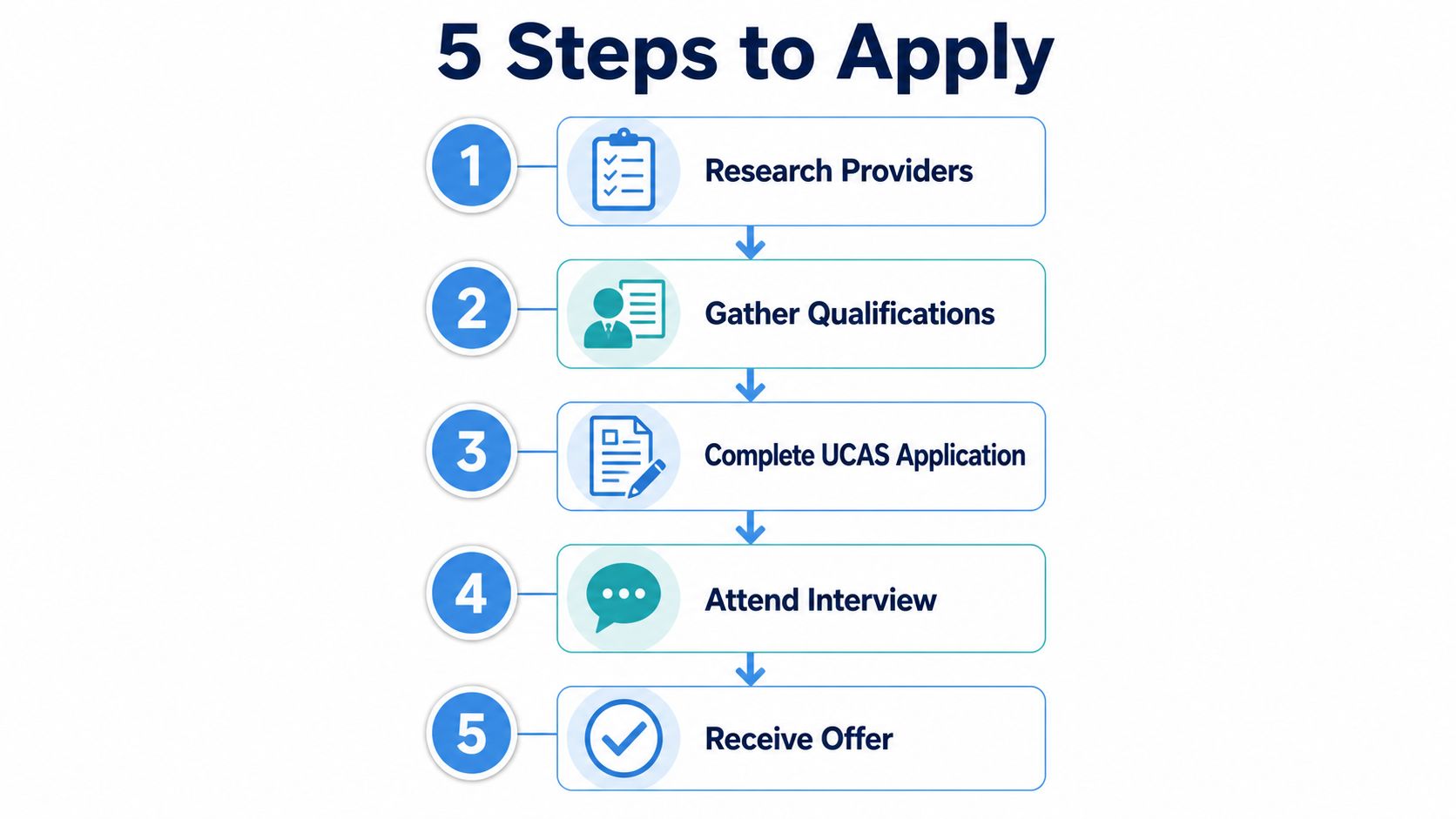
1. Research the destination first
Choose several nursing degrees that interest you, including the branch of nursing and the university location or delivery model. Read the full entry requirements, then email admissions if any wording is unclear. Keep a record of accepted Access subjects, required grades, GCSE equivalents, interview arrangements, and any checks needed before enrolment.
2. Compare Access providers carefully
Check that the provider offers the nursing pathway you need, not just a general health course. Confirm the awarding organisation, QAA recognition, credit structure, assessment method, tutor support, course duration, start date, attendance expectations, and total cost.
Ask a direct question: “Will this exact diploma be accepted by the nursing degrees on my shortlist?” A provider should be able to explain how to verify the answer without promising admission.
3. Prepare your evidence
Gather certificates, transcripts, identity documents, and details of any overseas qualifications. If English, maths, or science is missing, identify the approved equivalent before submitting your application. Explain relevant employment, volunteering, caring, or community experience, but connect each example to skills such as communication, reliability, safeguarding awareness, teamwork, or empathy.
Your personal statement should show informed motivation. Explain why nursing appeals to you, what you understand about the demands of the profession, and why an Access course is the right academic step now.
4. Plan the university application
Many applicants apply to university while completing the diploma. Review guidance on applying to university after an Access course, then confirm deadlines and reference requirements through the current application system. Your tutor or adviser may help you present predicted grades and explain your educational history accurately.
5. Prepare for selection
Nursing interviews may explore communication, ethical judgement, teamwork, resilience, equality, and your understanding of patient-centred care. Read about the NHS and the professional responsibilities of nurses, then practise answering with specific examples rather than memorised statements.
Interview preparation: Explain what you learned from an experience, not only what happened. Admissions teams need to see reflection and judgement.
The Access workload is intensive, with a full-time academic year compressed into roughly 36 weeks, so organise funding, work arrangements, travel, technology, and caring support before the course begins. This preparation protects your study time when deadlines become demanding.
Frequently Asked Questions About the Nursing Diploma
How long does the diploma take?
A full-time Access to HE Diploma can typically be completed in one year. Some online providers offer more flexible pacing, but the workload remains substantial, so check the provider's expected completion schedule and assessment deadlines.
Can I start without traditional qualifications?
The qualification is designed for adults without traditional entry qualifications, including people who don't have A-Levels. You may still need to demonstrate readiness for study, and your chosen university may require GCSE English, maths, science, or accepted equivalents.
What support is available?
Ask about tutor contact, assignment feedback, academic writing help, study-skills resources, technical assistance, and progression advice. Online learners should also find out how quickly tutors respond and whether support is available through scheduled tutorials, email, or a learning platform.
Which nursing branches can it support?
The nursing route can support progression towards branches including Adult Nursing, Mental Health Nursing, Children's Nursing, and Learning Disability Nursing, depending on the provider and the university you choose. Some courses also connect nursing with midwifery and allied health pathways. Always check the exact degree requirements, because the diploma's broad relevance doesn't guarantee acceptance onto every branch or institution.
Does online study affect university acceptance?
Online delivery isn't automatically a barrier, but the university must accept the specific diploma and awarding arrangement. Confirm the qualification's recognition, credit structure, assessment process, and any attendance or practical requirements before enrolling.
What should I check first?
Start with the university, not the course advertisement. Write down its required grades, GCSE conditions, accepted Access pathway, application timing, interview process, and health or placement checks. Then choose a provider that can meet those requirements.
Access Courses Online offers a fully online Access to Higher Education Diploma in Nursing, with flexible study designed for adults balancing education with work or family commitments. You can visit Access Courses Online to review the nursing pathway, explore tutor support and payment options, and take the next practical step towards university.