

You've found a biology degree you'd like to study, but the entry requirements seem written for someone who left school recently with the right A-levels. Perhaps you're working in healthcare, returning after raising a family, or changing direction after years away from formal education. The question is usually the same: is an Access to Higher Education Biology Diploma really enough to get you into university?
The answer can be yes, but it depends on the diploma's science content, your grades, and the exact requirements of each university course. Access to higher education biology is a serious Level 3 route, not a shortcut. It can help adult learners rebuild subject knowledge, demonstrate recent academic ability and apply for biology, biomedical, health and related degrees, provided they check the detail before enrolling.
What an Access to Higher Education Biology Diploma Actually Is
You might be looking at a course page late at night, comparing modules and wondering whether admissions tutors will treat an Access Diploma as a proper qualification. That uncertainty is understandable, especially if your previous education ended years ago. Many adult learners worry that a one-year course must be less demanding than A-levels, or that universities will see it as a GCSE resit route.
It isn't either of those things. An Access to Higher Education Diploma is a regulated Level 3 qualification designed to prepare adults for university study. The diploma framework is regulated through the Quality Assurance Agency, and it's recognised as an alternative route for learners who don't hold the traditional qualifications normally used for degree entry. It's also used within the UCAS admissions system, although universities set their own conditions for accepting it.
The qualification in practical terms
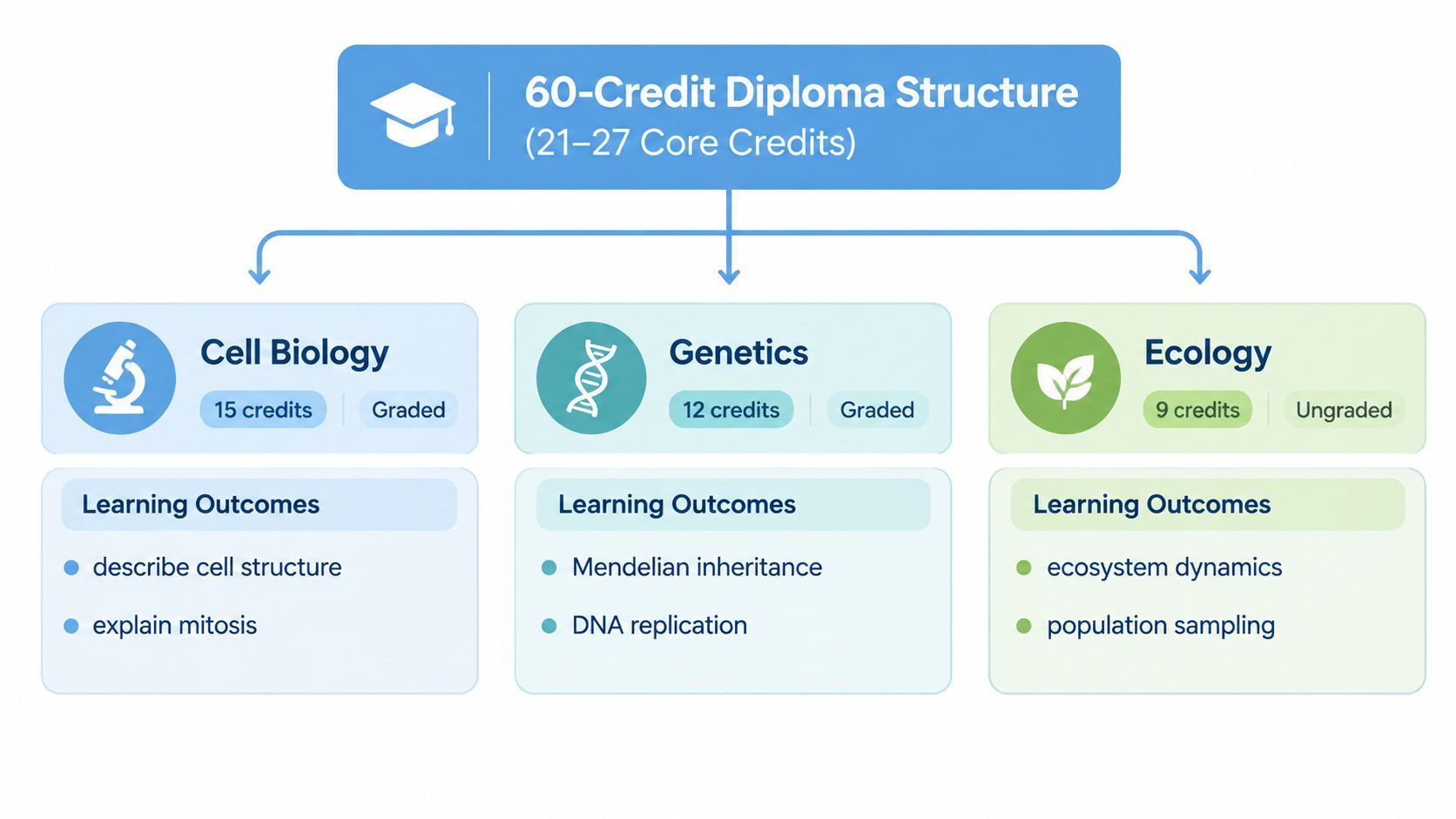
The diploma contains 60 credits, made up of 45 graded credits and 15 ungraded credits, as set out in the national Access to HE framework. Providers organise those credits into units, so a Biology pathway might include cell biology, genetics, human physiology, biochemistry, microbiology, ecology, chemistry and academic skills.
The qualification is broadly comparable with three A-levels, but the learning experience is different. A learner may study cell biology through assignments and laboratory-related work, then demonstrate understanding by explaining membrane transport, comparing cell structures or interpreting experimental findings. That type of work resembles the academic thinking expected during the early stages of a biology degree.
Practical rule: A university won't assess the word “biology” on the course title alone. It will check the credits, grades and subject units listed on your transcript.
For an adult learner, the important distinction is that Access to HE Biology provides a concentrated preparation route. It doesn't pretend you've had years of laboratory teaching. Instead, it gives you structured opportunities to learn scientific vocabulary, write academically, interpret evidence and show that you're ready for higher-level study. The sections on modules, applications and university requirements will help you judge whether a particular diploma matches your intended degree.
Who the Biology Access Diploma Is Designed For
The Biology Access Diploma is mainly intended for adults aged 19 or over who want to enter higher education but don't have the usual A-level profile. You might be changing career after caring for children, working as a healthcare assistant and aiming for a professional health degree, or returning to education after a long break.
It can also suit learners who have studied a vocational qualification but need more biology or chemistry before applying. Someone with a BTEC or T-level background may have useful practical experience but still need specific Level 3 biology units for a university application. International applicants may also explore Access study if their existing qualifications don't match a university's UK entry requirements, although each institution will assess previous study individually.
How it differs from other routes
A-levels normally spread subject learning across a longer school-based programme and often expect students to study several subjects together. Access study compresses preparation into an intensive adult-focused route, so you'll need consistent weekly study time.
BTECs tend to combine applied learning, practical tasks and broader vocational outcomes. An Access Biology Diploma can be more narrowly aimed at university progression and may place greater emphasis on academic writing, scientific explanations and subject-specific grading.
Functional Skills English and Maths are useful for building a foundation, but they generally don't replace the Level 3 science preparation universities expect. They may help you meet basic English and Maths entry conditions, yet they don't demonstrate that you've studied cell biology, genetics, chemistry or laboratory science.
| Qualification | Duration | Level | Best suited for |
|---|---|---|---|
| Access to HE Biology | Usually intensive adult study | Level 3 | Adults preparing for university science or health degrees |
| A-level Biology | Usually a longer school-based programme | Level 3 | Learners following a traditional academic route |
| BTEC Applied Science | Varies by qualification and provider | Often Level 3 | Learners seeking applied or vocational science preparation |
| Functional Skills | Flexible and varies by level | Below Level 3 | Learners strengthening English or Maths foundations |
The diploma assumes you may be rusty, not incapable. A good provider should help you develop confidence with essays, referencing, revision and scientific language while you learn the biology itself.
Core Modules, Credits and Learning Outcomes
The value of a Biology Access Diploma lies in the detail behind its title. Two courses may both mention biology but offer different combinations of units, so check the specification before applying for university. A suitable pathway commonly combines biology-specific study with chemistry or another science and academic preparation.
A typical structure may include 21 to 27 credits in biology-focused units, 15 to 21 credits in chemistry or a related science, with the remaining credits covering skills such as research methods, essay writing, referencing and examination technique. These figures describe the structure outlined in the course brief, not a universal timetable. Providers can organise units differently within the regulated framework.
What the biology units should help you do
The best way to judge a module is to ask what you'll be able to explain or apply after completing it.
- Cell biology: Describe cell structures, explain the function of organelles and distinguish active from passive membrane transport.
- Genetics: Use a Punnett square to explore Mendelian inheritance, explain DNA replication and connect genes with protein synthesis.
- Human physiology: Relate the respiratory, circulatory, nervous and musculoskeletal systems to the maintenance of a stable internal environment.
- Biochemistry: Explain how enzymes work, interpret factors affecting reaction rates and connect molecules with cellular processes.
- Microbiology: Compare microorganisms, discuss infection and consider how laboratory evidence supports biological conclusions.
- Ecology: Describe ecosystem dynamics, explain population sampling and evaluate relationships between organisms and their environment.
The 45 graded credits contribute to the overall diploma profile. The 15 ungraded credits usually support preparation, research and study skills, but they still matter. University work involves clear written arguments, reliable referencing, data interpretation and independent planning. A learner who understands biology but can't structure a lab report will need extra support once the degree begins.
Assessment may award Distinction, Merit or Pass grades for graded units. The grading system uses specified Level 3 criteria, so ask the provider how each university's requested profile translates into unit grades. Your tutor can also help you choose modules that meet a target course's science conditions.
Entry Requirements, Applications and Assessment
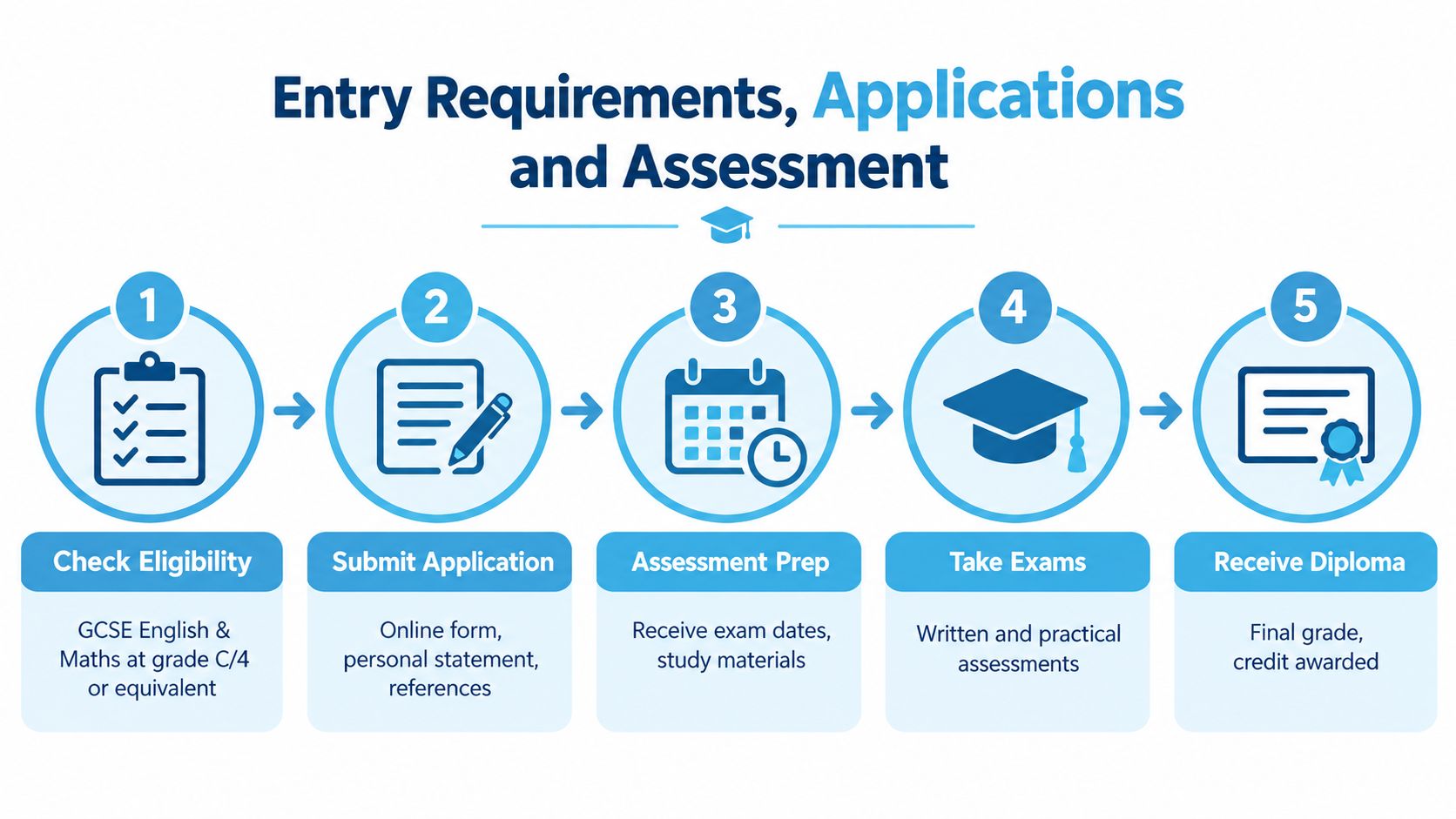
Start with the requirements rather than the course marketing. Many providers ask for GCSE English and Maths at grade C or 4, or an accepted equivalent, alongside evidence that you're ready for intensive study. Functional Skills, Key Skills and other equivalents may be accepted, but universities can apply separate GCSE conditions later.
A sensible application sequence
- Check your starting position. List your existing qualifications, including GCSEs, Functional Skills, BTECs, overseas awards and relevant work experience. Be honest about gaps in Maths, English and science.
- Choose an approved provider. Confirm which awarding organisation validates the diploma, such as Ascentis or Open Awards, and ask whether the science units match your intended university route.
- Ask universities before enrolling. Send admissions teams the exact module list and ask whether they accept that diploma for Biology, Biomedical Science or your chosen health degree.
- Complete the provider's assessment. An initial assessment may check literacy, numeracy, study habits and readiness. It isn't a judgement on your potential. It helps identify support needs.
- Plan around assessment. Graded work can include assignments, short-answer questions, laboratory reports and portfolio tasks. Preparation units may be ungraded, while credit accumulation is tracked across the diploma requirements.
You'll need to keep copies of your qualification evidence and respond promptly when a provider asks for documents. University applications also require careful personal statement planning, particularly if your recent experience is professional rather than academic. This guide to applying to university after an Access course can help you organise the application stage.
The diploma's assessments test more than memory. A cell biology assignment might require a structured explanation supported by sources, while a lab report tests method, results, evaluation and presentation. Your course team should explain marking criteria before submission and provide feedback you can use in later units.
Progression Routes Into Biology and Related Degrees
An Access to HE Biology Diploma can lead to more than a single BSc Biology application. The strongest route depends on your module choices, grades and the admissions rules for each institution. Biology-related options may include Biology, Biomedical Science, Zoology, Marine Biology, Pharmacology, Nursing, Midwifery, allied health and primary education with a biology specialism.
The qualification works because it gives universities recent evidence of academic study. An adult applicant may not have the same school-leaving profile as an 18-year-old, but a strong diploma can demonstrate current writing, research, science and time-management skills. Access Diplomas also carry UCAS Tariff points equivalent to three A-levels, although universities may still specify particular credits or grades rather than relying only on tariff points.
Matching routes to your preparation
| Degree route | Typical grade profile | Why Access fits |
|---|---|---|
| Biology | Often a strong Level 3 science profile | Builds knowledge of cells, genetics, physiology and ecology |
| Biomedical Science | Strong grades with relevant human biology and chemistry | Connects biological principles with disease and laboratory science |
| Zoology or Marine Biology | Strong biology content, sometimes with additional science | Supports study of organisms, evolution and ecological systems |
| Pharmacology | Strong biology and chemistry preparation | Develops a foundation for drug action and biological mechanisms |
| Nursing or Midwifery | Requirements vary, with some courses accepting Merit profiles | Shows recent academic capability alongside relevant experience |
| Allied health degrees | Course-specific science and grade conditions | Provides a structured bridge from adult learning to professional study |
Before choosing a provider, compare the actual units with the degree pages. The Access to HE Diploma Science pathway is one example of a route that includes biology-related areas such as human cell biology, DNA and protein synthesis, cell division, plant biology, respiration, circulation, the nervous system and the skeletal and muscular systems.
National participation data also shows why adult routes matter. In the UK, 47% of people had entered higher education by age 25 in 2020/21, compared with 45.2% the previous year, according to the University of Leeds repository summary of UK higher education participation evidence. That broad expansion hasn't removed unequal access, so an adult-friendly route remains important for people whose earlier education didn't lead directly to university.
University Requirements and the Hidden Science Barrier
A diploma can be accepted in principle but still fail to meet a particular course's conditions. This is the hidden science barrier. The university may welcome Access applicants while requiring specific biology, chemistry or maths credits that your chosen pathway doesn't contain.
Some pure science courses ask for a substantial number of Level 3 credits at Distinction, including chemistry or maths. Biomedical Science courses may prioritise human biology and chemistry, while nursing and some health degrees can accept a lower grade profile. These are broad patterns, not universal rules, so treat them as questions to investigate rather than guarantees.
Read requirements like an admissions tutor
Look for four details on every course page:
- Credit quantity: Does the course request a particular number of Level 3 credits?
- Grade profile: Are Distinctions required in all science units, or only selected modules?
- Subject content: Does “science” mean biology specifically, or must it include chemistry, physics or maths?
- Existing qualifications: Can the Access Diploma replace GCSE requirements, and must those GCSEs be held when you apply?
| Course type | Typical Access grade ask | Science barrier note |
|---|---|---|
| General Biology | Strong Level 3 biology profile | Chemistry or maths may be required for some institutions |
| Biomedical Science | Strong profile with human biology content | Combined or insufficient science content may be rejected |
| Zoology or ecology | Strong biology profile | Ecology alone may not satisfy laboratory science conditions |
| Nursing and midwifery | Often varies by institution and may include Merit profiles | GCSE English, Maths and science conditions can remain separate |
| Allied health | Course-specific | Professional accreditation can make requirements particularly precise |
The University of York Biology course information illustrates why checking the exact page matters. University requirements can specify A-level Biology or Chemistry and may set separate conditions for Access applicants. The broader participation picture also contains a warning: UK figures reported that only 3% of disadvantaged 18-year-olds entered highly selective universities, while participation differed sharply by background, including around 10% of disadvantaged white British men compared with higher participation among several other heritage groups, as detailed in the University of Essex repository source.
Ask admissions teams for a written answer where possible. Keep the response, module list and grade conditions together, then discuss them with your tutor before selecting units.
Funding, Fees and Support for Adult Learners
Funding is often the first practical concern after entry requirements. Eligible UK learners aged 19 and over may be able to use an Advanced Learner Loan to cover the full course fee. The loan doesn't require a credit check, and the balance is written off when the learner successfully completes an eligible higher education degree. Check current eligibility and course approval directly with the provider and the relevant government funding service, because personal circumstances and course status affect entitlement.
Compare the main options
| Funding route | Eligibility | Typical coverage | Key caveat |
|---|---|---|---|
| Advanced Learner Loan | Eligible adult learners on an approved course | Course fees | Repayment and write-off conditions apply |
| Instalment plan | Learners able to pay gradually | Fees spread over an agreed period | Confirm total cost and payment dates |
| Employer sponsorship | Employees whose study supports workplace development | Some or all fees, depending on employer | Employer approval is usually required |
| Jobcentre Plus support | Some learners receiving benefits | May support training costs or participation | Speak to your work coach before enrolling |
| Disabled Students' Allowance | Eligible disabled learners | Study-related support costs | It doesn't normally pay tuition fees |
Budget for items outside the headline fee. Depending on the provider, you may need textbooks, stationery, laboratory materials, travel for practical sessions or resit charges. Ask for a complete cost breakdown before accepting an offer.
Adult learners should also ask about reasonable adjustments, accessible digital materials, tutor response times, academic writing feedback and support for caring or work commitments. The Access to HE key statistics report records 23,290 Access to HE students entering higher education in 2021-22, and Biological and sport sciences represented 16.2% of subject starts, according to national Access to HE statistics. That provides useful context for the route, but it doesn't replace checking the outcomes and support offered by your chosen provider.
If you're exploring healthcare progression as well as biology, ProMed Certifications' scholarship advice offers a useful starting point for researching external financial support. Access Courses Online provides online Access study, tutor feedback, study-coach check-ins and dedicated SEND provision, so ask how those services operate before enrolling.
Study Tips, Sample Study Plan and FAQs
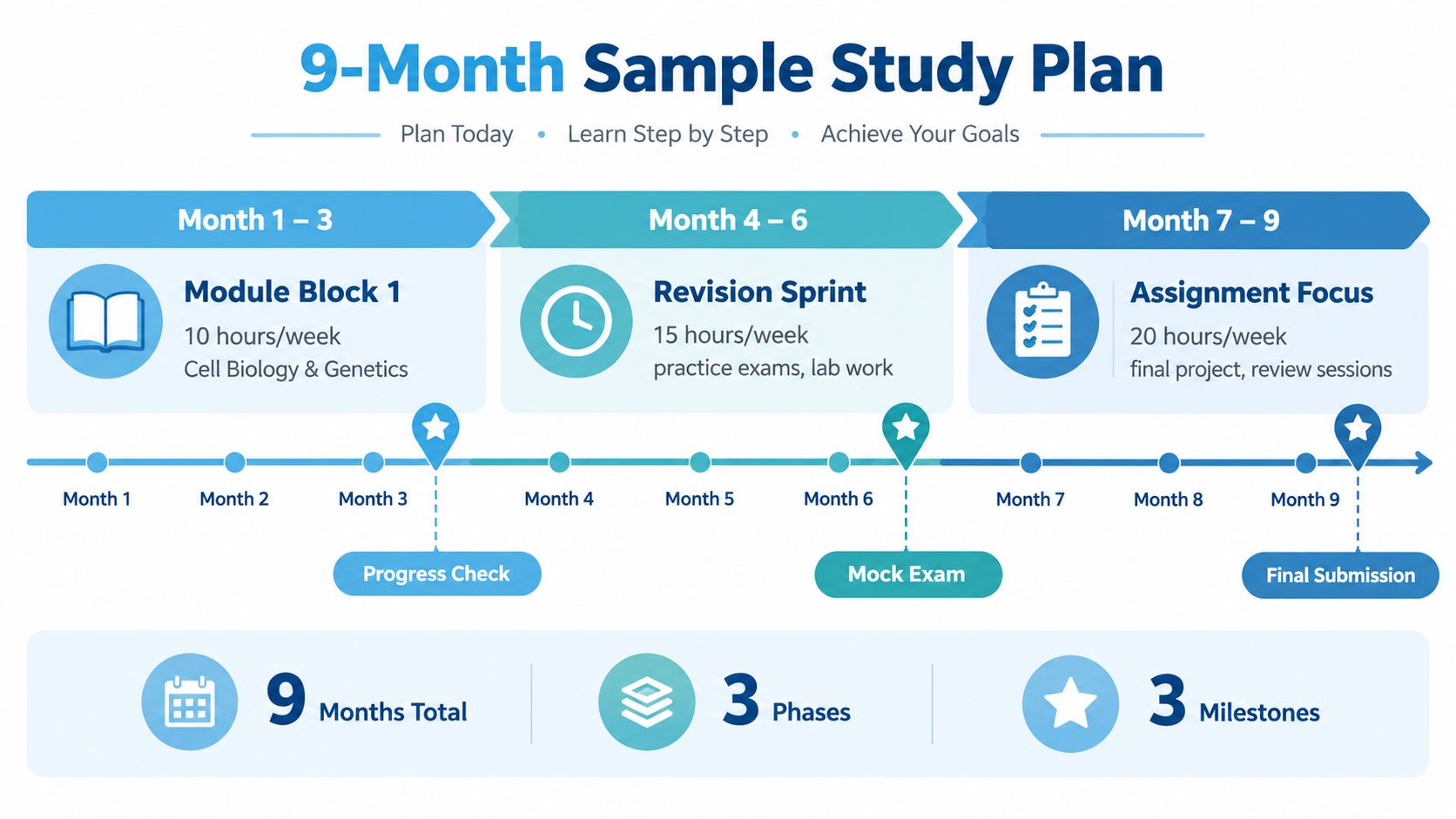
A biology diploma becomes manageable when you plan around your real life rather than an imaginary timetable. If you work or care for relatives, protect regular study blocks and treat assignment deadlines as fixed appointments. The sample below is a planning model, not a promise that every course follows the same calendar.
| Period | Main focus | Suggested approach |
|---|---|---|
| Months 1 to 3 | Cell biology and genetics | Build a glossary, practise diagrams and review notes each week |
| Months 4 to 6 | Revision and practical preparation | Use active recall, practise questions and review tutor feedback |
| Months 7 to 9 | Assignments and final submissions | Protect longer study blocks, edit carefully and check references |
Study methods that suit biology
Don't reread a chapter repeatedly and assume it has stayed in your memory. Cover the page and explain membrane transport, mitosis or DNA replication in your own words, then check what you missed. Use spaced repetition for terminology and keep a glossary that includes the term, a plain-English definition and a biological example.
Give more time to units carrying graded credits, but don't dismiss ungraded skills work. Weak referencing or unclear scientific writing can affect every later assignment. Practise under timed conditions when your course includes short-answer or examination tasks, and ask your tutor to identify the one improvement that would raise the quality of your next submission.
For a more detailed planning method, use this guide to creating a study plan and adapt it around your shifts, family commitments and assignment dates.
Questions adult learners ask
Can I work full-time while studying?
Many adults do, but the workload is demanding. An online or flexible course may make scheduling easier, yet you'll still need protected study time every week.
Is Access to HE Biology difficult?
It's challenging because the course compresses substantial science and academic skills into an intensive period. It becomes less intimidating when you study consistently instead of leaving biology terminology and assignments until the deadline.
How long does it take?
Many full-time programmes are completed within an academic year, while flexible providers may allow a different pace. Confirm the duration, submission windows and progression deadlines before you start.
What grade do universities want?
There's no single answer. Some courses ask for high Distinction profiles and named science units, while others accept different combinations. Use the university's written requirements, not general claims about Access grades.
Access to higher education biology is a practical route for adults who need recent science preparation and a recognised bridge to university. Choose the modules carefully, confirm requirements early and build study habits from the first week.
Access Courses Online offers flexible online Access to HE Diploma study, tutor feedback, study-coach check-ins and support for learners preparing for science and health-related university routes. Visit Access Courses Online to review the available pathway, check funding guidance and discuss whether the course matches your intended biology degree.