
So, you feel the calling to become a midwife but didn't go down the traditional A-level route? Don't let that stop you. The Access to Higher Education (Midwifery) Diploma is your direct, purpose-built pathway to university. This guide is your complete roadmap, designed to turn any uncertainty into a clear, actionable plan for your future.
Your Direct Pathway to Becoming a Midwife
The journey to becoming a midwife is a deeply rewarding one, built on compassion, skill, and sheer dedication. But for many adult learners or career changers, the path can seem confusing, especially if you don't have A-levels. This is exactly where an Access to Higher Education Diploma in Midwifery comes in.
Think of this qualification not just as an alternative, but as a specialist route designed specifically with you in mind. It zooms in on the exact knowledge and academic skills that universities look for in aspiring midwifery students. This laser focus ensures you are thoroughly prepared for the rigours of a degree, making it a highly respected qualification by admissions tutors across the country.
Answering a Critical Need
Your ambition to join this profession has never been more vital. The UK is facing a real challenge, with a shocking 12.5% decrease in the number of newly qualified, UK-educated midwives joining the professional register. This highlights a critical shortage and just goes to show how valuable dedicated training pathways like this one are.
This guide will walk you through every stage, covering the essentials of your journey:
- Understanding the Course: We'll break down what the diploma involves and why it's so effective.
- University Applications: Get the inside track on mastering your UCAS application and personal statement.
- Funding and Flexibility: Learn how to make your studies affordable and manageable around your life.
- Actionable Next Steps: We’ll give you a clear plan to get started on your path, right now.
To really nail down your pathway, it's also crucial to understand the fundamental difference between a Doula and a Midwife. Getting clear on these roles from the start ensures your career goals align perfectly with the qualification you're pursuing. Our goal here is to give you a clear, encouraging, and supportive plan for the incredible career ahead of you.
Understanding the Access to HE Midwifery Diploma
So, you’re thinking about becoming a midwife, but the traditional route feels out of reach. What exactly is this Access to HE Midwifery Diploma everyone talks about?
Think of it as your dedicated, fast-track route to a university midwifery degree. It’s a nationally recognised Level 3 qualification, which puts it on the exact same academic footing as taking three A-levels. Simple as that.
But here’s the crucial difference. While A-levels cast a wide net across various subjects, the Access to Higher Education (Midwifery) Diploma is designed with a single goal in mind: preparing you for a midwifery degree. Every single module has been handpicked to give you the knowledge and study skills you'll need from your very first day at university. This is why universities across the UK not only accept it but genuinely value it.
How the Credits Work
The diploma’s structure is straightforward and designed to show universities you’re ready. Every Access to HE course is built from 60 credits, which are broken down to cover both your subject knowledge and your academic abilities.
- 45 Graded Credits: These are the heart of your course. They come from core subjects directly linked to midwifery, like Human Biology and Health Studies. Your final grade is based on how you do here, with marks of Pass, Merit, or Distinction.
- 15 Ungraded Credits: These modules focus on sharpening your academic toolkit. You'll cover things like how to write a university-level essay, research effectively, and think critically. They're essential for a smooth transition to higher education.
This system gives university admissions tutors a crystal-clear picture of what you’re capable of, making it a qualification they know and trust.
A Qualification You Can Rely On
One of the first questions people ask is, "Is this qualification legitimate?" The answer is a resounding yes. All Access to HE Diplomas are regulated by the Quality Assurance Agency for Higher Education (QAA). This is the very same independent body that keeps an eye on the quality and standards of UK universities.
The QAA’s job is to make sure every Access to HE course meets strict national standards. This guarantees that your diploma is a high-quality, respected qualification that properly prepares you for university-level study, no matter where you complete it.
This official oversight means you can be confident that all your hard work will lead to a qualification that truly opens doors. When universities see that QAA seal of approval, they know you're ready for the challenge ahead. You’re not just earning a certificate; you’re completing a robust, regulated course built specifically to launch your career in midwifery.
What You Will Learn on Your Midwifery Access Course
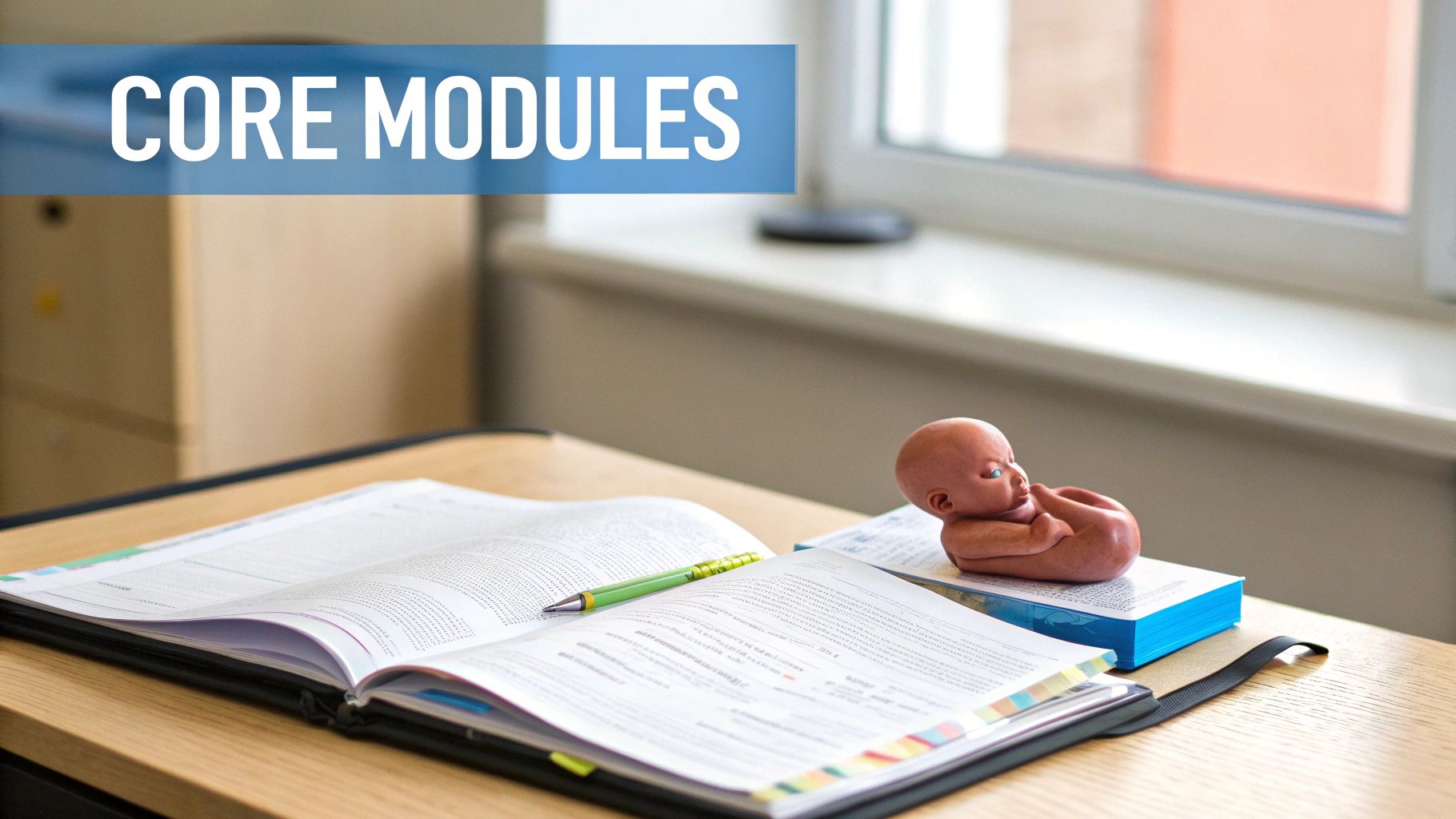
Starting your Access to Higher Education Midwifery course is like being handed the exact blueprint you need to succeed at university. This isn't just a random collection of topics; it's a programme that’s been carefully put together to build your knowledge from the ground up. The goal? To make sure you’re not just ready for your degree, but ready to thrive.
The course is broken down into core modules, and each one has a very specific job to do. You won't just be memorising facts for the sake of it. Instead, you’ll learn to connect theories and concepts directly to what midwives do every single day. This is how abstract knowledge transforms into practical, career-defining skills.
Core Subjects You Will Master
The subject-specific modules really are the heart of your diploma. They give you the scientific and social foundations that modern midwifery is built on. Think of them as the essential pillars holding up your future degree studies.
You can expect to get stuck into subjects like:
- Human Biology: This is where it all begins. You'll cover everything from how cells work and the basics of genetics to the incredible details of human anatomy and physiology. Understanding the body is absolutely fundamental to understanding pregnancy, birth, and postnatal care.
- Health Studies: Here, you'll zoom out and look at the bigger picture of healthcare in the UK. This could include topics like the structure of the NHS, public health campaigns, and the social factors that can impact the health of mothers and babies.
- Psychology: This module prepares you for the deeply human, compassionate side of being a midwife. You’ll learn about human development, behaviour, and the powerful psychological journey of pregnancy and birth, giving you the tools for truly patient-centred care.
These subjects aren't taught in separate boxes, either. You’ll constantly be encouraged to see the links between them, building a rich, connected understanding of what it means to be a midwife. To get a real taste of how we teach, you can see what it's like to study online with a registered midwife and check out a sample lesson.
Developing Essential Academic Skills
Alongside these core subjects, your Access course is designed to sharpen the academic skills you'll lean on heavily at university. This is a crucial part of the diploma that really sets you up for success.
You will be assessed through a series of assignments rather than final exams. This method is designed to build your confidence and skills progressively, focusing on essays, reports, and presentations that hone your critical thinking, research abilities, and academic writing.
You’ll also have timed assignments to get you comfortable with the pace and pressure of university assessments. By the time you finish your diploma, you won't just have the specialist knowledge for a midwifery degree; you'll have the practical academic toolkit you need to hit the ground running from day one.
Navigating the UCAS Application and University Entry
Once you’ve got your Access to HE Diploma underway, the next big milestone is turning all that hard work into an actual university offer. This is where you’ll bring your passion, experience, and new academic skills together in your UCAS application – the central hub for applying to all UK universities.
The whole process can feel a bit daunting at first, but it’s really just a structured way for you to showcase your potential. Your Access course provider will be there to support you, helping you fill out the forms, providing your predicted grades, and writing that all-important academic reference that admissions tutors rely on.
Decoding University Entry Requirements
As you start looking up midwifery degrees, you'll see they have specific entry requirements. A very common offer for students with an Access to HE Diploma will look something like this: "Pass the Access to HE Diploma with 45 credits at Level 3, including 30 credits at Distinction and 15 at Merit."
This is simply the university's way of setting its academic bar. They aren’t just looking for a pass; they want to see solid proof of high achievement in your graded assignments. This is exactly why it’s so vital to aim for the best grades you can on every single piece of work, right from day one.
On top of your diploma, universities will almost always ask for GCSEs in Maths and English at Grade 4/C or higher. It's a really good idea to check these requirements early on and make sure you have these qualifications sorted before you hit 'submit' on your application.
Crafting a Powerful Personal Statement
Your personal statement is your one big chance to speak directly to the admissions tutors. Think of it as much more than just a list of your qualifications. It's your 4,000-character story explaining why you are the perfect person for their midwifery course.
This is where your life experience becomes your biggest advantage. Admissions tutors are especially interested in hearing from mature students who can show resilience, empathy, and a real, grounded understanding of what being a midwife actually involves.
Use your statement to:
- Explain your passion: Why midwifery? What specific moments or experiences lit that fire in you to pursue this career?
- Showcase relevant experience: Connect any volunteer or work experience directly to the skills a midwife needs. Have you supported people, communicated with vulnerable individuals, or worked in a care setting? Talk about what you learned from it.
- Demonstrate you’ve done your homework: Show that you've researched the profession. Mentioning things like the NMC Code of Conduct or the "6 Cs" of nursing and midwifery proves you have genuine insight.
Standing Out as a Mature Applicant
Recent data shows that while overall midwifery recruitment has seen a small 3% increase, this was driven entirely by a 22% jump in applicants under 21. This actually points to a unique opportunity for mature students to fill a crucial experience gap. You can find the full report and explore more on healthcare student trends on the Office for Students website.
Your life experience isn't just a bonus; it's a core part of your application. Frame your journey as a strength. Whether you've raised a family, managed a team, or changed careers, you bring a level of maturity and perspective that is invaluable in midwifery.
The UCAS system uses a tariff to turn qualifications into points, which helps universities compare applicants. To get a clear idea of how your grades will translate, check out our detailed guide on how Access course UCAS points are calculated. By planning your application strategically and telling your unique story, you can make an impression that they won't forget.
How to Fund Your Course and Study Flexibly

Let's be honest, two of the biggest hurdles for anyone thinking about returning to education are almost always time and money. Juggling your current life while figuring out how to pay for a course can feel like a massive challenge, but this is exactly what modern learning is designed to solve. An Access to Higher Education Midwifery course is far more within reach than you might think.
The secret is knowing your options. For many people, the financial side is the biggest worry, but there’s a government-backed solution made specifically for courses like this. At the same time, the boom in flexible online learning means you no longer have to choose between your current commitments and building your future career.
Funding Your Access to HE Diploma
The most straightforward way to cover your course fees is with an Advanced Learner Loan. This is a government loan designed for people aged 19 and over who are studying approved Level 3 qualifications, which includes the Access to HE Diploma.
It’s best to think of it less like a traditional loan and more like a smart investment in your future. You only start paying it back once you’re earning over a certain salary, and even then, the repayments are linked to your income. But for aspiring midwives, here’s the game-changing part:
Student Finance England will completely write off your outstanding Advanced Learner Loan balance once you go on to complete a higher education course, such as your midwifery degree. This means your Access course effectively becomes free upon graduation from university.
This incredible offer removes the financial barrier for thousands of students, making a professional career in healthcare genuinely achievable. For a deeper dive, you can learn all about the specifics of funding for your Access to Higher Education course.
The Freedom of Flexible Online Study
Beyond the finances, there’s the question of time. How on earth do you fit studying around a job, childcare, or everything else life throws at you? This is where the flexibility of online learning really shines.
Providers like Access Courses Online put you firmly in the driver's seat of your own education. Forget rigid term times and having to be in a classroom at a set time; you can study whenever and wherever works for you.
- Study at Your Own Pace: Squeeze in modules in the evenings, chip away at assignments on weekends, or use any spare moment you can find.
- No Commuting: You’ll save a huge amount of time and money by being able to learn from the comfort of your own home.
- Fit Learning Around Life: You can keep earning and looking after your family without having to press pause on your career goals.
This way of learning is so important in a field like midwifery, where student debt can be a real concern. As the Royal College of Midwives has pointed out, the removal of bursaries has left many new midwives facing significant debt before they’ve even started their NHS careers. Flexible online study helps you manage your money and your life, setting you up for a much more stable start to university and your new profession.
Your Action Plan for Starting Your Midwifery Journey
Feeling inspired? Let's turn that excitement into a clear, straightforward plan. Kicking off your access to higher education midwifery journey is a huge step, and breaking it down into manageable actions makes the whole process feel less overwhelming and much more achievable. Think of this as your personal roadmap to getting started.
The very first step is always research. Start by making a shortlist of universities you’d love to attend and then dig into their specific entry requirements for midwifery degrees. Take note of what they ask for in terms of GCSEs (it's usually English and Maths) and the exact grades they expect from an Access to HE Diploma.
Building Your Application and Experience
Next, it’s time to look into Access to HE course providers. Keep an eye out for flexible online options, as these let you fit your studies around your life, not the other way around. At the same time, start thinking about how you can get some relevant experience. This doesn't have to be in a hospital setting; it could be volunteering with a local family support charity, helping out at a breastfeeding support group, or any role where you're providing care and communicating with compassion.
This kind of hands-on experience is gold for two big reasons:
- It confirms your passion: Getting a real-world taste of the field helps you know for sure that midwifery is the right path for you.
- It strengthens your application: It gives you powerful, concrete examples to talk about in your personal statement and during interviews.
The journey to becoming a midwife is tough, but it's also one of the most rewarding careers out there. The level of commitment needed is why dropout rates can be a concern, with around 15% of students not completing their courses. Building a solid foundation of experience and academic readiness through your Access course is the best way to make sure you’re prepared to not just start, but to succeed. You can discover more insights on the challenges in midwifery education in the UK.
Your journey will demand dedication, resilience, and top-notch organisation. To successfully balance your studies, placements, and personal life, developing robust effective time management strategies right from the start is absolutely essential.
Once you’ve done your research, started building your experience, and have your funding sorted with the Advanced Learner Loan, you can enrol on your course with real confidence. You'll know you have a clear, step-by-step plan to make your dream a reality.
Frequently Asked Questions About Midwifery Access Courses
Thinking about making the leap to university can bring up a lot of questions. It's completely normal! Here are some clear, straightforward answers to the most common queries we get about the Access to Higher Education Midwifery diploma, so you can plan your next steps with total confidence.
Do I Need GCSEs to Start an Access Course?
While you can often enrol on an Access course without them, it's a really important point to consider. Almost every university will require GCSEs in English and Maths at Grade 4/C or above to even consider you for a midwifery degree.
Our best advice? Try to get these qualifications sorted before or during your diploma studies. Some course providers, including us, offer equivalent qualifications that you can study alongside your main course, which is a great way to tick all the boxes at once.
How Long Does the Course Take?
Most of our students complete their online Access to HE Diploma in around 9 to 12 months. But one of the biggest benefits of learning online is the flexibility.
We typically give you up to two years to finish the course. This means you can genuinely study at a pace that fits around your life, whether that's juggling work, family, or other commitments.
This visual shows the simple three-step process to begin your midwifery journey: research, funding, and application.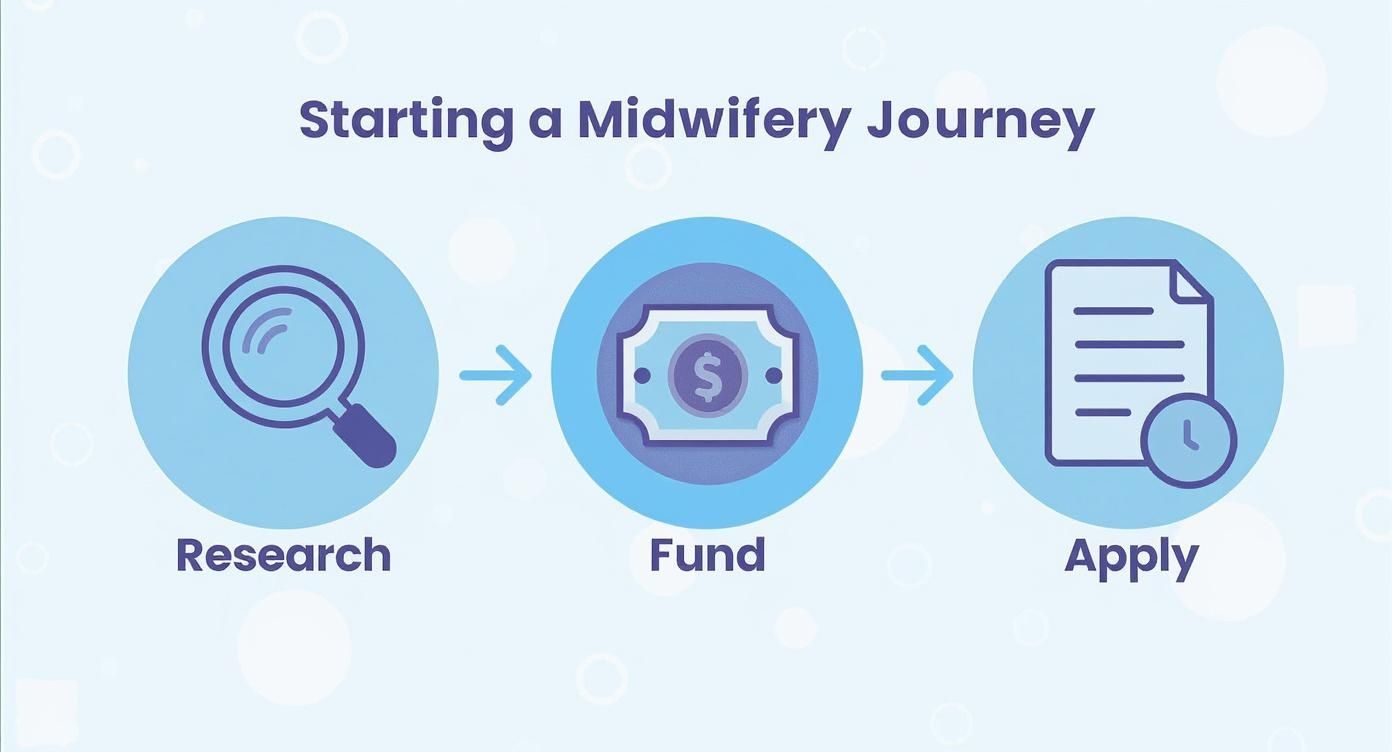
This process shows that with a bit of planning, the path to starting your studies is structured and totally manageable.
Are Access Diplomas Accepted by All Universities?
Yes, Access to HE Diplomas are widely recognised and accepted by universities all across the UK. They are a well-established route into higher education.
However, and this is crucial, you need to choose a high-quality, accredited provider. It’s also vital that you check the specific entry requirements for the universities you’re interested in. They can be quite precise about the grades and modules they want to see, so always do your homework first.
Ready to take that first, exciting step towards the career you’ve always wanted? At Access Courses Online, we provide accredited, flexible diplomas designed to fit around you. Explore our Access to HE Midwifery course and start your journey today.