
You're halfway through an Access to HE Diploma, you're juggling shifts or childcare, and the idea that “networking” means expensive events, awkward small talk, and a polished LinkedIn profile you don't have yet feels laughable. Meanwhile, you know you can't just submit applications and hope someone notices you. That gap, between being a serious learner and being visible to the people who can help you progress, is exactly where the right networking opportunities matter.
The good news is that networking isn't a personality test. It's a repeatable habit that works even if you're not confident, not extroverted, and not free on weekday evenings. If you can send a short message, follow up properly, and show up consistently in a couple of low-cost online spaces, you can build useful contacts without pretending to be someone else.
Why Networking Opportunities Matter When You Study Online
If you're studying online, it's easy to feel invisible. You do the work, submit the assignments, and keep going, but nobody outside your course knows what you're aiming for unless you tell them. That matters because careers don't usually move forward on merit alone. They move forward when the right people know what you're working towards.
Networking becomes a system when you stop treating it like a lucky break. You set a time, make a contact, follow up, and keep the relationship warm. That is a practical approach for adults with limited time, not a motivational slogan for people who already have spare evenings and a neat little industry circle.
Think in contacts, not charisma
You do not need to be naturally smooth. You need to be clear, brief, and consistent. A short message that explains who you are, what you're studying, and why you've contacted someone will always beat a vague “just connecting” request.
Practical rule: if you can't say why you're reaching out in two sentences, you're not ready to send the message yet.
That mindset suits online learners because it respects the schedule. You can build momentum in small blocks, and you can do it without pretending that confidence will magically arrive first. Confidence usually comes after the first few useful replies, not before them.
The point is simple. Networking opportunities are not optional extras for “natural networkers”. They're how isolated study turns into a visible plan.
The Payoff of Building Contacts in the UK
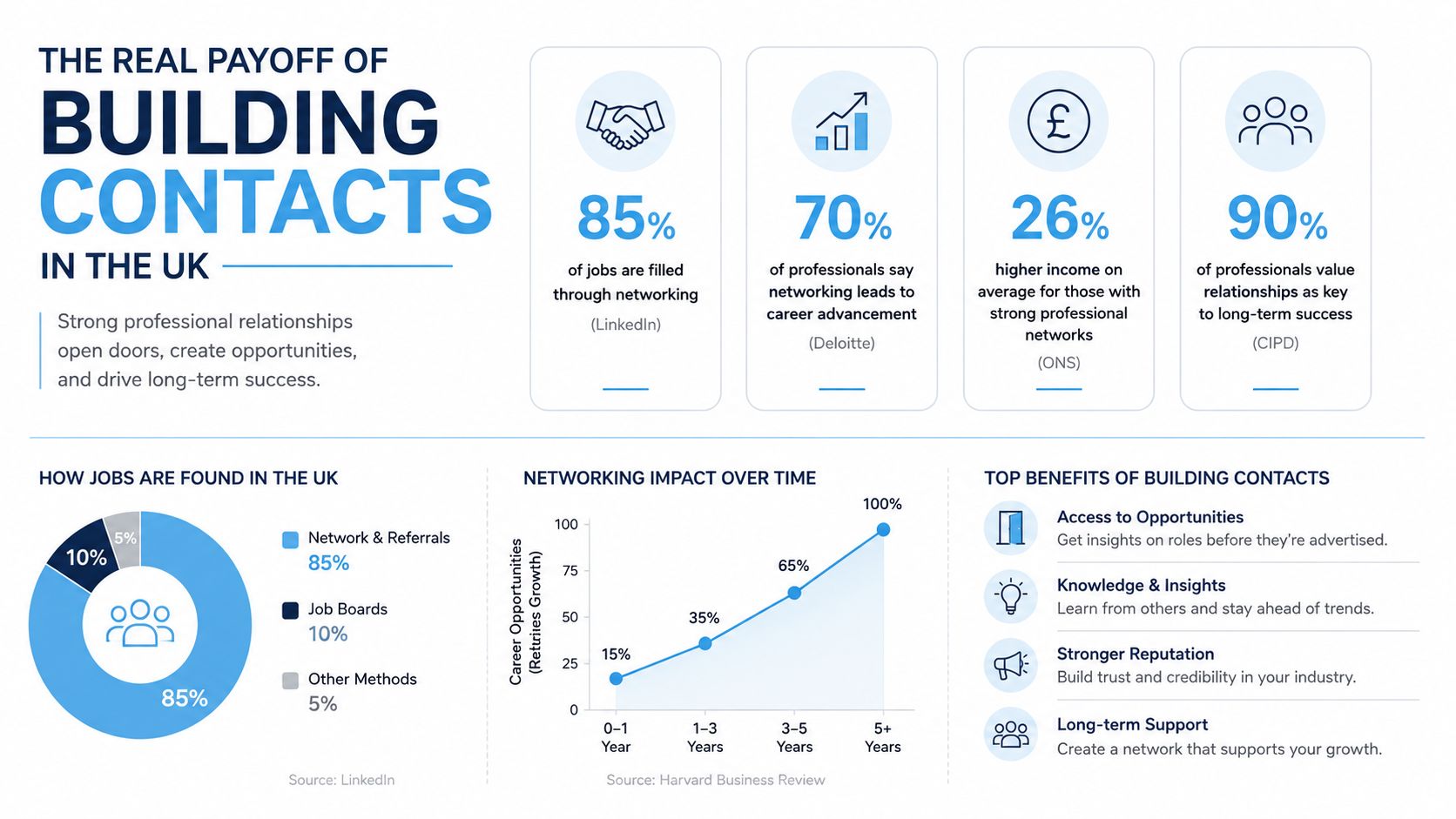
The UK job market already shows why this effort pays off. StandOut CV reports that 39% of UK workers found their job through their network, and 8 in 10 professionals believe networking is important for career success, while a 50% bigger professional network is associated with a 3.8% higher salary. The same source also says 72% of recruiters use LinkedIn to find new hires, which tells you exactly where a lot of opportunity is being noticed. Read those figures properly and the message is blunt. Networking affects both access and earnings in the UK labour market. StandOut CV's networking statistics
A regional business study from the West Midlands found that the average firm spent 8.5 hours per week on networking activities, which is a useful reality check. Businesses are not treating relationship-building as a side hobby. They treat it as part of sales, partnerships, and hiring, because that is how work gets done in a local economy. The UK networking data summary
The timing advantage
The value is not just “more contacts”. It is better timing and better access. If you are a learner trying to move into healthcare, business, science, social science, or computing, one conversation can tell you which route is realistic, which role is competitive, and which experience is worth chasing first.
A small network can beat a large silent one. A few people who know what you are studying, remember your name, and have seen you follow through will do more for you than a long list of people who barely recognise you. Build relationships before you urgently need them. That is the part many learners ignore until they are already applying and need a quick introduction.
Online Channels That Work Around Your Schedule
Start with channels that let you show up regularly. LinkedIn is the obvious one, but only if you use it with a purpose. A simple headline, a photo, and a short summary of what you're studying are enough to begin. You do not need a perfect CV to make your first useful connection.
If you want a practical way to keep posting without overthinking it, a tool like linkedin post scheduler can help you draft once and stay visible without living on the platform. That matters for adults who can't spend half the week checking feeds. For anyone still figuring out the basics of online study and flexibility, this overview of what distance learning is is a useful reminder that your schedule is supposed to work around real life, not the other way round.
Pick one or two channels, not six
Subject-specific Slack and Discord communities work when you already know the field you're moving towards. Join one group, read for a week, then answer one question or react to one thread. Professional body forums are better if you want a serious tone and sector-specific discussion, especially in regulated areas where informal chatter isn't enough.
University open-day groups and Access to HE learner communities are the most underrated starting point. They're lower pressure, and people there already understand that you may be changing direction, studying part-time, or building from scratch. If you want to keep the first message simple, use this shape:
- LinkedIn: “Hi, I'm studying an Access to HE Diploma and preparing for a [subject] degree. I liked your post about [topic], and I'd appreciate connecting.”
- Slack or Discord: “I'm new here and studying [subject] part-time. I'm here to learn from people already working in the field.”
- Professional forum: “I'm looking for a realistic entry point into [sector] and wanted to follow the discussion from a learner's perspective.”
- Learner group: “I'm balancing study with work and family, and I'd like to hear how others made their first useful contacts.”
That's enough. Short wins here. Long bios don't.
Turning Online Contacts Into Real Opportunities
Once you've made a digital connection, move it into a real-world context only when there's a sensible reason. Volunteering, taster days, short placements, alumni events, and local meetups all work better when you approach them as a contributor, not someone begging for a shortcut. That's especially important if you're still building confidence or don't yet have formal qualifications.
A good example is the learner who messages someone in their target field, then asks where that person would suggest getting a first look at the work. The reply often points to a taster day, a volunteer role, or an open event that is easier to attend than a full evening networking function. If you want a broader sense of how short experience fits into a learner journey, the advice on how to get work experience is worth reading before you start asking for opportunities.
Choose entry points that match your route
Healthcare learners can look at NHS trust open days and local service events. Computing learners should pay attention to British Computer Society events and local user groups. Business learners should check chamber of commerce evenings, enterprise groups, and community business forums. The point isn't to attend everything. It's to pick one route and show up where people can picture you in the field.
Useful test: if the event helps you understand the work, meet one relevant person, or hear how entry really happens, it's probably worth your time.
If you're worried about going alone, borrow the same thinking from making friends as a solo traveller. The useful habit is the same, arrive with one question, speak to one person, and leave with one follow-up. You do not need to dominate a room to make the visit count.
Timing matters too. Don't wait until the final week of the Diploma to start. Begin once you can speak clearly about what you're studying and what route you're aiming for. That gives you enough substance to talk with confidence, without pretending you already know everything.
Outreach Scripts and the 48-Hour Follow-Up Window
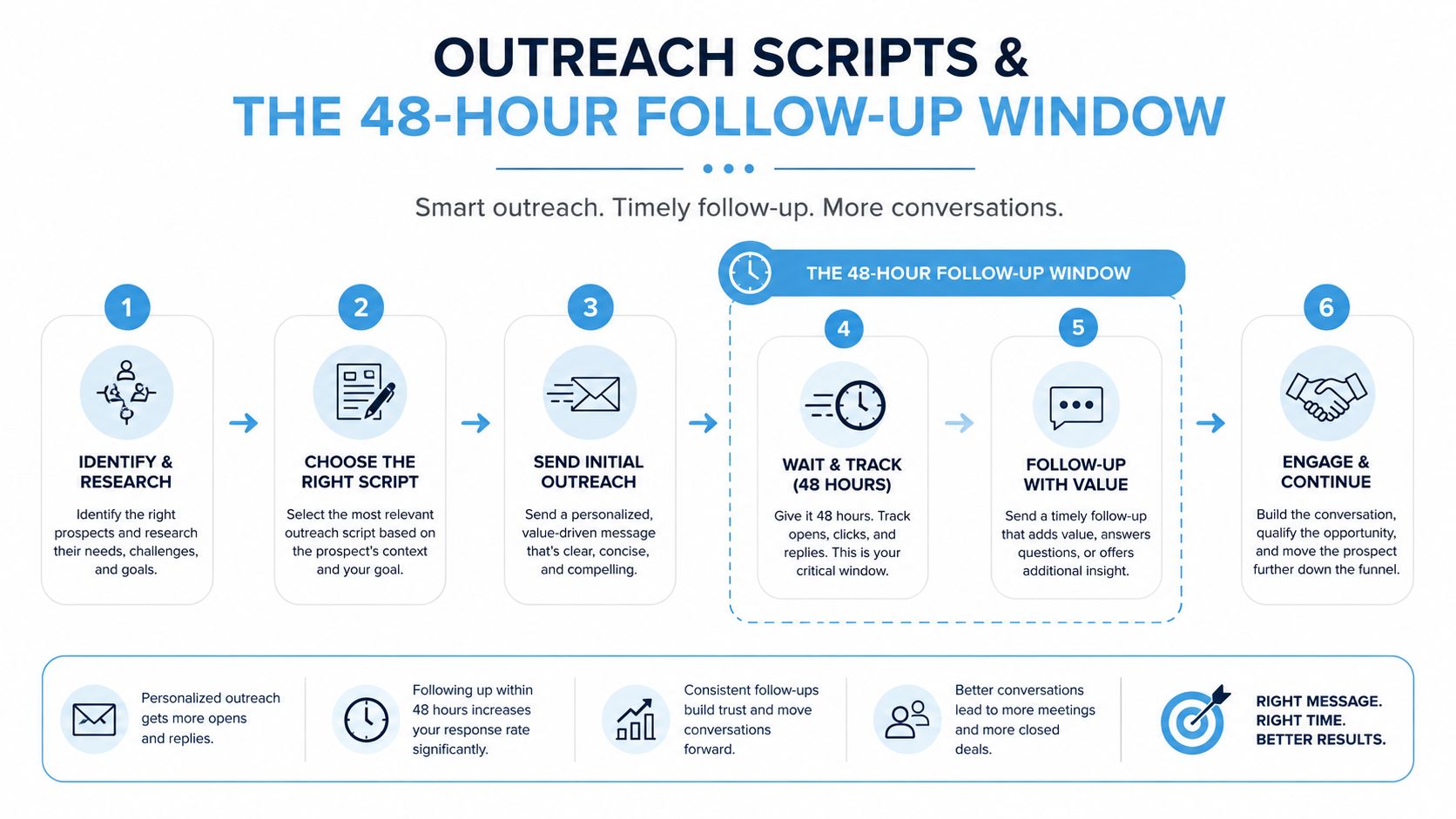
A learner sends a connection request to a healthcare professional on LinkedIn, gets accepted, and then freezes. That happens all the time. People stall because they think the first message needs to sound polished. It does not. It needs to be specific, brief, and easy to answer.
Use this shape:
“Hi [Name], I'm studying an Access to HE Diploma and preparing for [course or career path]. I noticed your work in [area], and I'd value connecting because I'm trying to understand what entry looks like from the learner side. If you're open to it, I'd love to ask one or two quick questions by message or a short call.”
That works better than a generic request because it gives context and shows respect for their time. A vague “let's connect” message tells the other person nothing. A personalised note tells them why you picked them, and that matters. If you want help making that kind of message more purposeful, cover letter help is useful reading because the same rule applies, be specific about why you chose that person.
Keep the ask small
Do not ask for a big favour first. Ask for a short conversation, a pointer to the next step, or one piece of advice. If they agree to a call, prepare three questions and keep the conversation tight. If they don't reply, send one polite follow-up after a short gap, then move on without taking it personally.
The timing rule matters. Follow up within 48 hours, because that is the window where momentum is still alive. Analysts behind Networking statistics on what works found that follow-ups within 48 hours convert 70% of new contacts into ongoing professional relationships, while waiting a week or longer drops conversion to 12%. The same source shows that personalised messages perform far better than generic ones in that window, 67% compared with 29%.
If you want to sound natural, do not overexplain. Try this when asking for time:
“Thanks for accepting my connection request. I'm trying to understand the route into [field], and I'd really value 15 minutes to ask how you approached your own start.”
That is clear, respectful, and not needy. It also gives the other person an easy yes or no.
Common Mistakes and a Weekly Rhythm That Sticks
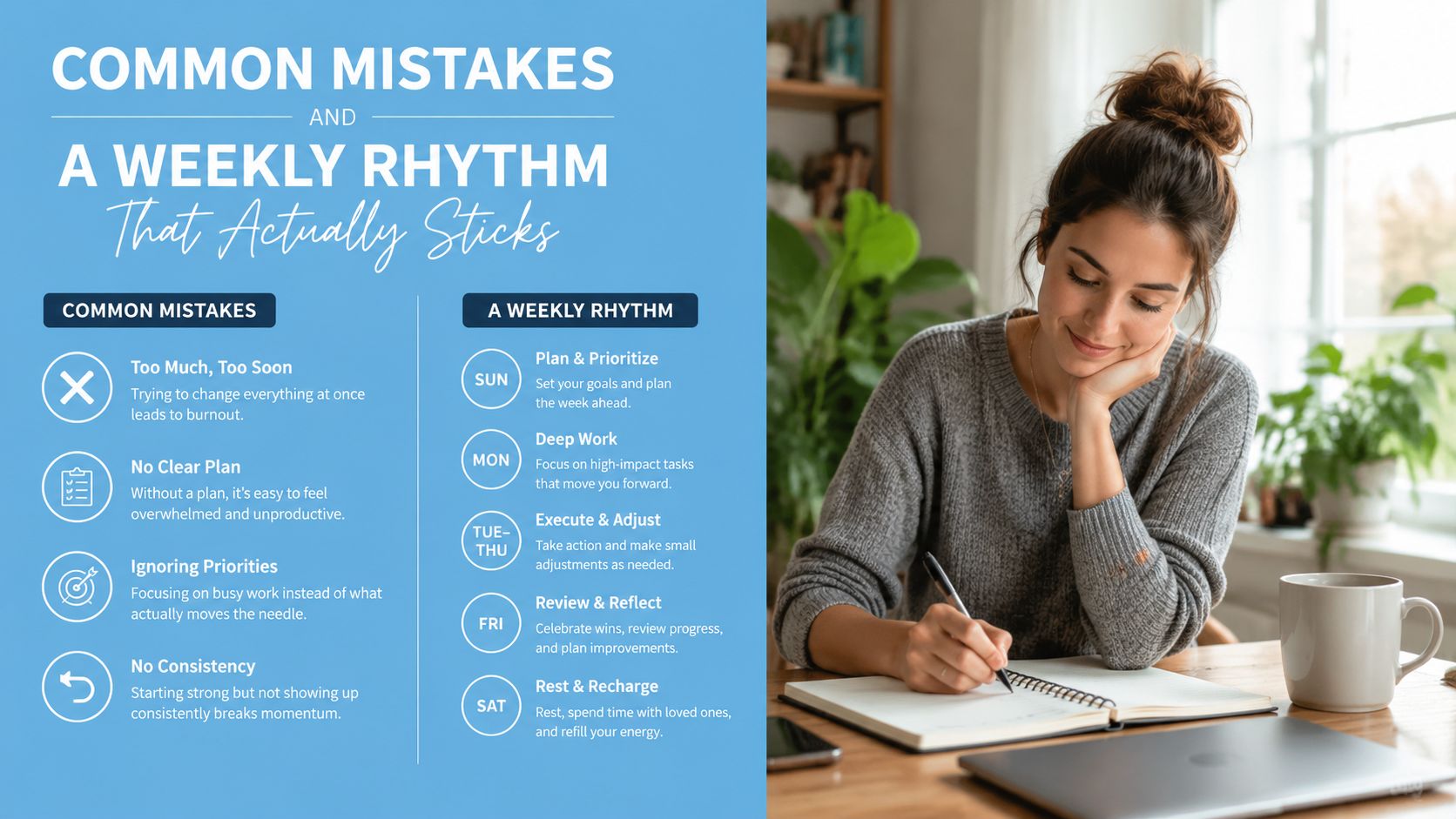
The biggest mistake is waiting until you feel ready. Adults do this all the time. They tidy the profile again, rewrite the summary again, and delay outreach because they think one more hour of preparation will make the first contact easier. It won't. Sending the message is what makes you better at sending the message.
Drop these habits now
Don't write essays in your messages. Don't treat networking like a one-off event and then disappear. Don't chase everyone. The goal is a steady rhythm, not productivity theatre.
A workable week looks like this:
- One introduction to a person, group, or forum.
- One follow-up to keep an earlier contact warm.
- One useful share such as a post, article, or question that helps the conversation.
- One event check to see what's available locally or online.
That rhythm is enough for most adult learners. It keeps the door open without swallowing the rest of your week. If you can protect roughly two hours for this, you're doing it properly. If you try to turn networking into a second job, you'll quit it.
The other mistake is sounding like a job seeker in every message. Lead with interest, not desperation. People respond better when you sound like someone who wants to learn, contribute, and build a sensible route into the field.
Your 30-Day Networking Plan and Frequently Asked Questions
Use the first week to get visible. Update your profile with your study area, add a clear photo, and write one short line about what you're working towards. Then choose one online channel and join it properly, not just as a lurker.
In week two, send three short introductions to people whose work matches your route. In week three, ask for one short conversation or attend one event, even if it's online. In week four, follow up with anyone who replied, note what worked, and repeat the strongest action. The point is not volume, it's proof that you can build contacts while you study.
Frequently asked questions
What if I feel like an imposter?
That feeling is normal, especially if you're returning to education after time away. Don't wait to feel legitimate. Your course enrolment, your commitment, and your willingness to learn are already part of your professional story.
What if nobody replies?
Send one follow-up, then widen the target a little. Many people are busy, not hostile. If a message goes cold, your next move is to contact someone else with a better fit, not to assume you've failed.
Are paid networking events worth it?
Only if the event gives you direct access to the kind of people you want to meet and you can realistically attend. If it drains your budget or pushes you into stress, choose free digital groups, open days, or local forums first.
The right next step is simple. Pick one channel today, send one message this week, and put one follow-up in your calendar for 48 hours later. That's how networking opportunities stop being abstract and start becoming part of your route to university and work.
Access Courses Online helps adults turn study into a real progression plan, especially when time, confidence, or past qualifications have made that harder than it should be. If you want flexible online study that fits around life and leads towards university, visit Access Courses Online and start mapping your next move with a course that works on your schedule.