
If an English GCSE is the last thing standing between you and your university ambitions, then you’ve come to the right place.
Choosing to study your English GCSE online is a brilliant, flexible way for adult learners to get this must-have qualification without completely turning their lives upside down. Think of it as the key that unlocks Access to Higher Education Diplomas and, from there, your university degree.
Why an Online English GCSE Is Your Smartest Route to University
For many adults, the idea of going back to a classroom just feels impossible. When you’re juggling a job, family, and everything else life throws at you, a rigid college timetable is the last thing you need. This is where online learning completely changes the game. It puts you firmly in the driver's seat, letting you fit your studies around your life, not the other way around.
And don't worry – universities absolutely recognise and value online GCSEs from accredited providers. They get that adult learners bring a wealth of life experience and a serious level of dedication. An English GCSE is usually a non-negotiable for getting onto an Access to Higher Education Diploma, which is the most common and respected way to get to university if you don’t have A-Levels.
If you're curious about that pathway, you can explore our detailed guide on getting into university without A-Levels.
The Qualification That Opens Doors
Getting that pass in GCSE English is about so much more than just ticking a box. It proves you have the literacy and critical thinking skills that are essential for studying at degree level. It’s especially vital for careers that are built on strong communication, like:
- Nursing and Midwifery: Where clear, empathetic communication can make all the difference to patient care.
- Social Work: Requiring the skill to write detailed reports and connect with people from all walks of life.
- Teaching: Where a mastery of language is the very foundation of the job.
It’s clear this qualification is more important than ever. In November 2023, the number of people taking the GCSE English language exam hit 60,365 – a massive 29% jump from the year before. This just goes to show how essential it is in today's world. You can dig into the numbers yourself in the UK government's exam entry statistics.
An online English GCSE isn’t just a piece of paper; it’s a smart investment in your future. It shows university admissions tutors that you’ve got the core skills needed to succeed in higher education and whatever career you choose.
To give you a clearer picture, here's a quick look at the main advantages of choosing an online study route for your English GCSE, especially for busy adult learners like you.
Key Benefits of Studying Your English GCSE Online
| Benefit | How It Helps You Succeed |
|---|---|
| Study On Your Terms | Fit learning around your job, family, and life. No need to quit your job or miss the school run. |
| Learn from Anywhere | All you need is an internet connection. Study from your sofa, a coffee shop, or on your lunch break. |
| Personalised Pace | Move through topics as quickly or as slowly as you need. Spend extra time on tricky areas without pressure. |
| Dedicated Tutor Support | Get one-on-one help from experienced tutors who understand the challenges adult learners face. |
| Cost-Effective | Save money on travel, childcare, and expensive campus resources. Online courses are often more affordable. |
As you can see, the online model is built to help you win.
Flexibility Designed for Your Life
The biggest win when you study your English GCSE online is the freedom it gives you. You can log on and learn after the kids are asleep, on your lunch break, or on a quiet Sunday morning. There’s no commute, no fixed class times, and no need to book time off work.
This modern way of learning is backed up by dedicated tutors who are there to give you feedback and guidance over email or virtual calls. You get all the academic support of a traditional college, but on a schedule that actually works for you. It turns that big dream of going to university into a realistic, manageable plan.
Choosing the Right Online Course and Exam Board
Deciding to study English GCSE online is a brilliant first step. Now for the next crucial part: finding the right partners for your journey. This means picking a solid online course provider and figuring out which exam board—usually AQA or Pearson Edexcel—is the best fit for you. Making the right choices here is key to ensuring your qualification is fully recognised and sets you up for success.
First things first, your chosen course provider must be accredited. This isn't just a nice-to-have; it's a guarantee that universities and employers will value your final grade. A good starting point is to look for providers on the UK Register of Learning Providers (UKRLP) and check out reviews from other adult learners who’ve been in your shoes.
This flowchart gives you a bird's-eye view of the path towards university and where your GCSE fits in.
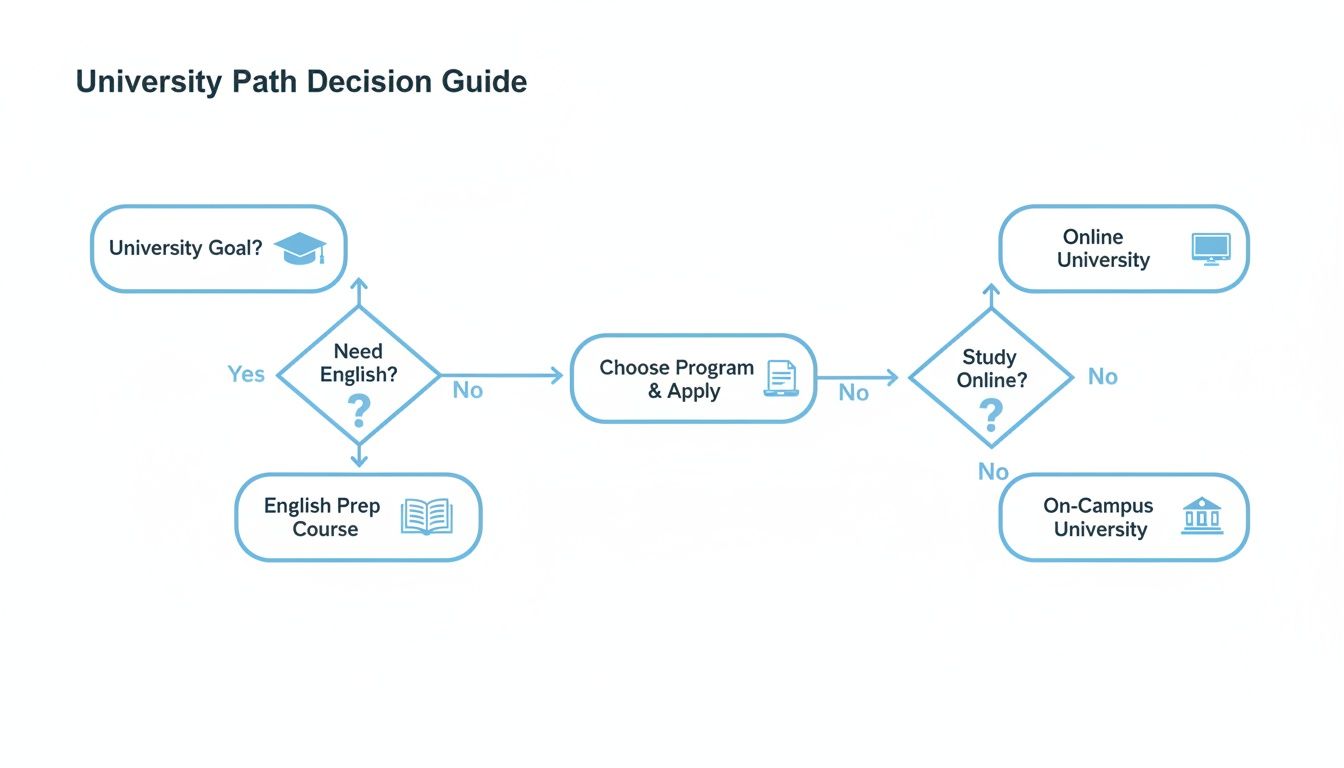
As you can see, if a university degree is your ultimate aim, getting your English qualification through a flexible online course is one of the most direct and effective ways to get there.
Comparing the Main Exam Boards
Most online courses will prepare you for exams with one of the two big players: AQA or Pearson Edexcel. They both lead to the same respected qualification, but they have slightly different flavours when it comes to the texts you'll study and how they assess you.
- AQA (Assessment and Qualifications Alliance) is well-known for offering a great mix of modern and classic literature. Many students find their question style to be direct and clear, which can make revision feel a lot more straightforward.
- Pearson Edexcel tends to feature more contemporary and international writing. Some learners also prefer their assessment structure, finding it helps to break down revision into more manageable chunks.
Your course provider will probably have a preference, but don't be afraid to ask them why. A good provider should be able to clearly explain how their chosen board's syllabus and exam style match their teaching methods to best support adult learners.
Finding a Quality Online Provider
Beyond accreditation, you'll want a provider that offers genuine, dedicated tutor support. As an adult learner, you’ll have different questions and face different challenges than a teenager in school. Having an experienced tutor you can actually email or jump on a call with is absolutely invaluable. Also, check that the course materials include plenty of past papers, mock exams, and detailed feedback on your work.
Online learning is also a fantastic way to bridge educational gaps. There are some stark regional differences in GCSE results across the UK. For example, in 2023, London saw 28.4% of entries achieve top grades, while the North East's figure was 17.6%. Online platforms give adults everywhere access to the same high-quality teaching, helping to level that playing field. You can discover more insights about these regional educational findings and see just how powerful this can be.
How to Register for Your Exams
This is one of the biggest worries for online learners: how do I actually book my exams? Because you're not in a traditional school, you'll need to register as a private candidate. It sounds daunting, but it's really not.
Here’s what you need to do:
- Find an exam centre. Your course provider should be able to help with a list of approved centres. If not, you can search online for local schools or colleges that accept private candidates.
- Get in touch early. This is so important. Exam centres have limited spots and strict deadlines, which are often around January or February for the summer exam season. Don't leave it until the last minute!
- Give them your details. You'll need to tell the centre which exam board you're with (e.g., AQA) and the specific course code for your GCSE English Language qualification. Your provider will give you this.
The process itself is quite simple, but being prepared is everything. A supportive course provider will walk you through these steps, taking the stress out of the admin so you can focus on what really matters—your studies.
How to Build a Study Plan That Actually Fits Your Life

When you decide to study your English GCSE online, the first thing to do is forget those rigid, colour-coded timetables from your school days. As an adult learner, life is already packed. The real secret to success is creating a plan that works with your life, not against it, building steady momentum without burning you out.
It all starts with being brutally honest about your time. Instead of trying to carve out huge, unrealistic chunks for studying, the trick is to find the smaller, consistent pockets of time you already have.
Find Your Study Pockets
First, take a look at a typical week. Don't plan anything just yet—simply observe. Where are the natural lulls in your day?
- Is it the 30 minutes on the train during your morning commute?
- Could you grab 45 minutes after the kids are in bed but before you crash on the sofa?
- What about that quiet hour on a Sunday morning before the rest of the house wakes up?
These small pockets are pure gold. Forcing a three-hour study marathon on a busy Tuesday night is a recipe for disaster. But aiming for four focused, 45-minute sessions spread across the week? That’s not only achievable, but it’s far more effective in the long run.
Once you’ve found your slots, block them out in your calendar. Treat them like non-negotiable appointments with yourself. This simple act makes your study time feel concrete and important.
A sustainable study plan is built on consistency, not intensity. An hour of focused work four times a week will always beat a frantic, all-day cramming session once a fortnight.
Break the Syllabus Down
Staring at the entire GCSE English syllabus at once is enough to make anyone feel overwhelmed. The key is to break it down into manageable, bite-sized pieces. The good news is your online course provider has already done most of this for you, usually organising the material into weekly modules.
Your job is to match these small tasks with your study pockets. Imagine it looking something like this:
- Monday Evening (45 mins): Read and make initial notes on the assigned poem.
- Wednesday Lunch (30 mins): Watch the tutor's video on analysing language techniques.
- Friday Commute (30 mins): Use a flashcard app on your phone to memorise literary devices.
- Sunday Morning (1 hour): Write a practice paragraph and send it over for feedback.
This approach turns a daunting goal like "revise poetry" into a series of clear, achievable tasks. Every time you tick one off, you build confidence and momentum, making it that much easier to keep going. For a deeper dive into this method, check out our guide on creating a study schedule that actually works.
A Sample Flexible Weekly Structure
Here’s a practical example of what a flexible week could look like for someone juggling a full-time job and family life. Use it as a starting point and adapt it to your own rhythm.
| Day | Focus Area | Activity & Time |
|---|---|---|
| Monday | Reading | Analyse Chapter 1 of the set text (45 mins) |
| Tuesday | Rest | No scheduled study |
| Wednesday | Language Skills | Complete grammar exercises (30 mins) |
| Thursday | Writing Practice | Draft an analysis paragraph (45 mins) |
| Friday | Rest | No scheduled study |
| Saturday | Review & Planning | Review week's notes & plan next week (30 mins) |
| Sunday | Exam Practice | Complete a timed past paper question (60 mins) |
Take note of the built-in rest days. Life happens. Having that buffer means a demanding day at work or a last-minute family commitment won't throw your entire schedule off track. This isn't about being perfect; it’s about creating a resilient structure that helps you study your English GCSE online and succeed.
Smarter Revision Strategies and Essential Resources
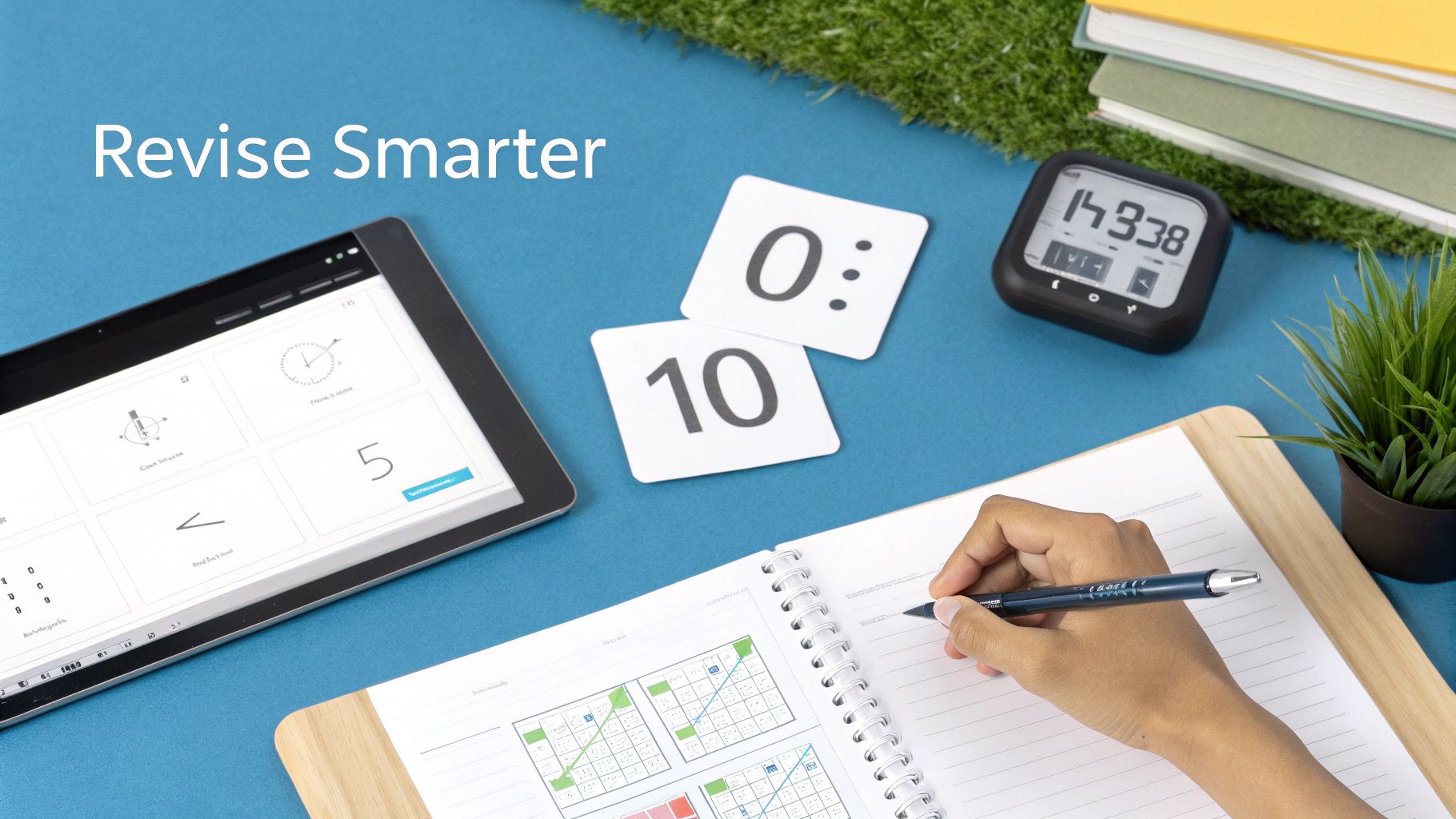
When it comes to revising for your online English GCSE, working smarter, not harder, is the name of the game. Forget endless hours of just highlighting your notes. Real success comes from using active, focused techniques that actually make information stick.
The key is to move beyond passively re-reading. Your brain needs to be challenged to retrieve information, not just recognise it on the page.
Think of it this way: instead of just reading your notes on An Inspector Calls, try creating a mind map from memory. Link Priestley's key themes to specific characters and quotes without looking at your book. This is called active recall, and it strengthens the neural pathways that you’ll rely on under exam pressure.
Master Active Recall Techniques
Active recall is your most powerful revision tool. It’s the difference between looking at a map and actually navigating the route yourself. Integrating a few simple methods can completely transform your study sessions.
Here are some proven strategies to get you started:
- Flashcards for Literary Devices: Go digital with an app or use good old-fashioned physical cards. Put a term like "metaphor" or "sibilance" on one side, and the definition with an example from a set text on the other. Test yourself regularly.
- Summarise Key Concepts: After reading a chapter or watching a lesson, close everything and write a short summary of the main points in your own words. This forces you to properly process and understand the material.
- Teach Someone Else: Try explaining a complex idea, like the theme of power in Macbeth, to a friend or family member. If you can teach it clearly, you know you've truly understood it.
Staying engaged during these focused sessions can be tough, especially when juggling other commitments. For practical advice, our guide on how to stay focused while studying has some great tips specifically for adult learners.
The Power of Past Papers
There is simply no substitute for practising with real exam papers under timed conditions. This is where theory meets reality. It’s one thing to know the content, but it's another to apply that knowledge within the strict time limits of an exam.
Getting stuck into past papers helps you:
- Get to know question formats: You’ll become familiar with how questions are phrased and exactly what the examiners are looking for.
- Perfect your timing: Learn to allocate the right amount of time to each section so you don't run out of steam halfway through.
- Pinpoint your weak spots: Quickly discover which topics or skills you need to revisit before the real thing.
Your online tutor is an essential part of this process. Don't just complete a practice essay and forget about it. Send it off for feedback and, most importantly, act on the advice you get back. A good tutor can show you exactly where you're losing marks.
Curated Online Resources
When you study English GCSE online, you have a world of digital tools at your fingertips. For the literature paper, one of the most vital skills is knowing how to write a literary analysis essay effectively – it's central to achieving those high marks.
Beyond essay guides, look for resources that bring the texts to life. YouTube channels like Mr Bruff offer brilliant video breakdowns of poems and plays, making complex ideas much easier to digest. Websites like the British Library's online archives provide fascinating context that can enrich your understanding and help your answers stand out from the crowd.
By combining these smart revision techniques with targeted resources, you'll build both the knowledge and the confidence you need to excel.
Understanding the Costs and Planning Your Next Move
Getting your finances sorted is just as important as the studying itself when you decide to tackle your English GCSE online. This qualification is a brilliant investment in yourself, but you need a clear picture of what it’s going to cost to plan properly.
The main expenses fall into a few different buckets. You’ve got the course fee, which usually covers all your learning materials, tutor support, and online platform access. Then there are the exam fees, which you’ll pay directly to whichever exam centre you choose. Lastly, don’t forget to budget for any set texts – the novels or plays your exam board requires.
Breaking Down the Investment
To make sure there are no nasty surprises, it helps to see what a typical cost breakdown looks like. These figures can wiggle a bit depending on the course provider and where you sit your exams, but it’s a solid starting point for your budget.
- Online Course Fee: You’re generally looking at somewhere between £300 and £500. This covers your tuition and all the resources you'll need.
- Exam Centre Fees: Pop aside around £150 to £250. This is what the centre charges for the admin of having you in as a private candidate on exam day.
- Set Texts: Budget about £20 to £40 for the books. You can often pick up second-hand copies of the novels, plays, or poetry collections to save a bit of cash.
Most good providers know that paying for it all in one go can be a stretch. That's why you'll often find interest-free payment plans available, letting you spread the course cost over a few months. It makes the whole thing feel much more manageable.
From GCSE to University: A Clear Pathway
The real payoff for this investment becomes crystal clear when you think about what comes next. Nailing your English GCSE is the essential key that unlocks the door to an Access to Higher Education Diploma.
Think of the Access to HE Diploma as the modern, flexible version of A-Levels. It’s specifically designed for adults who want a direct, respected route into university, without going back to college full-time.
With your English qualification in hand, you can then enrol on an Access course in a subject you’re genuinely passionate about, like:
- Nursing and Healthcare Professions
- Business and Management
- Social Work and Social Science
- Computing and IT
This gives you a clear, structured path from where you are right now, straight to a university offer. Your investment in an online English GCSE isn’t just about passing a single exam—it’s the first, most critical step towards that university degree and the career you really want.
Common Questions from Adult Learners
Thinking about studying your English GCSE online is a big move, and it's completely natural to have questions buzzing around in your head. As someone coming back to education, your circumstances are different, and you need real answers that speak to your situation.
Have I Left It Too Late?
A lot of learners worry they’ve been out of the classroom for too long. The simple answer is no. Online courses are built for adults, breaking down big topics into clear, easy-to-digest modules.
Tutors are well-versed in supporting people who haven't sat in a "classroom" for years. They're there to provide the encouragement and academic pointers you need to build up your confidence right from the start.
How Can I Possibly Fit This In?
Another big one is how to balance studying with an already packed life. The secret is finding small, consistent pockets of time instead of trying to clear huge blocks in your calendar.
Even just 30-45 minutes of focused work a few times a week really adds up. Staying consistent is far more powerful than panicked, last-minute cramming, and a flexible online course is designed around that very idea.
Logistics and Practicalities
One of the most frequent practical questions we get is, "How much tutor support will I actually get?" This really varies from one provider to the next, but any quality course will offer regular feedback on your work and the chance for one-to-one chats if you’re feeling stuck. Don't be shy about asking a potential provider about their support system before you sign up.
It's also smart to think about the total cost beyond the initial course fee. You’ll need to budget for exam centre fees and maybe even some private tuition if you feel you need a bit of extra help. For a better idea of what to expect, you can find useful info on the average price for tutoring to help you plan your investment.
The most important thing to remember is that you are not alone. Thousands of adults successfully pass their English GCSE online every year, juggling the same responsibilities and overcoming the same doubts you might have right now.
Finally, there’s the question of exam arrangements. As a private candidate, you're responsible for booking your own exams at a local centre. Your course provider should give you guidance on finding an approved centre, but it’s vital to get this sorted early—usually in the autumn before the summer exams—as places fill up fast. Good communication with both your provider and the exam centre is the key to a stress-free experience.
At Access Courses Online, we understand the unique challenges and ambitions of adult learners. We provide fully accredited online courses with dedicated tutor support to help you gain the qualifications you need to get to university. Start your journey with us today!