
Ever thought about becoming the architect of your own education? That's the core idea behind self-directed learning. In simple terms, it’s an approach where you take the driver’s seat on your educational journey. You're the one who decides what you need to learn, sets your own goals, hunts down the right resources, and measures your own success.
What Self-Directed Learning Really Means
At its heart, self-directed learning flips the old-school classroom model on its head. Instead of a teacher setting the pace and dictating the content, you become the active manager of your own learning. This doesn't mean you're left completely on your own; it just means you take ownership of the entire process.
This is especially powerful for anyone returning to education as an adult, particularly with a flexible online Access Course. It’s the framework that finally allows learning to fit around your job, family, and everything else life throws at you. Suddenly, education stops being a rigid chore and becomes an empowering experience you control.
The Rise of Learner-Led Education
This shift towards taking control of your own learning isn't just a small trend—it’s a major movement in education and the workplace. The data speaks for itself. When people have a choice, they put more time and effort into learning. In the UK, employees now spend a massive 72% more time on learning they choose for themselves compared to training that’s assigned to them.
On top of that, the time we spend on online learning has jumped by 38% year-on-year. It’s clear people prefer this self-guided approach. You can explore more on these learning trends to see just why it's gathering so much momentum.
It all points to one simple truth: when your learning is fired up by your own curiosity and clear goals, you’re far more engaged. It feels more relevant, it’s more effective, and ultimately, it’s so much more rewarding.
Self-directed learning is about moving from being a passenger in your education to being the pilot, navigating your own path towards your destination with purpose and control.
To really get to grips with this, it helps to see what a successful self-directed learner looks like. These aren't special talents people are born with, but skills and mindsets anyone can build with a bit of practice.
The table below breaks down the key characteristics. See which ones you already recognise in yourself!
Key Characteristics of a Self-Directed Learner
| Characteristic | What It Looks Like in Practice |
|---|---|
| Proactive & Independent | You don't wait for instructions; you actively seek out information and start tasks on your own initiative. |
| Goal-Oriented | You set clear, measurable learning objectives, like "master this module by Friday." |
| Resourceful | You use all available tools—tutors, online libraries, forums—to find answers and deepen your understanding. |
| Reflective | You regularly assess your own progress, identify areas of weakness, and adjust your study methods accordingly. |
By developing these traits, you're not just studying—you're learning how to learn, a skill that will benefit you long after your course is finished.
The Four Pillars of Successful Self-Directed Study
So, we've talked about what self-directed learning is, but what makes it actually work? It’s not just a vague idea of ‘studying on your own’; it's a solid framework built on four core pillars. Think of these as your toolkit for turning yourself from a passive student into the active architect of your own education.
These aren't abstract theories. They're practical steps you can start using from day one of your online Access to HE Diploma to build a strong, successful learning routine.
This flowchart shows how these four stages connect in a continuous, empowering cycle.
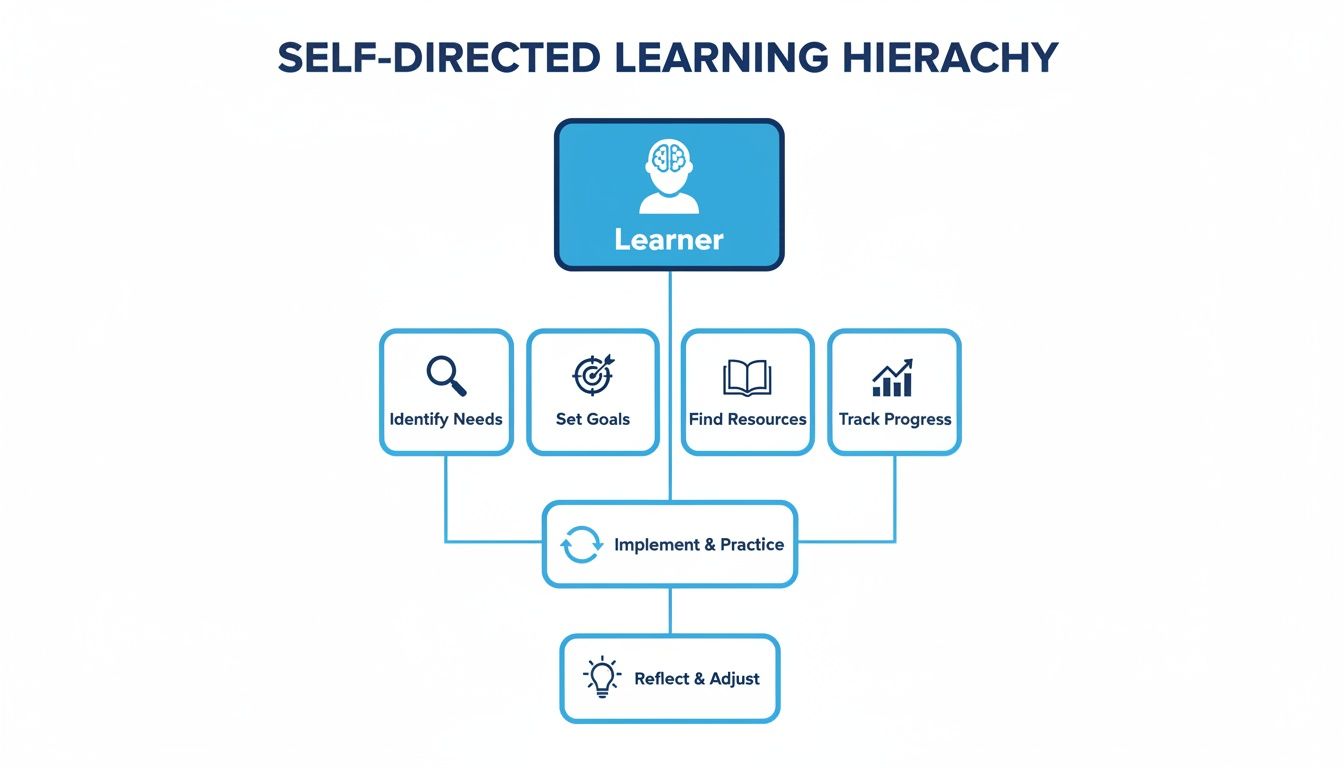
As you can see, the process puts you firmly in control. You identify what you need to learn, set clear goals, find the right resources, and track your own progress. Let’s break that down.
Pillar 1: Diagnose Your Learning Needs
Every great journey starts with a map, and in learning, that map begins with honest self-assessment. Before you can build a plan, you need to know exactly where you're starting from. This means pinpointing your existing strengths and, just as importantly, identifying the specific knowledge gaps you need to fill.
For instance, when you begin your Access Course, you might quickly realise that while you’re confident writing essays for one module, the statistical concepts in another feel a bit shaky. This awareness is your starting point. It allows you to direct your time and energy where they’re needed most, instead of trying to give every subject equal attention.
Pillar 2: Formulate Clear Learning Goals
Once you know where you stand, you need a destination. Vague ambitions like "get good grades" just won't cut it. To be truly effective, your goals need to be specific, measurable, and directly tied to your course outcomes.
Instead of a broad aim, try setting a concrete target: "This week, I will complete the first two assignments for the biology module and score at least 80% on the practice quiz." This approach breaks a huge course down into manageable chunks, building momentum and making your progress feel real and tangible. Having a solid plan is a crucial part of self-directed success, and you can learn more by creating a study schedule that actually works.
A self-directed learner doesn't just study; they strategise. They turn the course syllabus into a personal action plan, setting micro-goals that lead to macro-success.
Pillar 3: Identify and Use Resources
With your goals set, the next step is to gather your tools. In self-directed learning, you become a resourceful investigator, seeking out the best information to achieve your objectives. This goes way beyond just the course materials you're given.
Your resources are everywhere. They include:
- Your Tutor: This is your most valuable guide. Use them for expert feedback, clarification, and support.
- Online Libraries and Databases: These are treasure troves of academic articles and texts that will deepen your understanding.
- Student Forums: Don't underestimate the power of your peers. Connecting with other students allows you to bounce ideas around and solve problems together.
Being resourceful means actively using every tool at your disposal to support your learning journey.
Pillar 4: Evaluate Your Learning Outcomes
Finally, you need to become your own quality controller. Evaluation isn’t just about the grade you get on an assignment; it’s about reflecting on how you learned it. After you submit a piece of work, ask yourself: What went well? Where did I struggle? How can I apply my tutor’s feedback to the next task?
This continuous loop of action and reflection is what truly solidifies your knowledge. It ensures you’re not just ticking boxes and completing tasks, but genuinely mastering the material and building a rock-solid foundation for university.
Unlock Your Potential with Self Directed Learning
So, why should you get on board with this way of learning? The truth is, the benefits of self-directed learning go way beyond just passing your course. They lay a solid foundation for your future career and personal growth.
For many adult learners, the biggest immediate win is the flexibility. Life is busy, right? With self-directed study, you can finally fit your learning around your family, your job, and everything else you’ve got going on. You’re in control.
When you get to set your own pace, learning stops feeling like a chore and starts becoming something you’re genuinely invested in. You can spend a bit longer on the modules you find tricky and breeze through the topics that click instantly. It just makes your study time that much more effective.
Develop Skills Universities and Employers Actually Want
Beyond the freedom it gives you, self-directed learning helps you build a toolkit of skills that are seriously in demand. Universities and employers aren't just looking for a piece of paper with a qualification on it; they want people who can think for themselves and take the initiative.
By taking charge of your own education, you’ll naturally pick up some crucial abilities:
- Critical Thinking and Problem-Solving: You learn to look at information, really analyse it, and figure out solutions when you get stuck.
- Time Management: Juggling your studies with the rest of your life forces you to get good at prioritising tasks and hitting deadlines. It’s a skill you’ll use forever.
- Autonomy and Confidence: Successfully getting yourself through a course builds incredible self-reliance and a belief that you can tackle whatever comes next.
These are the exact skills you need to thrive at university and in the modern workplace. That sense of ownership you feel gives your motivation a massive boost and builds confidence that lasts. A great starting point is cultivating a growth mindset, which helps you see challenges not as roadblocks, but as opportunities to learn.
Becoming a self-directed learner means you are not just studying for a qualification; you are actively preparing yourself for the independence and rigour of university life and your future career.
Join a Growing Movement of Adult Learners
This proactive approach to education is becoming more and more popular across the UK. In fact, adult learning has hit record levels, with almost half of all adults now getting involved in some kind of self-guided study.
According to recent data, 49 per cent of UK adults have taken part in learning within the last three years—the highest rate ever recorded. This jump has been massively driven by the rise of flexible online learning. You can read the full survey on adult learning trends for a deeper look.
By choosing this path, you’re not just studying smart; you're joining a nationwide movement of empowered, motivated people taking control of their futures.
Your Action Plan for Self-Directed Success
Knowing the theory is one thing, but actually putting self-directed learning into practice is where your journey to university really begins. Think of this as your practical playbook for applying these powerful strategies directly to your online Access Course, transforming your study habits from passive to proactive.

The key is to shift your mindset. You're no longer just receiving information; you're actively managing your own educational experience. You have the flexibility and the resources at your fingertips, and now it’s all about using them strategically to hit your goals with less stress and much better results.
Create a Dynamic Study Schedule
A self-directed learner doesn't just find time to study; they make time. Forget rigid, unforgiving timetables. Instead, create a dynamic schedule that actually fits in with your life. Use a digital calendar or a simple planner to block out your non-negotiables first—things like work, school runs, or family commitments.
With the essentials mapped out, you can spot your personal "golden hours." These are the times of day when you feel most focused and energetic. Dedicate these high-energy slots to tackling the tougher topics or assignments. The lower-energy periods? They’re perfect for lighter tasks like reviewing notes or organising your files. This approach works with your natural rhythm, not against it, making your study time far more productive.
Break Down Your Assignments
Staring at an entire module or a massive assignment can feel totally overwhelming. The self-directed approach is to slice it up into small, manageable tasks. It's like building with LEGO bricks; you just focus on connecting one small piece at a time, and before you know it, you've built something impressive.
For a big research essay, your task list could look something like this:
- Understand the Question: Spend 30 minutes breaking down the assignment brief and highlighting the key terms.
- Initial Research: Set aside one hour to find and bookmark five solid academic sources.
- Create an Outline: Map out your main arguments and the basic structure of your essay.
- Draft Introduction: Focus only on writing a compelling opening paragraph to get you started.
Every small task you tick off gives you a sense of accomplishment. This builds momentum and makes it so much harder for procrastination to creep in. For anyone juggling multiple subjects, this kind of structured approach is essential, a point often stressed in guides like How to Become a Polyglot.
Use Tutor Feedback as Your Roadmap
One of the most powerful tools you have is the feedback from your tutor. A passive student might just glance at the grade and move on. But a self-directed learner? They treat that feedback like a personalised roadmap for improvement.
Don’t just read the comments; analyse them. Look for recurring patterns in your work. Is it about how you structure your arguments? Your referencing? Maybe your academic tone? Turn each piece of feedback into an action point for your next assignment.
This simple shift transforms feedback from a final judgment into the starting point for your next success. You can find even more advice on how to get the most out of your online learning experience in our detailed guide.
To see just how much of a difference this makes, take a look at how a simple shift in mindset can change your entire approach to studying.
Passive vs Self-Directed Approach to Online Study
The table below shows the difference between a student who just lets the course happen to them and one who takes charge of their learning journey.
| Learning Activity | The Passive Student Approach | The Self-Directed Learner Approach |
|---|---|---|
| Course Schedule | Waits for deadlines to approach before starting work. | Sets personal mini-deadlines well ahead of the official due date. |
| Tutor Feedback | Reads the feedback and focuses mainly on the grade. | Actively analyses feedback to create an improvement plan for the next task. |
| Challenging Topics | Skims through difficult material, hoping it won't be on the assessment. | Spends extra, focused time on challenging modules and seeks tutor clarification. |
| Using Resources | Relies only on the core materials provided in the course. | Proactively seeks out extra reading, videos, and forum discussions to deepen understanding. |
As you can see, being self-directed isn't about being smarter; it's about being more strategic and engaged with your own progress. It’s a habit that will not only help you ace your Access to HE Diploma but will also set you up for success at university and beyond.
How to Overcome Common Learning Hurdles
Taking charge of your own education is an incredibly empowering feeling, but let's be honest, the path of a self-directed learner isn't always a smooth one. It’s completely normal to hit roadblocks like procrastination, a nagging sense of isolation, or motivation that comes and goes.
These aren't signs you're failing; they're just hurdles that every single independent learner bumps into at some point.
The trick is having a few practical strategies in your back pocket for when these challenges pop up. Acknowledging that these feelings are just part of the process is the first step. The next is getting yourself equipped with proven ways to stay on track and keep moving towards your goals.
Beating Procrastination and Building Momentum
Procrastination usually kicks in when a task just feels too big and overwhelming. The single most effective way to fight this is to break your work down into smaller, much less scary steps. Instead of staring at a mountain labelled "write a whole essay," just focus on the first small hill: "I'll find three good sources in the next hour."
A really popular and effective method for this is the Pomodoro Technique. It's a simple time-management trick that works like this:
- Pick one single task to focus on.
- Set a timer for 25 minutes and work on it without any interruptions.
- When the timer pings, take a 5-minute break.
- Repeat the cycle. After four sessions, take a longer, more rewarding break.
This technique helps you build focus and makes that initial step of starting feel so much easier. Each 25-minute block is a small win that builds your confidence and momentum.
Combating Isolation and Staying Connected
Studying online from home offers fantastic flexibility, but it can sometimes feel a bit lonely. It’s so important to remember that "independent" learning doesn't have to mean "alone." Actively building connections is vital for your well-being and your academic success.
A key part of self-directed learning is knowing when to seek help and connection. Your tutors and fellow students are your support network—use them to stay engaged and motivated.
Get into the habit of using the student forums. Asking a question or sharing a study tip not only helps you but also builds a sense of community with others who are on the exact same journey. Try scheduling regular check-ins with your tutor, even if you don't have a specific problem. Just chatting about your progress can help you stay connected and feel like part of something bigger.
Managing Motivation and Self-Doubt
There will definitely be days when your motivation takes a nosedive or those feelings of self-doubt start to creep in. This is especially common for adult learners returning to education after a break. When this happens, a powerful tactic is to reconnect with your ‘why’. Remind yourself of the amazing career you’re working towards or the doors your new qualification will open.
Breaking your long-term goals into small, weekly achievements also provides a steady stream of positive reinforcement. Ticking off a week's study plan is a real, tangible accomplishment that proves you're making progress. It’s a skill to tackle these feelings, and it's important to know how to beat impostor syndrome as an adult learner.
The great news is that the UK is increasingly supporting these flexible ways of learning. Recent figures show huge growth in adult education, with 34,020 enrolments in Free Courses for Jobs and an 8.5% increase in Digital Skills courses. This government backing proves just how valuable self-directed pathways are for adults aiming for university. You can explore more data on further education trends in England.
Building the Foundation for University Success
Getting to grips with self-directed learning during your Access to HE Diploma is about so much more than just ticking off your assignments. Think of it as your training ground for university, laying the essential groundwork for the academic independence that degree-level study demands.
The skills you’re building right now are the very ones that will set you up for success as an undergraduate.
Life at university is a whole different ball game. Lecturers won't chase you for deadlines, and you’ll be expected to have done your own reading and research before you even walk into a seminar. This environment is built on the skills you’re developing today: proactive research, disciplined time management, and taking real ownership of your learning.
From Access Course to Confident Undergraduate
By embracing a self-directed approach with your online course, you’re actively preparing for that big step. Every time you map out your own study schedule, hunt for extra resources, or use your tutor’s feedback to push yourself further, you're building the habits of a successful university student.
You won't just arrive on campus with the right qualifications; you'll get there with a proven toolkit of study methods that actually work for you.
Your online Access Course is the perfect preparation for academic success. It’s designed to nurture the independence and resilience you need to really shine in degree-level study and beyond.
This journey changes you from someone who just completes a course into a capable, independent learner who's ready for any challenge thrown their way. Try to see every module and assignment as another step towards becoming the confident, resourceful graduate you want to be.
The foundation you lay today will support your entire academic and professional future. It’s the first, and most important, step towards smashing your long-term goals.
Got Questions? We've Got Answers
Stepping into the world of self-directed learning, especially for something as important as an Access to HE Diploma, can naturally bring up a few questions. We hear from adult learners just like you all the time, so let’s clear up some of the most common queries and give you the confidence to take control of your future.
Does Self-Directed Learning Mean I Have to Teach Myself Everything?
Not at all. This is probably the biggest misconception out there! It’s easy to picture being left alone with a mountain of textbooks, but that’s not how it works. Self-directed learning is all about giving you ownership of your schedule and pace—not about leaving you to figure it all out yourself.
You are always supported. You get expertly structured course materials, clear goals for every single module, and a dedicated tutor who's there for you. You decide when and where you study, but the what is expertly laid out for you. Professional guidance is always just a message or a call away.
How Can I Stay Motivated When Studying Alone?
This is a big one, and it's a skill you'll build and strengthen along the way. One of the most powerful things you can do is to keep your 'why' front and centre. Why did you start this? Is it to finally get that university place? To launch a new, more fulfilling career? Reminding yourself of that goal is your best motivator.
It also really helps to set small, achievable goals each week. Ticking off those tasks creates a real sense of progress and builds momentum, which makes it so much easier to stay on track. Don't forget to connect with the online student community and your tutor, too—it makes a world of difference knowing you're part of a team.
Is an Online Access to HE Diploma Respected by Universities?
Yes, absolutely. Our Access to Higher Education Diplomas are nationally recognised qualifications. They are fully regulated by the Quality Assurance Agency for Higher Education (QAA), which is the very same body that oversees standards at universities. So you know the quality is there.
These diplomas are specifically designed to give you the exact entry requirements needed for a degree. In fact, completing one online shows universities that you have the independence, time management skills, and commitment needed to thrive in higher education. It actually makes you a very strong candidate.
Ready to take the next step towards your university goals? At Access Courses Online, we provide the flexible, accredited courses you need to succeed. Explore our Access to HE Diplomas and start your journey today.