
Blended learning is a fantastic approach that gives you the best of both worlds, mixing traditional, in-person classroom teaching with flexible online learning activities. Think of it as having the direct support and back-and-forth of being in a room with a tutor, but also having the freedom to tackle certain materials at your own pace, whenever and wherever you like. It’s all about using digital tools smartly to create a richer, more personal learning experience.
Understanding the Blended Learning Approach
At its heart, blended learning is a direct response to what modern students actually need. It’s not just about chucking a bit of tech into a classroom; it's a complete redesign of the learning journey to make it more effective and adaptable for you.
Imagine hiring a personal trainer who guides you during your gym sessions but also gives you a custom workout app to use at home. That’s the essence of blended learning—a thoughtful mix of guided, face-to-face instruction and independent, tech-supported study.
This approach is quite different from fully online or distance learning, where everything happens remotely. You can learn more about what is distance learning in our detailed guide, but the key difference is that a blended model purposefully keeps that face-to-face contact. This ensures you never feel isolated and can get all the benefits of direct collaboration and support.
The Best of Both Worlds for Learners
Blended learning strikes a unique balance that really works for adult learners who are often juggling work, family, and other commitments. It gives you the structure and community of a traditional classroom alongside the unbeatable flexibility of online education.
Some of the biggest advantages include:
- More Flexibility: You can get through your online modules and coursework on your own schedule, whether that’s late at night after the kids are in bed or during your lunch break. You still have those scheduled in-person sessions for hands-on practice or deeper discussions.
- Personalised Pacing: If you’re finding a topic tricky, you can re-watch online lectures or go over resources as many times as you need without feeling rushed. On the flip side, you can power through material you already feel confident with.
- Keeps You Engaged: By mixing things up with interactive online quizzes, group projects in the classroom, and tutor-led discussions, this model keeps learning dynamic and interesting. It caters to all sorts of different learning styles, so there’s something for everyone.
This integrated experience is designed to make education more accessible and effective. It recognises that great learning happens both through direct human interaction and through self-directed digital exploration, creating a much richer path to success. Ultimately, it empowers you to take more control over your own education.
Diving Into the Core Blended Learning Models
So, we know blended learning is a mix of online and in-person education. But that's just the starting point. It’s not a single, rigid formula. Think of it more like a flexible approach with several proven models, each designed to fit different learning styles, subjects, and schedules. They're like different recipes using the same core ingredients—online tutorials and face-to-face teaching—to create something unique.
By getting to grips with these models, you’ll see how blended learning actually works and figure out which method might be the perfect fit for your own life. The whole point is to find a structure that helps you get into higher education without forcing you to put everything else on pause.
This diagram shows the basic idea perfectly: taking the best of both worlds and merging them into one cohesive learning experience.
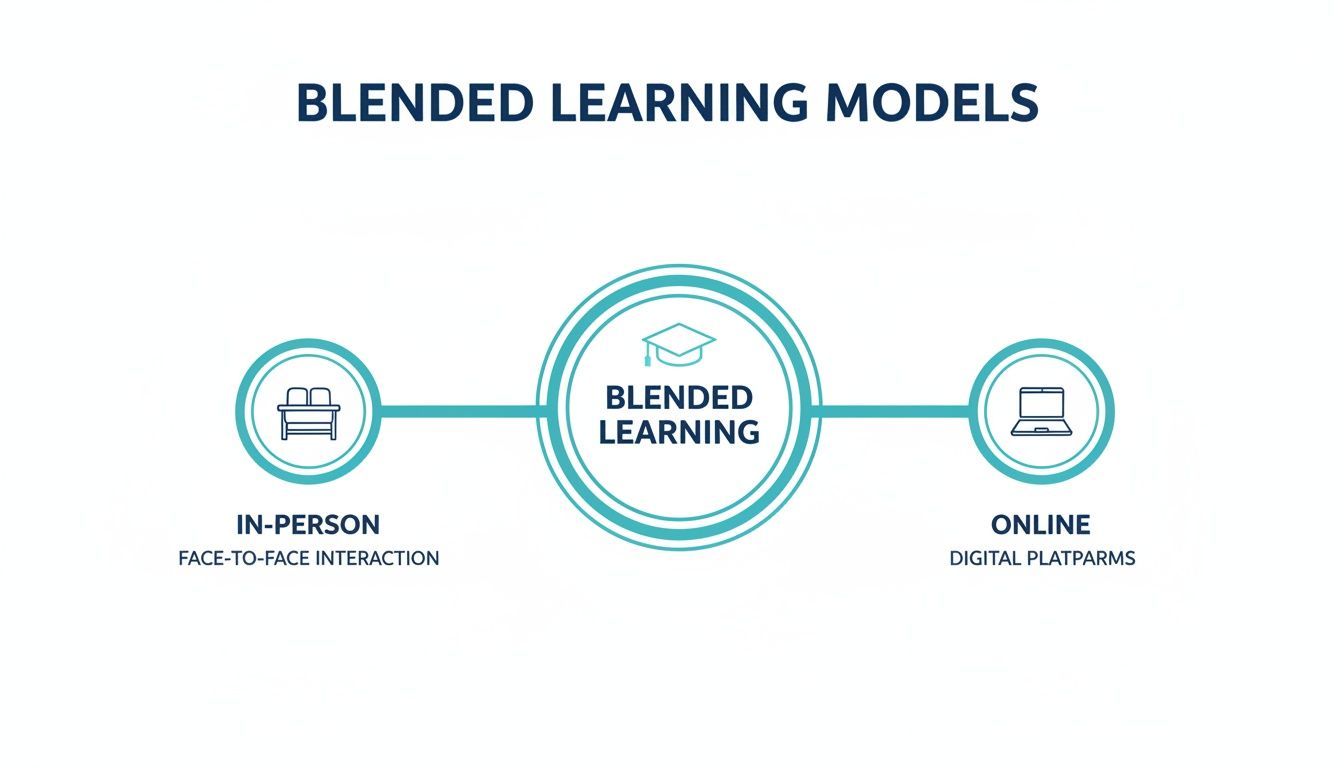
As you can see, the traditional classroom and the digital learning space are both essential pillars. Together, they support a truly integrated way to learn.
The Flipped Classroom Model
One of the most popular approaches is the Flipped Classroom. It does exactly what it says on the tin—it flips the traditional learning sequence on its head. Instead of your tutor delivering a lecture in person, you cover the core material online, at home, and in your own time. This usually involves watching pre-recorded videos, reading digital notes, or working through interactive modules.
This prep work means the in-person sessions become active, hands-on workshops. Your classroom time is no longer for listening passively but for applying what you’ve learned, solving problems, and having proper discussions with your tutor and classmates. It’s a bit like reading the reports before a big meeting; you show up ready to contribute, making the face-to-face time far more valuable.
This model works especially well for complex subjects where hands-on practice and getting expert feedback are absolutely vital.
The Enriched Virtual Model
Next up is the Enriched Virtual model, which leans much more heavily on online learning but still keeps a few key in-person elements. In this setup, you’ll complete the vast majority of your coursework remotely using a digital platform. The big difference from a fully online course is that you’re still required to attend some scheduled face-to-face sessions.
These sessions aren’t necessarily every day or even every week. They might be focused workshops, practical lab days, or important check-ins to review your progress. This gives you the amazing flexibility of distance learning but makes sure you get that critical, direct support when it matters most.
The Enriched Virtual model is a fantastic middle ground. It gives you maximum control over your schedule while making sure you never feel completely disconnected from your tutors or the other learners.
It’s a great choice for self-motivated people who need the freedom to manage their own time but still value the structure and accountability of meeting in person every so often.
The Rotation Model
The Rotation Model is a much more structured approach where you cycle through different learning stations on a fixed schedule. While it’s common in schools, it’s being adapted more and more for adult learning. In this model, at least one of these "stations" is always a dedicated online learning activity.
The other stations might include things like:
- Small-group teaching with a tutor to dig into specific topics.
- Collaborative projects with your peers to solve problems as a team.
- Independent study using traditional textbooks or worksheets.
This method keeps things varied and makes the whole process feel dynamic. It breaks down your learning into manageable chunks, letting you engage with the material in several different ways in a single session. This helps reinforce tricky concepts and caters to all sorts of learning preferences.
It's clearly working, too. In UK higher education, a massive 73% of students said they had a positive experience with blended learning after the pandemic. You can dive deeper into its impact in the full report on blended learning in higher education.
Comparing Popular Blended Learning Models
To make it even clearer, let's break down these three popular models side-by-side. Each one offers a different balance of online flexibility and in-person support, making them suitable for different kinds of learners and subjects.
| Model Type | How It Works | Best For Learners Who... | Example |
|---|---|---|---|
| Flipped Classroom | Students engage with lectures and materials online before class. In-person time is used for interactive activities and problem-solving. | Enjoy preparing independently and want to use class time for active, hands-on learning and discussion. | A nursing student watches video lectures on anatomy at home, then uses classroom time for practical lab work with a tutor. |
| Enriched Virtual | The course is mostly online, but with a few required face-to-face sessions for key workshops, labs, or assessments. | Are highly self-motivated and need maximum flexibility but still want occasional in-person guidance and connection. | A computing student completes coding modules online but attends a monthly in-person workshop to troubleshoot projects with their tutor. |
| Rotation Model | Students rotate between different learning stations on a fixed schedule, including online modules, group work, and direct instruction. | Thrive with structure and variety, and benefit from engaging with material in multiple ways within a single session. | An Access to Science student cycles between an online simulation, a small-group discussion with a tutor, and an independent lab experiment. |
Ultimately, the best model depends entirely on your personal needs, your learning style, and the demands of the subject you're studying. The beauty of blended learning is that there's likely a perfect fit out there for you.
Why Blended Learning Works for Adult Learners

It’s one thing to talk about the theory behind blended learning, but its real magic comes to life when you see how it empowers ambitious adults. It lets people chase their educational goals without having to put their careers or family life on hold. This isn't just about mixing online lessons with classroom time; it’s a total rethink of how education can fit into the messy, complicated reality of modern life.
For working professionals and busy parents, the rigid schedule of traditional university courses can feel like an impossible mountain to climb. Blended learning breaks down that barrier, creating a practical, effective path to getting where you want to go.
Unmatched Flexibility for Real Life
If there’s one standout benefit of blended learning, it’s the incredible flexibility. It puts you in control of when and where you study, which is an absolute game-changer for anyone juggling major responsibilities.
Think about a parent aiming for a healthcare diploma. With a blended model, they can get through the complex anatomy modules online late at night after the kids are in bed. Then, they can attend a focused, hands-on workshop over a weekend to nail the practical clinical skills, making every minute of that in-person time count because the theory is already sorted. This is what blended learning makes possible—fitting your education into the pockets of time you already have. You can discover more on this in our guide on how online learning fits into your busy lifestyle.
Personalised Pacing and Deeper Understanding
In a traditional classroom, the tutor sets the pace for everyone. If you don’t get a concept right away, you can easily get left behind. Blended learning, with its online elements, completely does away with this pressure.
You’re handed the reins to control the pace of your own learning. This means you can re-watch that tricky lecture on cellular biology as many times as you need until it finally clicks, without feeling embarrassed or holding up the rest of the group.
On the flip side, if you already have a good handle on a topic, you can move through it more quickly. This personalised pacing ensures you’re building a rock-solid foundation of knowledge, focusing your energy where it’s most needed. The result is a much deeper, more lasting understanding of your subject.
Building Skills for the Modern Workplace
Beyond the subject itself, a blended approach naturally teaches you skills that are vital in today’s job market. Getting comfortable with online learning platforms, taking part in digital discussions, and managing your own study schedule all help build your digital literacy.
This is a massive advantage. You’re not just learning about nursing or business; you’re also getting better at using the technology and self-management techniques that employers are crying out for. This model has become so essential that an estimated 85% of UK higher education institutions have woven blended learning into their programmes.
Here are a few more key benefits adult learners often talk about:
- Cost and Time Savings: Cutting down on daily commutes to a campus saves a serious amount of money on travel and frees up precious time you can put back into your studies or family.
- Immediate Application of Knowledge: If you’re already working in your field of study, blended learning lets you put new ideas to work straight away. You could learn a new business strategy online in the evening and try it out in a meeting the very next morning.
- A Supportive, Connected Experience: The mix of online forums and in-person sessions means you’re still part of a lively learning community. You get all the convenience of studying from home without the sense of isolation that can sometimes creep in with fully online courses.
This practical, skill-building approach is exactly why blended learning isn’t just a passing trend—it’s a powerful and permanent part of adult education. It offers a realistic and empowering way to advance your career and hit your academic goals, completely on your own terms.
Tackling the Common Hurdles of Blended Learning
While blended learning is a fantastic route to a new qualification, its unique mix of independence and structure can throw up a few hurdles. But don't worry—these are common challenges, and with a few smart strategies, you can easily turn them into strengths.
It’s all about being prepared. By getting a handle on time management, building self-discipline, and staying connected, you’ll set yourself up for a successful and rewarding learning journey. This isn’t about dwelling on problems; it’s about giving you the tools to thrive.
Getting a Grip on Your Time and Schedule
One of the first things learners notice is the freedom that comes with blended learning. Without a strict 9-to-5 timetable, it’s all too easy to let study time slip down the priority list behind work, family, and life in general. The trick is to create your own structure.
Start by treating your study blocks with the same respect you'd give a work meeting or a doctor's appointment. Get out your calendar—digital or physical—and block out specific, non-negotiable slots for learning each week. This simple act builds a routine and fences off your study time from other demands.
When you schedule your study sessions, you're not just finding time; you're making time. This simple bit of planning turns a vague intention into a real commitment, which is the cornerstone of any successful independent study.
Building Rock-Solid Self-Discipline
Flexibility is a great perk, but it does demand discipline. When you’re the one in the driver's seat of your education, staying motivated is key. The secret isn't some magical burst of inspiration; it's about building consistent habits through small, steady actions.
Instead of seeing your whole course as a huge mountain to climb, break it down into smaller, weekly goals. For instance, a goal for this week could be to "finish the first two online modules and post one question in the student forum." Hitting these small targets creates a real sense of achievement and builds the momentum you need to keep pushing forward.
To help you stay on track, try these simple but powerful strategies:
- Create a Dedicated Study Space: Having a specific spot for learning—even if it's just the corner of a room—sends a clear signal to your brain that it's time to focus.
- Set Mini-Deadlines: Give yourself personal deadlines for finishing sections of a module. It's a great way to keep procrastination at bay.
- Reward Your Progress: Acknowledge your hard work! When you hit a weekly goal, treat yourself to something you enjoy.
This approach makes your progress feel real and keeps your motivation tank full throughout the course.
Staying Connected and Beating Isolation
The online side of blended learning can sometimes feel a bit lonely if you don't make an effort to connect with the community. The good news is that modern courses are designed with this in mind, with plenty of features to help you build a strong sense of community.
Make it a habit to jump into your course's online forums. Think of them as more than just a place to ask questions—they're virtual common rooms where you can share ideas, chat about tricky topics, and learn from your classmates' experiences. Engaging with others not only reinforces what you've learned but also reminds you that you’re all in this together.
And don't forget your tutors! They are there to give you one-on-one support and guidance. Never hesitate to send a quick message or email if you're stuck on a concept or just need a bit of encouragement. Building these connections is a vital part of the blended learning experience, turning it from a solo activity into a shared, supportive journey.
See Blended Learning in High-Demand Careers
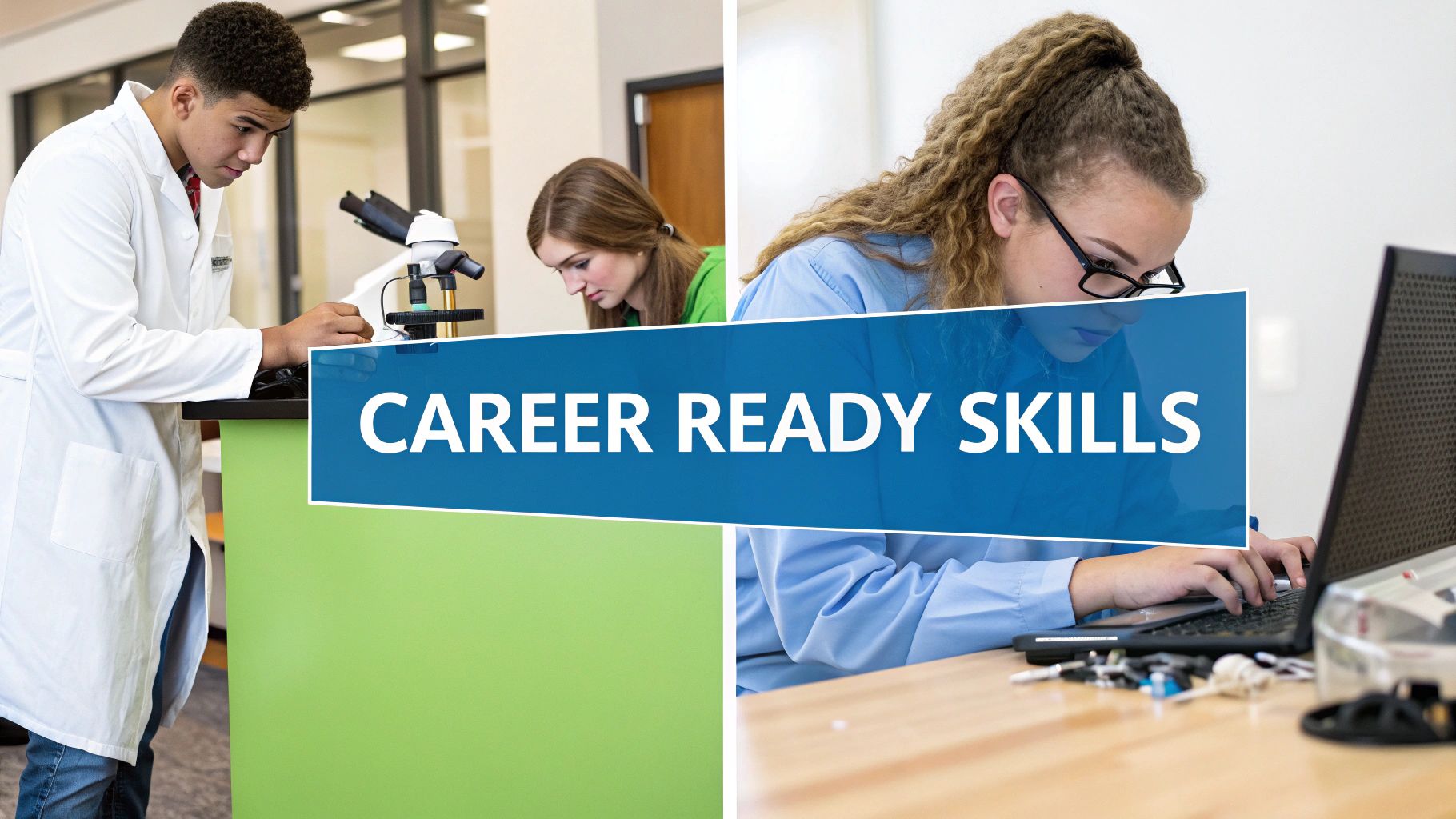
Theory is one thing, but the real magic of blended learning comes alive when you see it in action in high-demand, practical careers. This approach isn’t just some educational trend; it’s a direct reflection of how modern professionals actually work and learn every day.
Think about fields like healthcare, technology, and the sciences—they all demand a solid mix of deep theoretical knowledge and sharp, hands-on skills. Blended learning is perfectly built to deliver both.
It mirrors the professional world, where you might watch an online tutorial to learn a new software trick before jumping into a team project to apply it. By learning this way now, you aren't just studying for a future career—you’re actively training in the exact way you’ll need to think and work to succeed in it.
Preparing for a Career in Healthcare
The healthcare sector is a brilliant example of where blended learning truly shines. Aspiring nurses, midwives, and paramedics have to get their heads around vast amounts of complex information, from human anatomy to pharmacology, while also developing critical, real-world clinical skills.
Picture an aspiring nurse studying an Access to HE Diploma. They can spend their evenings working through online modules on the cardiovascular system, watching detailed animations, and taking interactive quizzes until they feel completely confident. This self-paced study ensures they fully grasp the theory before ever setting foot in a practical session.
Then, they attend a scheduled, in-person workshop where the focus is all about application. Here, they're:
- Practising patient assessment techniques on medical manikins.
- Learning to take vital signs under the watchful eye of an experienced tutor.
- Engaging in role-play scenarios to build the communication skills essential for patient care.
This powerful combination makes sure that theoretical knowledge is cemented with practical ability, preparing learners for the high-stakes environment of healthcare.
The blended model for healthcare training builds both confidence and competence. It lets you master the 'why' at your own pace online, so you can focus entirely on the 'how' during those precious face-to-face training sessions.
Thriving in Computing and Technology
In the fast-moving world of tech, constant, self-directed learning isn't just a bonus; it's a necessity. Blended learning offers the ideal training ground for the software developers, data analysts, and IT specialists of the future.
Take a student aiming for a university spot in computer science. They could learn foundational coding languages like Python or Java through an interactive online platform. These platforms give instant feedback, coding challenges, and video tutorials, allowing the student to really learn by doing.
This independent online work is then paired with collaborative sessions, either in-person or live online. During these, the student might work with a small group to build a real application or troubleshoot tricky code with guidance from a tutor. This process develops not just their technical skills but also the teamwork and problem-solving abilities that are absolutely vital for a tech career.
The model has proven so effective that it's being adopted widely. For instance, blended learning in UK secondary schools hit 68% by 2024. You can explore more data on the growth of the blended learning market. This practical, project-based approach gets them ready for the realities of the industry, where learning on your own and working together are the keys to success.
Our Approach to Flexible Online Learning
At Access Courses Online, we’ve taken the best parts of the blended learning model and created an experience that’s built for real life. While our courses are entirely online to give you maximum flexibility, we’ve woven in what we call a ‘blended support’ system. This means you get the freedom of self-paced study combined with the personal, human guidance you need to thrive.
You get 24/7 access to all your course materials, so you can study whenever and wherever suits you. Whether you're an early bird or a night owl, your classroom is always open. But this independence doesn't mean you’re ever left to figure things out on your own.
The Power of Blended Support
We pair this total flexibility with dedicated, one-on-one support from our experienced tutors. Think of them as your personal academic mentors, genuinely invested in your success. Whenever you have a question or need feedback, you can reach them by phone, email, or direct message.
It’s a model that gives you the best of both worlds:
- The convenience of online learning: You can fit your studies around your life, not the other way around.
- The support of traditional teaching: You have direct access to tutors who know their subject inside and out and are there to guide you through any challenges.
Our philosophy is simple: technology should create access, but people create success. This blended support structure ensures you have all the tools to learn independently and the expert guidance to stay on track.
Removing Barriers to Higher Education
Our entire approach is organised around one core mission: making your journey to university as smooth as possible. We’ve designed our courses to knock down the common obstacles that adult learners often face when returning to education.
Here are a few features designed to help you succeed:
- Start-Anytime Enrolment: You don’t need to wait for a specific term to begin. You can start your course the moment you feel ready.
- Interest-Free Payment Plans: We offer flexible payment options to make financing your course manageable and remove any financial pressure.
- Guaranteed University Pathways: Our accredited Access to HE Diplomas are designed to provide clear and direct routes into university degree programmes.
All these elements work together to create a supportive framework that empowers you to hit your academic and career goals. To get a real feel for what it’s like, you can learn more about what it's like to study an Access Course online from home in our detailed article.
In any flexible learning environment, finding tools to make studying easier is a huge plus. For instance, using modern tech for lecture transcription for students can be a massive help for reviewing material and making notes more accessible. Ultimately, our goal is to give you a clear, supportive path to university that respects your life commitments while providing everything you need to excel.
Your Blended Learning Questions, Answered
Thinking about your future is a big deal, and it's completely normal to have questions about how blended learning actually works. This approach mixes the freedom of online study with real, human support, but we get that you want to know more before diving in.
To help you feel sure about your decision, we’ve put together answers to some of the most common questions we hear from students just like you. Let's clear things up so you can take your next step with confidence.
Is Blended Learning as Effective as Traditional Courses?
Yes, absolutely. In fact, many students find they get a much deeper understanding of their subject this way. The biggest advantage is that you're in the driver's seat, controlling the pace of your learning in a way that just isn't possible in a traditional classroom.
The results speak for themselves. By pairing the convenience of studying online in your own time with targeted feedback from expert tutors, you get a really powerful learning experience. You can go over tricky topics as many times as you need, making sure you've built a solid foundation before tackling the next module.
Do I Need to Be a Tech Whiz to Succeed?
Not in the slightest. If you can browse the internet, send an email, or type up a document, you have all the tech skills you need to thrive. Today's online learning platforms are designed to be as simple and intuitive as possible.
The whole point is for the technology to help you learn, not get in the way. Good course providers will always have technical support on hand to sort out any snags you might hit. Plus, there's a great side benefit: by using the online systems, you'll naturally sharpen your digital skills, which is a massive plus for any modern career.
Think of the online platform as your digital campus. It’s built to be easy to find your way around, with everything you need right there, so you can focus on what really counts: your studies.
How Can I Stay Motivated When Studying Online?
Keeping up your motivation is a common worry for adult learners, but it’s something you can absolutely manage with the right mindset and support network. The best way is to build a routine that works for your life and to remember you're not doing this alone.
Momentum is key. Here are a few simple tips that really work:
- Carve out study time: Block out specific, non-negotiable times for your coursework in your weekly calendar.
- Set small, weekly goals: Focus on ticking off manageable tasks. That sense of accomplishment is a huge motivator.
- Connect with others: Get involved in the student forums, chat with your tutors, and reach out to your classmates.
Knowing you're on a shared journey with other people makes all the difference. When you use the support systems available, you'll find it much easier to stay engaged, focused, and on track to smash your goals.
At Access Courses Online, we’ve designed our courses to give you the perfect blend of flexibility and dedicated support, creating a clear and achievable path to university. Take a look at our accredited online Access to HE Diplomas and start your journey today.