

Picking a university course is one of those big life decisions, but it doesn't have to be a source of stress. The trick is to break it down into smaller, more manageable stages. You start with a bit of honest self-reflection, move into some focused research, and finish by evaluating the practical details. It's a simple process that helps you connect what you love with your skills and where you want to go in the future.
Your Framework for Choosing the Right University Course
Deciding what to study is so much more than just picking a subject you liked in school. It's about finding a path that genuinely fits who you are, what you're good at, and what you want out of life. Making a rushed choice can easily lead you down a path that isn't the right fit, which is a frustrating waste of time and money. The data backs this up—a surprising number of students think about dropping out, and it's often because they've realised they're on the wrong course.
This framework is designed to stop that from happening. It’s here to guide you from feeling uncertain to feeling clear and confident about your choice. We’ll start by looking inwards to figure out what truly drives you. Then, we’ll look outwards to see how those interests connect to real-world careers. Finally, we’ll dig into the nitty-gritty details of different courses and universities to find the perfect match.
A Three-Pillar Approach
The whole process stands on three simple pillars: understanding yourself, researching your options, and evaluating the fit. Each one builds on the last, making sure your final decision is well-rounded and based on both personal passion and practical reality.
This visual guide breaks it down perfectly, showing how you move from reflection to research and finally, evaluation.
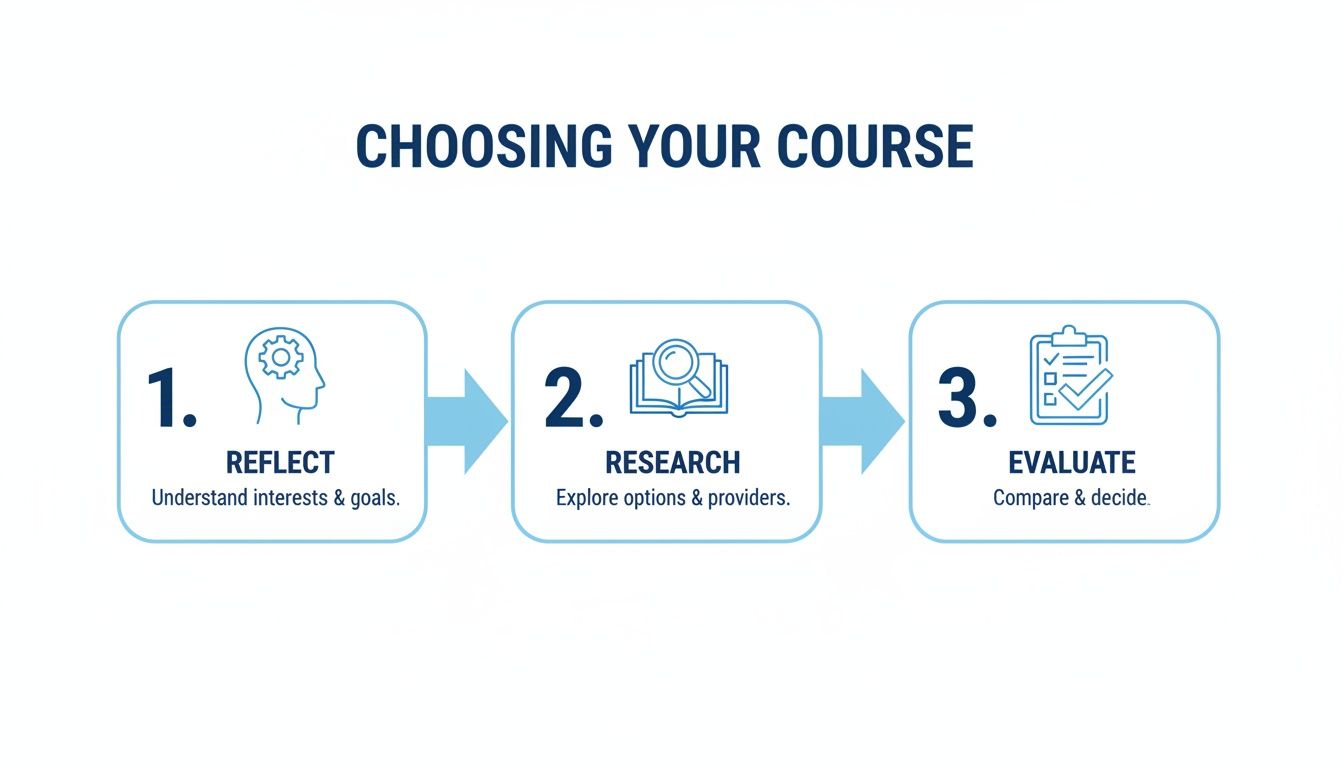
As you can see, a great choice always starts from within before you even begin looking at what's out there. It’s all about being methodical and thoughtful.
Your Course Decision-Making Roadmap
To give you a bird's-eye view of the journey ahead, I've put together a table that summarises the core stages we're about to explore. Think of it as your personal roadmap, guiding you from that first moment of self-assessment right through to your final evaluation.
By following a structured process, you move beyond guesswork. You replace anxiety with a clear plan, ensuring the course you choose is one you’ll thrive in, not just endure.
Your University Course Decision-Making Framework
This table breaks down the core stages you'll go through, from looking inward to making your final checks. It’s your blueprint for making a confident, well-informed decision.
| Stage | Key Action | Why It's Important |
|---|---|---|
| 1. Self-Reflection | Audit your personal interests, skills, and long-term career goals. | Builds a foundation based on what genuinely motivates and suits you, not just what others expect. |
| 2. Strategic Research | Explore subjects, connect them to career paths, and check industry demand. | Ensures your chosen course has practical value and opens doors to real employment opportunities after graduation. |
| 3. Practical Evaluation | Analyse course modules, teaching styles, and university culture. | Helps you find a learning environment where you will feel engaged, supported, and most likely to succeed. |
Each stage is crucial for building a complete picture, ensuring the path you choose is one you'll be excited to follow through to graduation and beyond.
Discovering Your Strengths and Personal Goals
Before you even think about scrolling through university websites or comparing league tables, the single most important step is to look inward. This isn’t about some vague, soul-searching exercise; it’s about doing a practical audit of what actually makes you tick. A great university experience is always built on a foundation of genuine interest and a sense of personal purpose.

Honestly, figuring out how to choose a university course starts with you. When you properly understand your own motivations, skills, and goals first, you create a personal compass. This compass will guide all your research later on, making the whole process feel a lot less overwhelming.
Explore Your Genuine Interests
Let’s be real, your passions go way beyond the subjects you might have studied at school years ago. Think about what you actually do in your free time. What topics do you find yourself reading about or watching videos on for hours on end?
This is all about spotting the themes that naturally grab your curiosity.
- Love Problem-Solving? Are you the person friends come to for advice or to fix things? You might find yourself drawn to courses in engineering, social work, or business management.
- Driven by Creative Expression? Do you enjoy writing, design, or making music? This could point towards degrees in areas like marketing, media production, or the arts.
- Fascinated by How Things Work? Do you get a kick out of understanding systems, whether it's the human body, a computer, or society itself? This kind of curiosity is perfect for courses in science, computing, or sociology.
Jotting these down, no matter how random they seem, helps create a map of your real interests. Trust me, this map is far more valuable than a list of your best school grades.
Separate Your Skills from Your Enjoyment
It’s so easy to confuse what you’re good at with what you actually enjoy doing. You might have a knack for organising data, but the idea of doing it for a living could fill you with dread. This is where a quick personal skills audit comes in handy, helping you separate your talents from your passions.
Just create two simple lists: "Things I'm Good At" and "Things I Enjoy."
Now, look for the overlap. Anything that appears on both lists is your sweet spot—those areas where your natural talents and genuine interests line up. For example, you might be a confident public speaker and also love helping people, which could point towards a brilliant career in teaching or healthcare.
A course that plays to your strengths but bores you is a recipe for burnout. The goal is to find a subject that energises you, tapping into skills you genuinely want to develop further.
Define Your Career and Lifestyle Goals
Even if you don't have a specific career path mapped out, you probably have an idea of the kind of work environment and lifestyle you'd like. Thinking about these factors now is a great way to filter your course options later.
Ask yourself a few practical questions:
- Work Environment: Do you picture yourself in a fast-paced, collaborative office, or do you work best independently and in a quiet space?
- Work-Life Balance: Are you motivated by a high-stakes, high-reward career path, or is having flexibility and time for family and hobbies your top priority?
- Impact: Is making a real difference in people's lives important to you, or are you driven more by intellectual challenges and innovation?
Answering these helps build a personal profile. Someone who values their independence and enjoys deep thinking might thrive in a research-focused science degree. On the other hand, a person who loves teamwork and interacting with the public might be a natural fit for a business or communications course. This profile acts as your guide, making sure the path you choose actually aligns with the future you want for yourself.
Connecting Subjects to Future Career Paths
Once you have a better sense of who you are and what you enjoy, it’s time to start connecting the dots between your interests and the real world of work. This is the fun part, where you shift from looking inward to exploring outward, mapping potential university subjects to tangible career paths.
It's about more than just matching a degree title to a job title, though. Thinking strategically now means the degree you work so hard for will open the doors you want it to after graduation. You'll want to look at things like graduate employability rates, industry demand, and salary potential to build a shortlist of subjects that aren't just interesting, but also offer long-term stability.
Decoding Popular Courses and Industry Demand
A great place to begin is by looking at what thousands of other students are choosing to study. Enrolment numbers aren't just dry statistics; they're a direct reflection of what’s in demand, both from students and the industries they hope to join.
For the 2023/24 academic year, Business and Management degrees were at the top of the charts with a massive 595,620 students. This highlights just how versatile this field is, opening up routes into everything from finance to marketing and HR.
Right behind it, Subjects Allied to Medicine enrolled 365,850 students, which is no surprise given the booming healthcare sector. Social Sciences was next with 279,860, while Computing saw 192,140 students, clearly driven by the growth of our digital world.
These numbers tell a story. The demand for business graduates remains incredibly high because pretty much every industry needs good management. Likewise, our consistent need for healthcare professionals makes medicine-related subjects a secure bet. This data helps you weigh up the benefits of a high-demand field against a more niche specialism you might be passionate about.
Balancing Passion with Practicality
While it’s vital to study something you love, it’s just as important to think about the practical side of things. A degree is a huge investment of your time and money, so you want to be sure it offers a good return.
A really helpful exercise is to create a simple table to compare your top subject choices. This makes it so much easier to see the pros and cons of each path side-by-side.
| Subject Area | Potential Career Paths | Average Graduate Salary (Estimate) | Key Skills Developed |
|---|---|---|---|
| Computer Science | Software Developer, Cybersecurity Analyst, Data Scientist | £30,000 - £35,000 | Problem-solving, programming, logical thinking |
| Psychology | HR Manager, Therapist, Marketing Executive, Social Worker | £22,000 - £27,000 | Analytical skills, empathy, communication |
| Graphic Design | UX/UI Designer, Brand Identity Designer, Art Director | £21,000 - £26,000 | Creativity, visual communication, software proficiency |
Laying it all out like this forces you to think beyond the course modules and consider the life your degree could actually help you build. If you need a bit more help with this, our guide on how to choose a career path goes into much more detail on aligning your studies with your professional goals.
Looking Beyond the Obvious Career Path
Don't forget, many degrees don't lead to a single, straightforward career. A history degree, for example, doesn’t just qualify you to be a historian. Think about it—it equips you with incredible research, analysis, and writing skills that are hugely valued in fields like law, journalism, and the civil service.
Don’t get trapped by literal thinking. Focus on the skills a course will give you, not just the subject name. These are what employers are truly looking for.
This is where transferable skills become so important. These are the abilities you can take with you to almost any job or industry.
- Communication: Presenting ideas clearly, whether you're writing an email or giving a presentation.
- Teamwork: Working well with others to hit a common goal.
- Problem-Solving: Spotting complex issues and figuring out smart solutions.
- Critical Thinking: Looking at information from all angles to make a sound judgement.
It's always a good idea to explore key transferable skills that different degrees can develop, as this gives you flexibility in a job market that's always changing. Your final shortlist should feature subjects that not only get you excited but also arm you with the versatile skills you'll need for a successful future.
Evaluating Course Content and University Culture

So you've got a shortlist of subjects that spark your interest. Now, the real detective work begins. Glossy prospectuses are great, but they only show you the highlight reel. To find a course where you'll genuinely thrive, you need to look past the marketing fluff and get a feel for what day-to-day student life is really like.
This is all about digging into the curriculum, understanding how you’ll be taught, and getting a sense of the university's vibe. It’s about matching the whole experience to your personality, ensuring you find a place that doesn’t just teach you, but properly supports and inspires you.
Dissecting the Course Curriculum
Here’s a secret: no two degrees are created equal, even if they have the exact same title. A Business Management degree at one university might be laser-focused on finance, while another could be all about marketing and HR. The only way to spot the difference is by looking at the course modules.
Head over to the university’s website and find the detailed course breakdown. This usually lists the modules you’ll study each year.
- Core Modules: These are the compulsory subjects that form the backbone of your degree. They give you a crystal-clear idea of the course's main focus.
- Optional Modules: These are where you get to specialise, usually from your second year. They let you steer your degree towards the topics that genuinely excite you and align with your career ambitions.
Pay close attention to that balance between core and optional modules. A course with a broad range of options gives you incredible flexibility to shape your own learning journey, which is a massive factor in staying motivated.
Understanding Teaching and Assessment Methods
How you're taught and graded can make or break your university experience. Some people are brilliant in high-pressure exam halls, while others shine when they can get stuck into coursework and practical projects. Be honest with yourself about where your own strengths lie.
Think about the different formats you'll come across:
- Teaching Style: Is the course mostly made up of large, formal lectures, or are there plenty of small, interactive seminars? Lectures are fantastic for soaking up information, but seminars are where you get to debate ideas and receive personalised feedback. A healthy mix of both is usually a good sign.
- Assessment Methods: How will your work be marked? Is it 100% exam-based, or will you be graded on a mix of essays, presentations, group work, and practical tasks? A varied assessment structure is often fairer and suits a wider range of learning styles.
Choosing a course that matches how you like to learn isn't a minor detail—it's everything. If you hate public speaking, a degree packed with assessed presentations could be a constant source of stress, preventing you from ever reaching your full potential.
Evaluating the Wider University Experience
Your time at university is so much more than just lectures and library sessions. The culture, location, and support network of an institution are massive factors in your overall happiness and success. It's time to think about the bigger picture.
Location and Lifestyle: Do you picture yourself in a buzzing city centre with endless things to do, or would a quieter campus university feel more like home? Don't forget the practicalities, like the cost of accommodation, transport links, and whether there are part-time job opportunities nearby.
Student Support: University life can be tough at times, so knowing what help is on hand is vital. Check out the support services on offer, like academic tutors, mental health and wellbeing teams, and careers advisors. A university that invests in its students' welfare is one that is genuinely committed to helping them succeed.
Student Feedback: One of the best ways to get an honest opinion is to listen to current and former students. The National Student Survey (NSS) provides official data on student satisfaction, covering everything from teaching quality to library resources. Websites like The Student Room are also goldmines for candid insights and forums where you can ask questions directly.
By carefully comparing these real-world details, you’ll move beyond a simple list of subjects and start to find a specific course and university that feels like the perfect fit for you.
Getting to Grips with Entry Requirements and Funding
You’ve done the soul-searching and explored the exciting career paths that lie ahead. Fantastic. Now for the nuts and bolts: figuring out how to actually get a place and how to pay for it. This part can feel a bit daunting, but it’s all about matching your ambition with a realistic plan.
Think of it as learning a new language – there are terms like UCAS points, tuition fee loans, and continuation rates. But don't worry. Let's break down exactly what you need to look for to make sure your dream course is well within your reach, both academically and financially.
First Things First: Can You Get In?
Every single university course has its own checklist of entry requirements. It’s crucial to remember that these can vary wildly from one uni to the next, so never assume that a Psychology course at one institution will have the same demands as another. Get into the habit of checking the specifics for every course on your shortlist.
You'll usually see these requirements presented in a few different ways:
- A-Level Grades: This is the classic format, like AAB or BBC. Sometimes they'll ask for a certain grade in a key subject – for example, a B in Maths if you're aiming for an engineering degree.
- UCAS Tariff Points: A lot of universities make offers based on a points system. This is great because it converts grades from all sorts of qualifications (A-Levels, BTECs, etc.) into a single number, giving you more flexibility.
- Alternative Qualifications: Universities are welcoming more students from different backgrounds than ever before. This includes qualifications like BTEC Diplomas, Scottish Highers, and, importantly, Access to Higher Education Diplomas. These are specifically designed for adults who are ready to get back into education.
If you’re scratching your head wondering how your qualifications add up, a UCAS point calculator is your best friend. It’ll quickly show you which courses are realistic targets.
Look Beyond the Grades: Competition and Student Happiness
Once you know you can meet the grades, it’s smart to dig a little deeper. How popular is the course? And more importantly, are the current students actually happy there?
High competition isn’t always a bad thing, but it’s good to be aware of it. The latest UCAS data shows that applications from UK 18-year-olds are climbing, with over 2.0 million offers made by June 2024. That’s a new record! With more people applying, making a well-informed choice is more critical than ever.
One of the most telling stats – and one that many people overlook – is the course continuation rate. This simple number shows you what percentage of students stick with the course into their second year. A high rate, say 95% or above, is a massive green flag. It suggests students are happy, well-supported, and engaged. A low rate, on the other hand, could be a warning sign. Dropping out costs you time and money, so checking this on sites like Discover Uni is an absolute must.
A course with slightly lower entry requirements but a brilliant continuation rate might be a much better long-term choice than a "prestigious" course where a significant number of students don't make it to year two.
Sorting Out the Finances
Finally, let's talk money. A degree is a major financial investment, but please don't let the big numbers scare you away. There’s a lot of support out there to make it affordable.
- Tuition Fees: For UK students, these are currently capped at £9,250 per year. This fee covers your teaching, access to libraries, and all the university's support services.
- Student Loans: The good news is that most UK students can get a Tuition Fee Loan from the government to cover the full cost. You pay nothing upfront. Repayments only start after you graduate and are earning over a certain amount.
- Maintenance Loans: These loans are there to help with your day-to-day living costs – rent, food, bills, travel. How much you get depends on your household income and where you’ll be living while you study.
- Scholarships and Bursaries: This is the best bit – free money that you never have to pay back! Scholarships are often for academic achievement, while bursaries are usually based on your personal circumstances. It’s well worth spending some time hunting around on university websites to see what you could be eligible for. You might be pleasantly surprised.
Right, you've done the hard graft of research and a bit of soul-searching. Now you’re facing the final hurdle: turning that shortlist of potential courses into one, solid decision. This is where you put your assumptions to the test and start building an application that really shows a university who you are.

It’s all about pulling everything together. From visiting campuses to finally writing that all-important personal statement, this is your chance to shine and lock in your place.
Getting a Real Feel for Your Top Choices
Reading a prospectus is one thing, but actually setting foot on campus (even virtually) is a whole different ball game. It’s your opportunity to get a gut feeling for a place and ask the questions you won’t find answers to online.
Here are a few ways to get a proper sense of your top choices:
- University Open Days: These are invaluable, whether you attend in person or join a virtual event. An in-person visit lets you wander the campus, check out the library and labs, and have a casual chat with current students. Virtual open days are brilliant for saving time and money, often giving you access to pre-recorded lectures and live Q&As with tutors from the comfort of your home.
- Taster Courses: Keep an eye out for these. Many universities offer short taster sessions, sometimes for free, which let you 'try before you buy'. It's the best way to get a genuine feel for the teaching style and academic level before you commit to three years.
- Work Experience or Volunteering: If you can swing it, getting some hands-on experience in a related field shows real initiative. It doesn't have to be a long-term commitment; even a few days shadowing a professional can give you incredible insight and something powerful to talk about in your application.
Asking the Right Questions
When you do get a chance to speak with admissions tutors or current students, make it count. Forget the questions you could have Googled in two minutes. Dig a little deeper.
Smart Questions to Ask Admissions Tutors:
- What’s the average weekly contact time for a first-year student on this course?
- What specific career support is available for students in this department?
- For this particular programme, what makes a personal statement really stand out?
Getting a feel for the university’s culture is absolutely crucial. Try asking a current student, "What's the one thing you wish you'd known before you started here?" Their honest answer will tell you more than any glossy brochure ever could.
Crafting a Winning UCAS Application
Your UCAS application is your big chance to sell yourself, and the personal statement is the heart of it all. This is your story. It’s where you connect the dots between your skills, your experiences, and your passion for the course.
A great personal statement is more than just a list of your achievements; it's a narrative. It needs to show why you're so keen on the subject and how your journey so far has prepared you for this next step. For a more detailed guide, have a look at our in-depth article on how to write a personal statement to help get your ideas flowing.
Once you have a draft, don't be afraid to use modern tools to give it a final polish. Resources like AI-powered essay analysis can be a huge help in spotting areas for improvement and refining your writing.
Aligning Your Choice with Future Trends
Finally, a quick reality check can help cement your decision. It's always smart to think about employability. Data from 2023/24 shows that UK universities awarded over 1,053,060 qualifications, with postgraduate numbers climbing fast in fields like Business, Medicine, and Computing.
This points to a job market that's hungry for highly skilled graduates. Choosing a course with strong career prospects isn't just sensible—it's strategic.
Making that final choice is about bringing everything together: your passion, the course details, the university atmosphere, and your long-term goals. By taking these final steps, you can hit 'submit' on your application with total confidence, knowing you’ve found the perfect path for you.
Ready to take the next step towards your degree? If you don't have the traditional qualifications, an Access to Higher Education Diploma is your direct route to university. At Access Courses Online, we provide flexible, accredited online courses that fit around your life. Discover your path at https://accesscoursesonline.com.